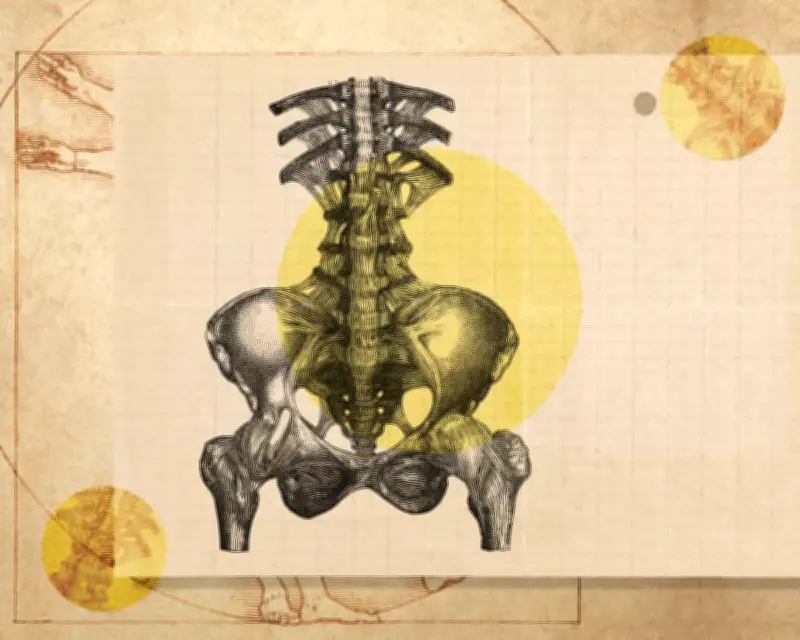
Most instances of debilitating lower back pain originate from something as seemingly innocuous as a muscle spasm. This initial event can trigger a cascade of nerve sensitisation and chronic discomfort that proves notoriously difficult to treat effectively. Understanding this pathway is crucial for the estimated eighty percent of the population who will experience lower back pain at some stage in their lives.
The Surprising Origins of Severe Back Pain
Many individuals who have suffered from acute back pain report bewilderment at the disparity between the trivial nature of the triggering action and the intense, sometimes paralysing, pain that follows. Simple daily motions like getting out of bed, picking up a light object, or bending down can unexpectedly initiate weeks, months, or even years of significant discomfort. The explanation lies in the fact that most lower back pain is not the result of substantial damage to muscles, tendons, or bones. Instead, it frequently begins with a benign muscle spasm that sets the lower back on a problematic trajectory towards nerve sensitisation.
Why Movement is Fundamental to Spinal Health
The human spine is a remarkable structure designed to protect the spinal cord and nerves while simultaneously supporting our upright posture and enabling a wide range of movements. Professor Manuela Ferreira, head of musculoskeletal health at the George Institute for Global Health in Sydney, explains that this requires numerous interconnected parts. "There are so many structures that could be involved in the process of back pain; so many joints, so many muscles – big muscles, small muscles – the disks," Ferreira states. A critical issue is that modern lifestyles often fail to move these structures sufficiently. "Joints need to be moved," she emphasises. "We're putting a lot of weight, a lot of load, on the especially the lumbar spine, without allowing it to adjust itself and move around."

Identifying Common Triggers and Risk Factors
Back problems represent a significant public health concern, contributing substantially to disease burden and healthcare budgets. At any given time, a considerable proportion of the population is affected. The condition is notably common partly because initial episodes often occur during adolescence and have a high recurrence rate; approximately one-third of people experiencing low back pain will have another episode within a year. According to musculoskeletal therapist Professor Peter O'Sullivan from Curtin University in Perth, multiple factors can predispose individuals to back pain. "We know there are genetic factors that predispose to back pain, we know that there are lifestyle factors, there are mental health factors," O'Sullivan notes. Frequently, the initial muscle spasm occurs when a person is physically or mentally run down. "The current view is the majority – and this is like 95% of back pain – will often emerge at a time when you're under stress, not sleeping, not as active, fatigued, and then you do something like just be bending over, picking something up, and then your back spasms," he explains. This acute pain often leads to protective behaviours like reduced movement, which can cause surrounding tissues and nerves to become hypersensitive to even minor stimuli.
The Reality of Pain Without Obvious Injury
It may come as a surprise to sufferers that severe lower back pain is rarely linked to serious structural damage. Advanced imaging studies using X-rays, CT scans, and MRIs typically reveal no significant anatomical differences between individuals with pain and those without. "This old thinking of, 'Oh, you've done your back' is not supported with current evidence," O'Sullivan asserts. However, this does not lessen the very real and often crippling experience of the pain itself. O'Sullivan compares it to a severe muscle cramp or migraine; the sensation is genuine, even if its precise physical origin remains elusive to medical technology.

Prevention Through Lifestyle Modification
As with many musculoskeletal conditions, proactive prevention is vastly more effective than reactive treatment. Recent research underscores the profound impact of healthy lifestyle choices. A comprehensive Australian study demonstrated that improvements in sleep quality, smoking cessation, adopting a healthier diet, and increasing physical activity could lead to substantial reductions in healthcare costs associated with low back pain. The study included compelling case studies, such as a woman who had endured chronic back pain for over four decades. PhD researcher Tiara Tian from the University of Sydney reported, "She went from being very impacted by back pain in her daily life, all the way to not being bothered by back pain for the last twelve months." This transformation was achieved through a gradual increase in physical activity, beginning with a daily fifteen-minute walk and progressing to online exercise classes.
Embracing Movement as the Primary Solution
The consensus among experts is that continued, mindful movement is the cornerstone of managing and preventing most back pain. "The best movement is the next movement," O'Sullivan advises. For specific spinal exercises, activities like yoga are highly beneficial as they encourage the spine to move through its full range of motion. "We encourage people to move the spine in all directions … flex, extension, rotate and side-bend," he says. Exercising with existing back pain does not mean ignoring pain signals but rather adapting movement within comfortable limits. Ferreira clarifies, "You have to change how you move, but you have to keep moving – it's almost like reminding your brain that it's OK to move." This approach helps desensitise the nervous system and restore functional movement patterns, offering a pathway out of chronic pain for many individuals.