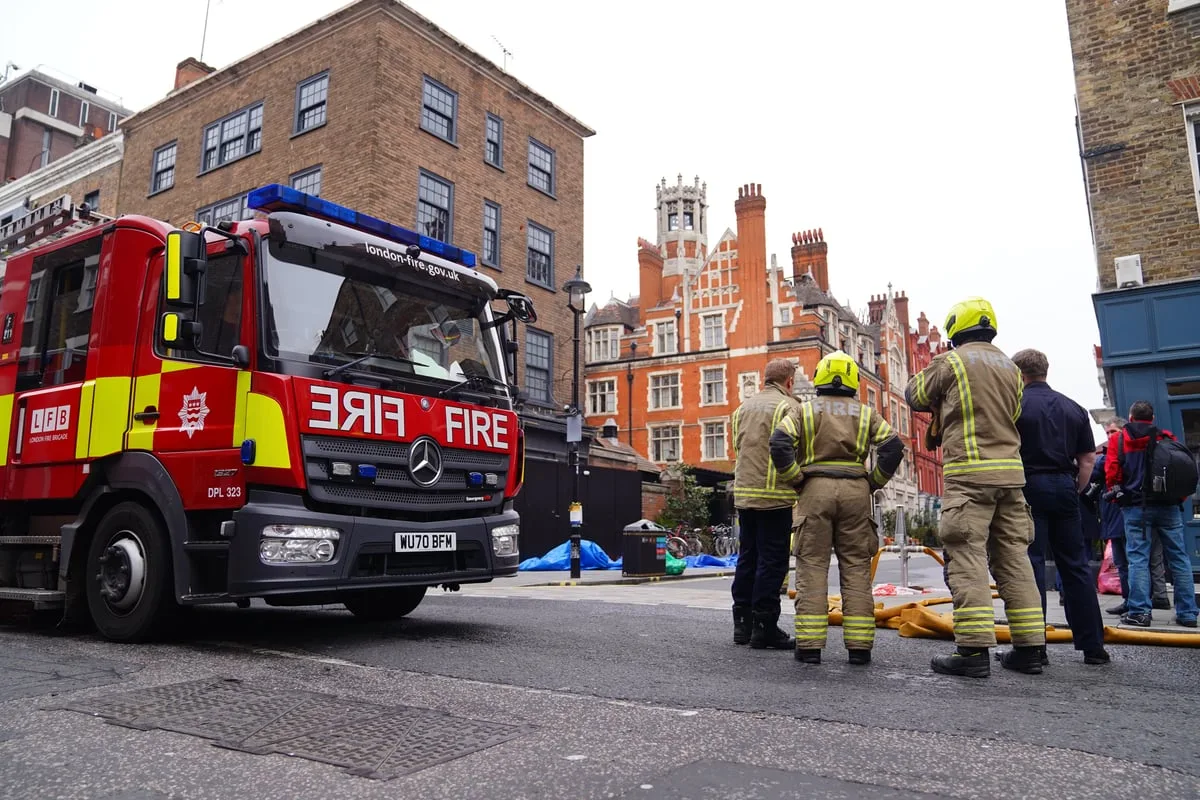
London Firefighters Face Elevated Cancer Risk from Toxic Exposure, Report Reveals
London Firefighters' Cancer Risk from Toxic Exposure

London Firefighters Confront Heightened Cancer Threat from Toxic Chemical Exposure

A concerning new report has revealed that firefighters serving across London face a substantially elevated risk of developing cancer compared to the general population. The investigation highlights how routine exposure to dangerous toxic substances released during fires is creating a serious occupational health crisis within the fire service.

Alarming Statistics on Cancer Diagnoses Among Fire Crews

Research commissioned by the Fire Brigades Union presents stark findings, indicating that approximately one in every twenty-five firefighters surveyed has received a cancer diagnosis. This troubling statistic emerges from a comprehensive self-reported survey encompassing more than 11,000 serving and former firefighters across the United Kingdom. The data reveals particularly worrying patterns among younger personnel, with firefighters aged between 35 and 39 experiencing cancer diagnosis rates roughly three times higher than equivalent age groups within the general public.

Further biological evidence strengthens these concerns, as the study identified that between 10 and 15 percent of firefighters showed abnormal tumour markers in testing. This figure stands in sharp contrast to control groups drawn from the general population, suggesting a direct correlation between firefighting duties and physiological changes associated with cancer development.

Dangerous Contaminants and Historical Exposure Incidents

The London Assembly Fire Committee, which conducted the investigation, identified that firefighters are routinely encountering a hazardous cocktail of toxic substances during fire suppression operations. These include known carcinogens such as asbestos fibres, heavy metals like lead and mercury, and persistent organic pollutants that can accumulate in the body over time. The report specifically references the catastrophic Grenfell Tower fire as a pivotal incident, where more than 800 responding firefighters were exposed to lethal toxins with potential long-term cancer risks.

Green Party leader Zack Polanski, who chairs the London Assembly Fire Committee, expressed grave concerns about the ongoing dangers. "Our investigation demonstrates clearly that the risks don't disappear when the flames are extinguished," Polanski stated. "We're deeply troubled by the persistent threat posed by toxins and contaminants that firefighters encounter during their vital work." He highlighted how cultural attitudes within the service have evolved from historical practices where soot-covered uniforms were worn as a 'badge of honour' to greater awareness today, though significant challenges remain.

Systemic Challenges and Calls for National Action

The committee's investigation identified several systemic issues contributing to the ongoing risk. While acknowledging that the London Fire Brigade's fire contaminants policy has driven important cultural changes away from glorifying dirty equipment, the report notes substantial variation in how these policies are implemented across different stations. Older fire station designs and inconsistent availability of proper personal protective equipment (PPE) were highlighted as particular concerns that require addressing.

Polanski emphasized that cultural change alone is insufficient, stating: "There are fundamental measures the government should implement, which would necessitate increased funding for fire services. This includes ensuring adequate supplies of correctly specified PPE and establishing proper cleaning protocols for contaminated equipment."

Comprehensive Recommendations for Reform

The report presents a series of urgent recommendations aimed at better understanding and mitigating the risks faced by firefighters:

  • Establishing a UK-wide firefighter exposure and health monitoring programme to systematically track contaminants and health outcomes
  • Piloting immediate exposure monitoring for operational firefighters specifically within London
  • Strengthening training, assurance mechanisms, and compliance with existing fire contaminants policies
  • Improving PPE availability and implementing future-proof procurement strategies
  • Embedding comprehensive health promotion and preventative support within occupational health provisions
  • Requesting the Industrial Injuries Advisory Council to formally review evidence linking cancer risks to firefighting duties

A spokesperson for the London Fire Brigade responded to the findings, stating: "Ensuring our firefighters' safety remains our absolute priority. We're actively engaged in numerous initiatives to better understand and reduce the health impacts of contaminant exposure. This work is helping develop clearer insights into how exposure affects firefighters throughout their careers and identifying the most effective protective measures."

The spokesperson further detailed existing protections, noting: "We provide extensive personal protective equipment alongside clear, comprehensive decontamination guidance. Regular mandatory training ensures all personnel understand contaminant risks and the protective steps available. While significant progress has been made in risk reduction, we remain fully committed to continuous improvement through close collaboration with partners including the Fire Brigades Union."

The committee's call for a government-led national exposure programme represents a crucial step toward addressing what has become a pressing occupational health emergency affecting those who protect communities across the capital and beyond.




