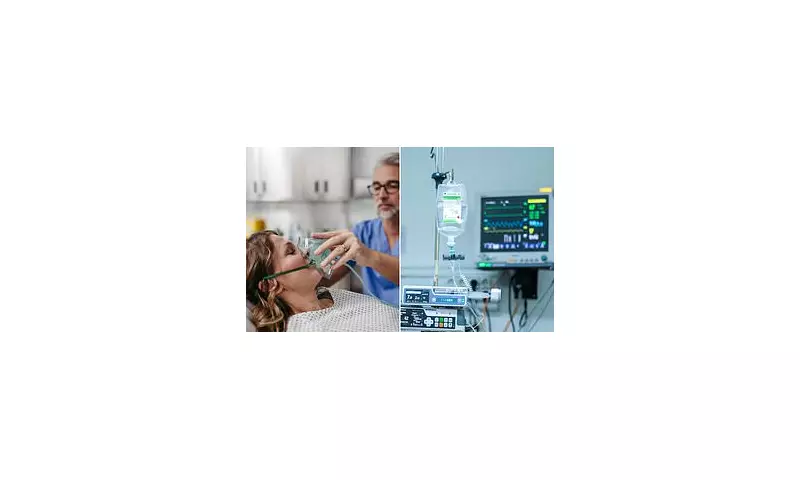
For patients and their loved ones, the Intensive Care Unit (ICU) can be an intimidating and unfamiliar environment. Now, a nurse working in this critical field has lifted the veil on daily life in the unit, answering common questions about what happens when patients are sedated and unconscious.
Personal Care Behind the Scenes
Nurse Conner, who shares insights into nursing on social media platform TikTok, recently addressed public curiosity in a video titled 'Answering questions about keeping you alive in the ICU'. One of the first queries he tackled was whether nurses wash and care for patients' hair during long stays. He confirmed that they do, stating, 'I will wash your hair and make sure it does not get matted.'
He humorously added the caveat that, as a 'boy nurse', his hairstyling skills were a learned necessity. Conner joked about mastering a 'solid messy bun' and even learning to braid, quipping that the latter was 'harder than learning [life-support treatment] ECMO'. His reassurance to patients was clear: 'I can't promise it will be good, but I promise we don't have to shave your head.'

Monitoring Eyes and Explaining Delirium
Another question came from contact lens wearers worried about their removal. Conner admitted the question gave him pause, explaining that while he checks patients' eyes several times daily for pupillary response, he couldn't recall a specific instance of removing lenses. He suggested emergency room nurses might handle it for trauma arrivals, but emphasised, 'The good news is someone is looking at your eyes several times a day, so if they started to cause problems, we would notice.'
He then addressed a significant and common issue in critical care: ICU delirium. Conner described the unit as a 'liminal space that exists outside of space and time', where constant machine noise, round-the-clock assessments, and often windowless rooms disorientate critically ill patients. This loss of sense and place, he explained, can lead to traumatic confusion.
He recalled a delirious colleague he once cared for, who ripped out their own arterial line—a vital monitor in the wrist—and was baffled when Conner intervened to stop the bleeding. 'They were totally delirious and had no idea what was going on,' he said, noting that while staff try to mitigate it, 'it's very sad and very traumatic'.
Comfort and Recovery in the ICU
Conner also answered lighter questions, confirming that stuffed toys are permitted in the ICU provided they don't obstruct medical equipment. He noted this is especially important for patients with cognitive disabilities, where such comforts are 'not really negotiable'.
In a touching reveal about post-operative care, he shared that for open-heart surgery patients, nurses gift a heart-shaped pillow signed by the entire team. 'Partly to be sentimental, partly because we just cut your chest in half,' he explained. The pillow is used to teach patients how to brace their chests and protect the healing wound when moving.
This candid glimpse from the frontline of critical care highlights the blend of high-tech medicine and essential human compassion that defines nursing in the UK's intensive care units.