Emergency Room Violence Epidemic: Nurses Assaulted While Doing Their Jobs
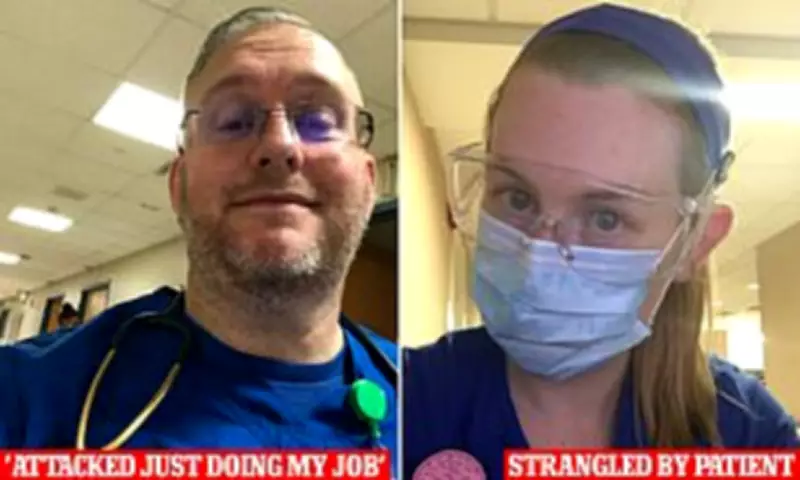
Dani Brochu experienced a moment of sheer terror that would permanently alter her career. As an emergency department technician, she entered a patient's room to remind him about pre-surgery fasting rules. The patient had secretly consumed graham crackers despite strict protocols. What happened next would haunt Brochu for years.
'He took his oxygen tubing and wrapped it around my neck,' Brochu told Daily Mail. 'I couldn't breathe as the tubing crushed my windpipe. Lights began to pop in my head as I struggled.' Her strained cries for help barely escaped her throat, but fortunately reached staff outside the door. Nurses and security guards rushed in just in time to intervene.
Lasting Psychological Scars
Though the patient was quickly subdued and restrained, the emotional damage proved permanent. Today, Brochu supervises both the intensive care unit and emergency department at the same Connecticut hospital system where she's worked for a decade. She never wears her stethoscope around her neck anymore—a constant reminder of that violent encounter.

Brochu's harrowing experience represents just one of countless similar accounts from emergency department staff nationwide. Nurses and doctors regularly contend with violent patients who cause both psychological trauma and physical injuries that can end careers.
Michelle Renee Weihman, an emergency department nurse for thirty years who now works as a patient advocate, described the daily reality: 'Nurses are hit, kicked, bitten, threatened, spit on and have bodily fluids thrown on them. We also regularly find weapons on patients.'
A Growing Crisis in Healthcare
The violence against healthcare workers has reached epidemic proportions, with emergency department staff bearing the brunt of patient aggression. Data from the Bureau of Labor Statistics reveals that emergency department employees face nearly four times greater risk of serious workplace violence injuries compared to workers in other industries.
Dr. Pam Vollmer, who worked as an emergency department nurse for eight years, explained: 'During those eight years, days without experiencing some sort of verbal or even physical abuse became the exception rather than the norm. The environment becomes a pressure cooker over time that is fueled by stress.'
Annual tracking confirms the escalating danger. A 2022 survey by the American College of Emergency Physicians found 85 percent of workers believed violence was becoming more common, with two-thirds reporting an assault within the previous year. By 2024, the situation had deteriorated further—91 percent of respondents reported that they or a colleague had been attacked during the past year.
Physical Consequences Beyond Immediate Injuries
The violence often triggers severe medical consequences for healthcare workers. Matthew Harless, a 270-pound powerlifter and emergency department nurse, learned this firsthand during a routine shift last April. While helping a patient to the bathroom, the patient suddenly became violent, punching and kicking Harless repeatedly, including blows to his head.
'I was attacked just doing my job,' Harless told the Daily Mail. 'That moment shattered my sense of safety at work and exposed just how unprotected nurses really are.'
Twenty minutes after the assault, Harless experienced a terrifying physical reaction—a transient ischemic attack (TIA), essentially a warning stroke often triggered by acute stress. This medical emergency highlighted how workplace violence extends beyond immediate injuries to create serious health risks for caregivers.
Pandemic Exacerbation and Systemic Failures
The COVID-19 pandemic dramatically worsened the crisis, exposing healthcare workers to unprecedented levels of aggression. Psychologists identify dangerous dehumanization trends where caregivers became viewed as expendable resources rather than human beings, stripping away the empathy that traditionally offered some protection.

Brochu observed: 'People are scared, people are stressed, people are angry, quite often without recognizing it. And then that, coupled with just the overall frustration with the medical system as a whole and or with their diagnoses, it's a perfect storm, and people just have short fuses.'
A Mayo Clinic study documented the alarming escalation. Between April and December 2020, daily verbal abuse against staff doubled from 6.2 percent to 12.7 percent. Physical assaults showed an even starker increase, jumping from 34.7 percent to 45.7 percent of staff experiencing violence over that six-month period, with notable increases in attacks involving bodily fluids.
Mass Exodus of Experienced Nurses
The ongoing violence epidemic has triggered a devastating exodus of experienced emergency department nurses. A 2023 National Nurses United survey found that 65 percent of nurses regularly feel anxious or fearful at work, prompting 37 percent to consider leaving the profession entirely.
Weihman identified a critical systemic failure: 'What's especially frustrating is that after incidents, staff are often asked what they could have done differently, instead of focusing on what systems and security changes are needed to keep people safe.'
For Brochu, Harless, and thousands of other healthcare professionals, it wasn't isolated incidents but rather an ongoing barrage of violence and abuse—compounded by inadequate responses from hospital administrations—that ultimately drove them from a profession many entered as a vocational calling. The emergency department violence crisis continues to threaten both healthcare workers' safety and the stability of America's medical system.