A hospital has been found to have failed to inform a dying father-of-seven that he was terminally ill, instead giving him false reassurances that he would recover, a damning investigation has revealed.
A Devastating Failure of Communication
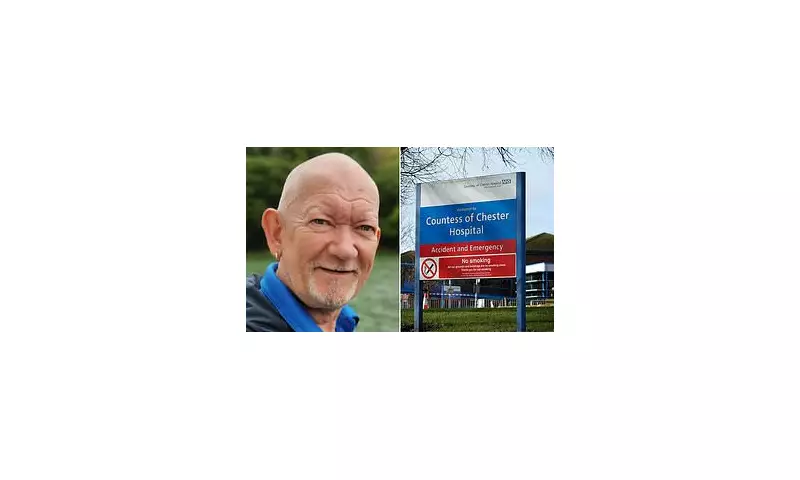
William Chapman, known as Syd, was a 58-year-old former soldier who served in the Royal Irish Rangers. The grandfather of 16 from Upton, Cheshire, was admitted to the Countess of Chester Hospital in July 2021 with worsening shortness of breath and was initially diagnosed with Covid-19.
Following further tests, a consultant noted in a letter to Mr Chapman's GP in November 2021 that he had incurable pulmonary fibrosis, a condition involving the thickening and scarring of lung tissue. Critically, the consultant neither sent Mr Chapman a copy of this letter nor informed him of the diagnosis directly, as they were duty-bound to do.

Months earlier, in September, a junior doctor had told Mr Chapman there was 'nothing to worry about' and that he would be fine, despite having no evidence to support this claim. As a result, Mr Chapman only discovered his terminal prognosis when his GP, who mistakenly believed he already knew, mentioned it during a phone call.
The Profound Impact on a Family
The investigation by the Parliamentary and Health Service Ombudsman (PHSO) concluded that if Mr Chapman had been properly informed, he could have made crucial decisions about his health and remaining time. Instead, he was unprepared when later told the full extent of his condition.
His daughter, Chantelle Parker, 32, said the family felt 'completely let down'. 'My dad thought he was going to get better, because that's what they led him to believe,' she stated. 'Because of that he carried on working, even though it was a struggle for him.'
Ms Parker explained that her father would have spent more precious time with his family had he known. 'By the time he was given the information to make that decision he was too poorly to work anyway, he was practically bed-bound. We all lost that time to spend together.'
She added that the ordeal had destroyed their trust in the NHS, noting that her father had even turned down an offer of private treatment due to his faith in the health service.
Systemic Failings and a Lack of Accountability
The PHSO report identified a 'worrying lack of accountability' among hospital doctors and a failure to maintain proper records. It found hospital staff failed to listen to Mr Chapman's family, and there was poor or non-existent record-keeping for some consultations.
Furthermore, the Countess of Chester Hospital NHS Foundation Trust took over a year to respond to the family's formal complaint. The PHSO said the trust did not adequately investigate the events, failed to acknowledge all its shortcomings, and did not properly recognise the impact of its failings on Mr Chapman and his family.
Rebecca Hilsenrath KC, chief executive officer at the PHSO, called it a 'disturbing case' that highlighted the vital importance of effective communication. 'When you hear this kind of diagnosis in this kind of way, you lose a sense of dignity and the opportunity to make your own decisions about how to live your life,' she said.
She noted that the family's trauma was worsened by the hospital's handling of their complaint and pointed to a need for a 'cultural shift starting from the top down to improve patient safety'.
The trust has now 'apologised unreservedly' and accepted the findings. It has complied with a PHSO recommendation to apologise, make service improvements, enhance its record-keeping, and pay Mr Chapman's wife £1,200. William Chapman died just eight months after his belated diagnosis, in 2022.