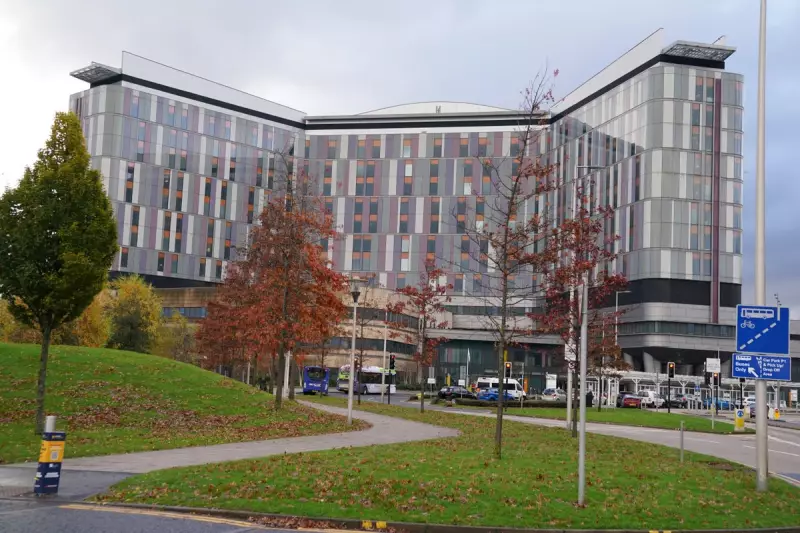
Senior counsel Fred Mackintosh KC has delivered a damning assessment of how a major Scottish health board's approach has affected the official investigation into infection-related deaths at a flagship hospital. The inquiry examining the Queen Elizabeth University Hospital (QEUH) in Glasgow has faced significant obstacles due to the stance taken by NHS Greater Glasgow and Clyde (NHSGGC), according to the lead counsel's closing submissions.
Inquiry's Task Made 'More Difficult' by Persistent Denials
Mr Mackintosh stated unequivocally that the health board's initial and prolonged denials regarding infection problems at the hospital complex had "severely impacted" the inquiry's work. He explained that NHSGGC had "long insisted that there is no evidence to back up the concerns over patient safety at the Queen Elizabeth that caused the inquiry to be established." This position forced the inquiry team to dedicate substantial resources to establishing whether connections existed between patient infections and identified safety issues within the hospital's water and ventilation systems.
Delayed Acceptance of Responsibility
The counsel highlighted that the health board has now reached what he termed a "delayed acceptance" regarding paediatric infections likely being linked to the water system. This concession, he noted, substantially reflects what the case notes review concluded back in March 2021. "There needs to be some acknowledgement that how the health board approached this issue has severely impacted on the work of the inquiry," Mr Mackintosh told inquiry chairman Lord Brodie during the final day of evidence.

'Wilful Blindness' Among Senior Management
In perhaps the most striking criticism, the senior counsel accused health board managers of demonstrating "wilful blindness" toward issues with the QEUH building. He asserted that senior figures had failed to ask necessary questions about the hospital's infrastructure, instead choosing to ignore mounting evidence of problems. This managerial approach has come under intense scrutiny throughout the inquiry's proceedings.
Health Board's Apology and Admissions
In written closing submissions, NHS Greater Glasgow and Clyde has offered what it describes as a "sincere and unreserved apology" to patients and families affected by the hospital infections. The health board has accepted there was probably a "causal connection" between infections suffered by patients and the hospital environment, particularly the water system. Additionally, NHSGGC admitted that three whistleblowers were not treated "as they ought to have been" and acknowledged that "the process had a significant impact on their wellbeing."
Families' Devastating Testimony
A joint statement from families affected by hospital infections delivered powerful testimony about the human cost of the failures. They stated that flaws in the building's environment had "killed and poisoned our loved ones," adding: "We trusted the hospital and the health board. Instead, we were left at the mercy of a hospital with a defective ventilation system and a defective water system." The families described being at the mercy of what they now know to be "a deceitful and dishonest health board," with some loved ones dying and others left with serious lifelong consequences.
Ongoing Safety Concerns and Political Calls
The affected families have called on politicians to take action, maintaining that the building remains unsafe despite health board assurances. NHSGGC has sought to reassure patients and families that the QEUH and Royal Hospital for Children are safe today, citing comprehensive steps taken to address past physical defects and an ongoing programme of maintenance and monitoring. The health board stated that ensuring safe patient care remains its "key priority at all times" and acknowledged issues with past culture and communication while committing to continued improvement.

Substantial Financial Costs of Investigation
The inquiry, launched in 2020 following deaths linked to infections including that of 10-year-old Milly Main in 2017, has examined the design and construction of both the Queen Elizabeth University Hospital and the Royal Hospital for Children on the same campus. Total costs for the investigation have now exceeded £31 million, reflecting the scale and complexity of examining the systemic failures that led to patient harm.
As the inquiry moves toward its conclusion, the senior counsel's remarks highlight fundamental questions about institutional accountability, transparency in healthcare governance, and the profound consequences when warning signs are ignored by those in positions of authority within the National Health Service.