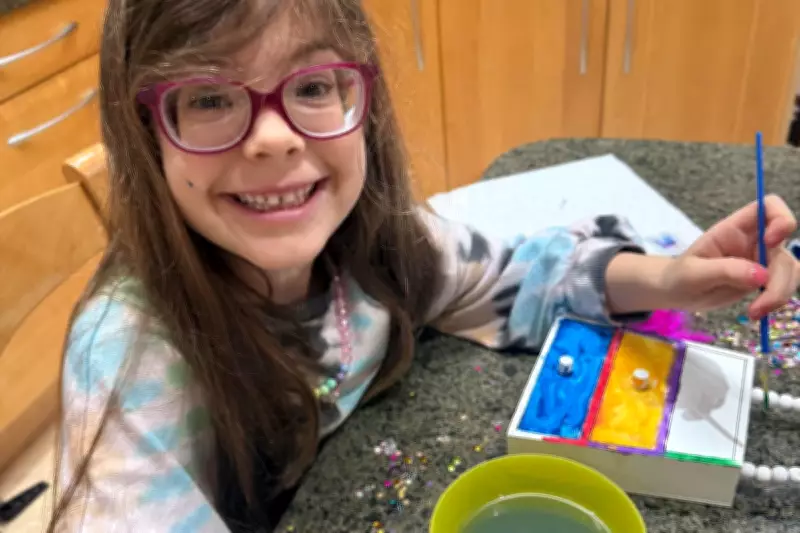
Six-Year-Old Girl's Sight Restored by NHS Gene Therapy Breakthrough
A six-year-old girl from Stevenage in Hertfordshire has had her sight restored thanks to a life-changing eye gene therapy provided by the National Health Service. Saffie Sandford, a Spider-Man fan, was diagnosed with the rare inherited condition Leber's Congenital Amaurosis (LCA) at the age of five after her parents noticed she was struggling to see in the dark.
Understanding the Condition and Treatment
Leber's Congenital Amaurosis prevents cells in the eye from producing a specific protein essential for normal vision. Babies and children with this condition typically have low vision in daylight, no vision in low light, and can lose their sight completely by adulthood. Saffie's diagnosis came as a shock to her parents, Lisa and Tam, who were unaware they were carriers of the genetic mutation.
After tests at Moorfields Eye Hospital in London confirmed the diagnosis, Saffie was transferred to Great Ormond Street Hospital (Gosh) for the groundbreaking gene therapy known as Luxturna. This one-off treatment involves injecting a healthy copy of the gene directly into the eye, marking the first therapy of its kind for one of the genetic causes of LCA.

Life-Changing Results and Family Impact
Saffie underwent the gene therapy in her first eye in April 2025 and in her second eye in September of the same year. Her mother, Lisa, described the transformation as "like someone waved a magic wand and restored her sight in the dark." Before the treatment, Saffie's condition was severely life-limiting, making daily activities challenging and threatening blindness by age 30.
Now, Saffie can participate in normal activities for a six-year-old, such as playing on climbing frames, trick-or-treating, and dining out in the evening. Her peripheral sight in daylight has improved, allowing her to see hazards and perform better at school. Lisa expressed immense gratitude, noting that while the results might not last forever, the family feels fortunate every day for this chance.
Research and Future Implications
Researchers at Gosh and University College London (UCL) have recently published findings showing that Luxturna can improve sight and strengthen visual pathways during critical stages of brain development. The study followed 15 children treated between 2020 and 2023, demonstrating enhanced visual pathway function in young children with RPE65-related retinal disease.
Doctors treated patients as young as 15 months old up to age 12, with the youngest children showing the most improvement due to treatment during a crucial period of visual development. The team used pattern visual evoked potentials (VEPs), a painless test measuring signal travel from the retina to the visual cortex, which is particularly useful for very young children or those with neurodevelopmental conditions.
Rob Henderson, consultant ophthalmologist at Gosh, emphasized the significance of these findings: "For the first time, we've been able to show objectively that gene therapy can strengthen the visual pathways in babies and young children living with this rare eye condition." He highlighted that even small improvements can make a profound difference for families and that pattern VEPs could set a new standard for assessing paediatric gene therapy trials globally.
While Luxturna is not described as a cure, researchers are hopeful for good long-term outcomes, with ongoing data collection to monitor its effects. This breakthrough underscores the potential of gene therapy to transform lives and the importance of age-appropriate outcome measures in medical advancements.