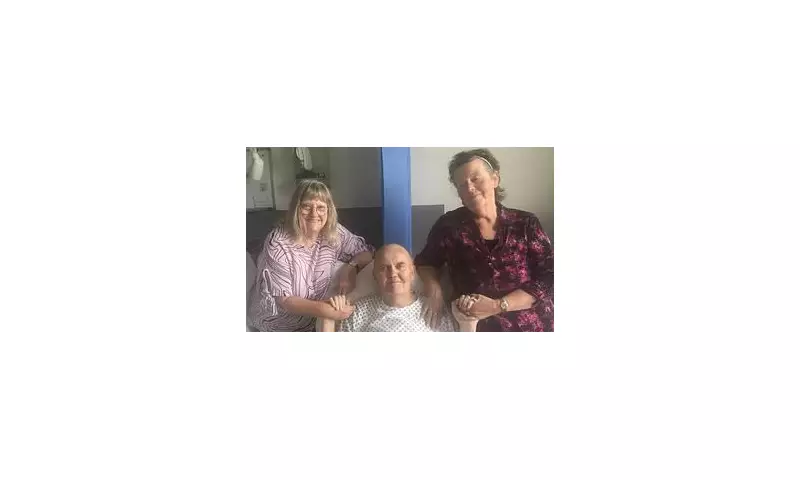
The heartbroken parents of a man who passed away from cancer after being denied face-to-face appointments on fourteen separate occasions are launching legal proceedings against his local GP surgery. Jason Spreadbury, a 55-year-old health and safety manager, was misdiagnosed over a five-month period despite suffering from agonising pain in his side that eventually left him reliant on crutches.
A System That Failed at Every Stage
As his condition deteriorated alarmingly, Mr Spreadbury was repeatedly refused in-person consultations at Combs Ford Surgery near Stowmarket, Suffolk. Reasons provided included doctors working from home. He was also sent home from the West Suffolk Hospital’s A&E department on two occasions after medics there concurred with his GP’s initial diagnosis of sciatica—nerve pain in the lower back and leg—and decided against performing a scan.
It was only when Mr Spreadbury found himself utterly incapacitated, unable to walk indoors from his garden due to the chronic pain, that he called NHS 111. This finally led to a GP consultation and a referral back to A&E. Subsequent tests revealed the devastating truth: he had inoperable cancer in his kidneys that had metastasised to his brain and bones. He died just two months later.

Parental Anguish and a Quest for Accountability
Mr Spreadbury's father, Robert, 71, expressed the family's profound grief and anger. 'We've been robbed of our son. None of them did their jobs properly,' he stated. 'We are taking Combs Ford Surgery to court and we have reported the hospital to the Parliamentary and Health Service Ombudsman.'
His mother, Josie, 75, added: 'At every stage of his treatment, the system failed my son. The heartbreak this has inflicted on us is unbearable and it makes me furious. It just brings home how dreadful the NHS is at this time.'
A Timeline of Missed Opportunities
The tragedy unfolded over several months. Mr Spreadbury first experienced pain in his side and back in early December 2024. A phone consultation with a nurse practitioner on December 30 resulted in advice to take co-codamol. By February 2025, the pain had intensified, prompting regular calls to the surgery.
On February 18, a phone consultation with a GP led to a diagnosis of sciatica and a recommendation for physiotherapy and painkillers. His medication was increased after another phone call in March. Critical opportunities for intervention were missed:
- On March 31, a scheduled in-person appointment was converted to a phone call because the doctor was working from home.
- On April 14, he was prescribed more painkillers despite requesting a hospital referral.
- His final request for a face-to-face appointment on April 22 was again handled by phone, where he explained he was now using crutches. He was simply given more painkillers.
During this period, visits to West Suffolk Hospital A&E on April 13 and 16 resulted in him being sent home, with doctors finding no abnormality or agreeing with the sciatica diagnosis.
The Final Desperate Chapters
In a bid to go on a planned holiday to Rhodes, Mr Spreadbury saw a private doctor on May 1 for a pain-relieving injection. The doctor refused, insisting the underlying cause needed investigation. The very next day, at his home in Combs Ford, his frailty left him stranded in his garden. After calling 111, he was finally seen by a GP who immediately referred him to hospital for a scan, which delivered the terminal diagnosis.
He was transferred to Addenbrooke’s Hospital in Cambridge, where his parents claim nurses left an abscess on his hip untreated for days. After a brief period at home, he entered end-of-life care at West Suffolk Hospital on July 14 and died three days later.
Legal Action and Institutional Responses
The family has announced formal legal action over his NHS treatment. Robert Spreadbury noted the process could take years but stated, 'I want people to know now what's happened.' Josie added, 'Combs Ford Surgery let my son down. People have to know what happened to him. I’m sure he’s not the only one.'

Combs Ford Surgery has acknowledged failures in its care. A spokesman said: 'We are truly sorry that opportunities to bring Jason in for a face-to-face review were missed,' adding that in-person appointments would now be offered for similar symptoms. In a further statement, the surgery apologised again but made no admission of liability.
Dr Ewen Cameron, chief executive of the West Suffolk NHS Foundation Trust, offered 'sincere and deepest condolences' but stated in a letter that Mr Spreadbury’s symptoms 'did not meet the criteria for MRI imaging.' The trust emphasised it takes complaints seriously to improve patient care and encouraged the family to contact its patient advice service.
The case highlights ongoing concerns about access to face-to-face GP appointments and diagnostic delays within the NHS, leaving a family to mourn a 'nice, smiley and quiet man' described as witty, brave, and happy until the very end.