Norwich Woman's Decade-Long Endometriosis Battle Dismissed as 'Just a Bad Period'
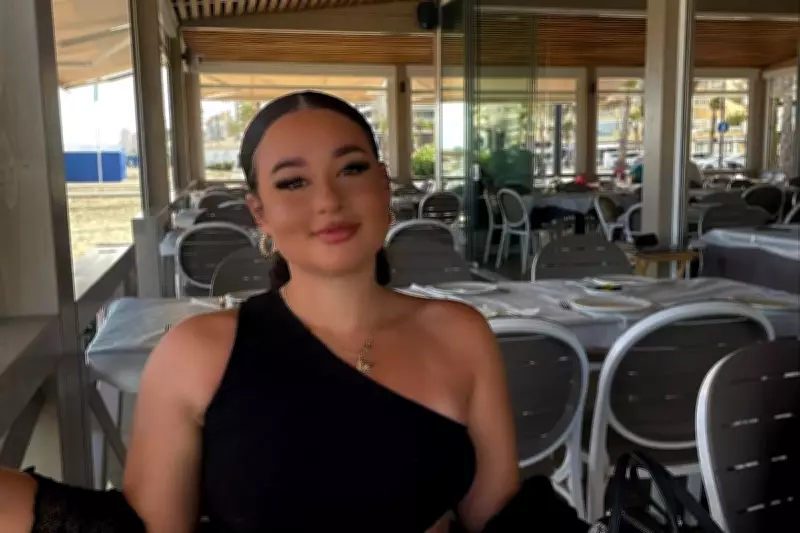
A young woman from Norwich has revealed how her debilitating endometriosis symptoms were consistently dismissed by medical professionals for over a decade, with doctors repeatedly attributing her severe pain to her weight or describing it as 'just a bad period.' Tehyana Johnson, now 22, expressed her profound frustration that nobody listened to her pleas for help during years of suffering.
A Childhood of Unexplained Pain
Ms Johnson's ordeal began when she was just nine years old, experiencing heavy bleeding that led to an iron deficiency diagnosis. By age twelve, her symptoms had escalated dramatically to include:
- Severe nausea and vomiting
- Excruciating cramping that left her bedridden for days
- Full body pain that she described as feeling like 'her body was on fire'
- Blood appearing in her urine
'I couldn't move and I'd just curl up into the foetal position,' recalled Ms Johnson, who works as a regional assistant for a social care company. 'That would go on for days... but when we went to see the doctors when I was about 14, there was no investigation and they just stuck me on the pill.'

Years of Medical Gaslighting
Despite being prescribed contraceptive pills that stopped her periods, Ms Johnson experienced what she called 'phantom pain' along with occasional light bleeding. Her back pain was dismissed as 'growing pains,' and when her symptoms worsened to the point of requiring hospital admissions, she claims she was still systematically ignored.
'I would go to hospital, and they would say, 'are you sure it's not just a bad period?'' she explained. 'They'd tell me to go back to my GP and, effectively, ignore me, and then my GP would say, 'if your pain is that bad, you need to go to hospital.''
In 2023, after finally being referred to a gynaecologist, Ms Johnson faced a year-long waiting list during which her symptoms severely impacted her ability to sleep, walk, and study. A change of GP surgeries led her to a locum doctor who recognised the severity of her pain, prescribed codeine, and escalated her referral.
Weight Blaming and Self-Diagnosis
The breakthrough proved temporary. In 2024, after seeing a male gynaecologist and undergoing clear ultrasound and MRI scans, she was again told she did not have endometriosis. Instead, her weight was cited as the primary cause of her symptoms.
'He spent the whole appointment telling me it's because of my weight... and he said to me: 'Your weight is my ideal weight as a 6ft 5in man,'' she recounted. 'Trying to explain my symptoms to someone who has already decided what he thinks is the answer, he just wasn't listening.'
Convinced something was profoundly wrong, Ms Johnson began her own research while at university. 'I wasn't going into my lessons because I couldn't get up, I didn't have any support, so I started Googling my symptoms and looking at WebMD and I came across endometriosis,' she said. 'I just thought, wait a second, this is what's been going on with me for the past 10 years.'
Emergency Complications and Final Diagnosis
Later in 2024, an unplanned pregnancy became a suspected ectopic pregnancy, which Ms Johnson claims doctors also dismissed. A private scan a week later identified a ruptured ectopic pregnancy, leading to an emergency hospital visit. Although she suffered a partial rupture, the pregnancy later 'dissolved' without surgery.
After advocating for a laparoscopy - considered the gold standard for endometriosis diagnosis - she endured another year-long wait. During this time, her symptoms intensified dramatically, including:
- Severe abdominal pain
- Chronic nausea
- Bladder spasms
- Bowel dysfunction
- Debilitating sciatica
'It's traumatic. I'm on the floor, I'm screaming, crying, and the pain lasts for hours,' she described of her worst episodes.

Vindication and Ongoing Struggle
In July 2025, Ms Johnson finally underwent the diagnostic laparoscopy. Upon waking, she was informed of extensive endometriosis with lesions and scar tissue on multiple organs, including her bowels. While some tissue was removed, she was told not all could be safely excised due to its widespread nature and location.
'They said there are lesions which look like they've been there for about 15 years, and I've got massive scarring on basically everything,' she stated. 'At this point, I'm thinking, you've left it so long that now there's not a chance that treatment will work.'
While the diagnosis brought a sense of vindication - 'I almost felt vindicated because I was right' - Ms Johnson feels much of her suffering could have been prevented. She continues to experience 'flare-ups' but uses a TENS machine for pain relief and is pushing for more referrals. She may require further surgery or, in severe cases, a hysterectomy.
Systemic Issues in Women's Healthcare
According to the charity Endometriosis UK, it takes an average of more than eight years from the first GP visit to receive a diagnosis for endometriosis, a condition affecting 176 million women worldwide. Symptoms vary but can include pelvic pain, severe period pain, heavy bleeding, and pain during or after sex or when urinating.
During Endometriosis Awareness Month, intimate wellness brand Intimina highlights that diagnosis takes an average of eight years and 10 months. Dr Susanna Unsworth, a women's health expert for Intimina, commented: 'Too many women are still told that severe period pain is 'just something they have to live with.' But pain that stops you going about your normal daily life is not normal and should always be assessed.'
A Call for Change and Self-Advocacy
Ms Johnson is now campaigning for earlier diagnosis of this 'invisible' and currently incurable condition. She urges other women to trust their instincts and persist in seeking answers.
'Always advocate for yourself and fight for yourself... but you're not alone as there are millions of us with this condition and there are support groups,' she urged. 'I'd say to GPs, think about if this was your child or your wife or your partner, you'd want them to be heard. Medical professionals need to educate themselves and be willing to be educated again.'
Her message to healthcare providers is clear: 'If your periods are affecting your quality of life, trust your instincts, seek medical advice and keep advocating for yourself. Women deserve to be listened to when they say something isn't right.'