
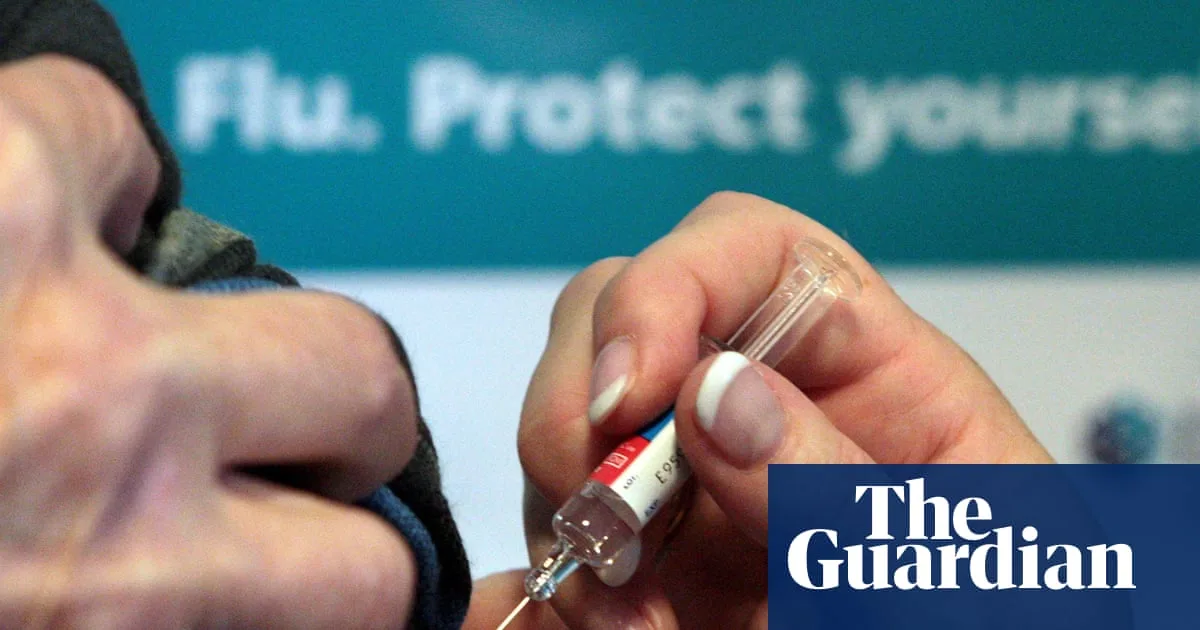
Hospitals across the UK are bracing for what officials describe as a once-in-a-decade flu season, as a mutated strain of the virus spreads widely among younger people and is expected to drive a wave of admissions when it reaches the elderly. The threat has prompted NHS managers to redouble vaccination efforts, expand same-day emergency care and treat more patients in the community to reduce the need for hospital stays.
With resident doctors in England on a five-day strike over pay, hospitals are turning to contingency plans, including bringing in consultants and other staff for extra shifts and rescheduling appointments where necessary. Elaine Clancy, group chief nursing officer for St George’s, Epsom and St Helier university hospitals, said: “We’re preparing for a spike of flu on to our wards.”
The mutated version, first spotted in June, is a descendant of a strain that fuelled Australia’s worst flu season on record, with more than 400,000 lab-confirmed cases. It has become the dominant strain in the UK, starting the season more than a month earlier than usual. Claire Beynon, executive director of public health for Cardiff and Vale university health board, said: “We are seeing a rapid and early increase in influenza this winter and are expecting to see an increase in hospital admissions.”
The virus is a subtype called H3N2, which tends to cause more severe illness, particularly in older people. The R value is thought to be 1.4, compared with a normal range of 1.1 to 1.2. Antonia Ho, professor in infectious diseases at the MRC-University of Glasgow Centre for Virus Research, said: “Whenever there is an early start to the season, there tends to be a bigger peak.”
Early data from the UK Health Security Agency suggests current vaccines are less effective at blocking infections but still provide good protection against severe disease. Vaccine effectiveness against hospital attendance is 70-75% in children and 30-40% in adults. Caroline Abrahams, charity director at Age UK, said: “The new strain of flu is a worry on what was already predicted to be a big flu season. It is more important than ever that everyone that is eligible – including older people – gets the flu vaccine and also takes precautions to stay well this winter.” While H3N2 can cause severe seasons, it is not inevitable; in 2003-24, an early season with a drifted H3N2 strain led to 12,000 flu deaths in England and Wales. Health officials urge eligible people to get vaccinated, noting that less than a third of those with long-term conditions have come forward.




