
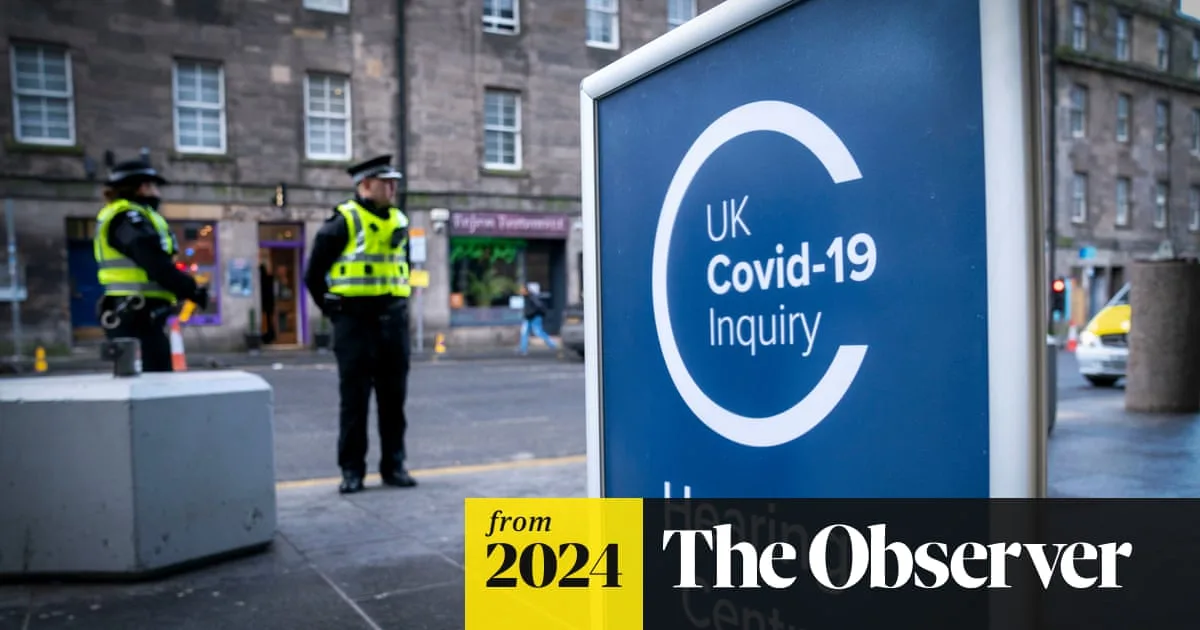
The first official report by the UK Covid inquiry is set to expose a catalogue of failures by the last Conservative government and health officials in the run-up to the pandemic. Lady Heather Hallett, the inquiry’s chair, will issue the report on Thursday and make recommendations to ensure that the UK is better prepared for any future outbreak.
The British Medical Association (BMA) has urged Hallett to reflect the “appalling failure” to supply doctors and other health workers with the required PPE. An expert report for the inquiry by medical historian Claas Kirchhelle found decisions were taken to reduce the “UK preparedness stockpiles” from 2012 onwards, including surgical masks and FFP3 respirators. The government opted for a “just in time” procurement strategy, buying respirators only after a pandemic was declared, which created greater vulnerability should supply chains be disrupted.
By January 2022, the Department of Health and Social Care had spent £12.6bn on PPE, including contracts with companies referred into a “VIP lane” by Tory ministers and officials. The BMA’s submission stated: “There is no doubt that the provision of PPE to healthcare workers during the pandemic was hopelessly inadequate.” The inquiry is also investigating procurement and is likely to make findings on the responsibility for diminished PPE stockpiles.
Lawyers representing bereaved families said there was evidence that a “high-impact newly-emergent” disease could have been predicted, but UK pandemic preparation focused on an influenza-style pandemic. Nearly 220,000 deaths involving Covid-19 occurred from March 2020 to March 2023. The bereaved families argue that austerity undermined health services, making it more likely that “even a moderate pandemic would overrun the system”.
The Department of Health and Social Care has accepted that PPE was in short supply but asserts that the UK never ran out nationally. A second report into “decision-making and political governance” is expected later this year, and the inquiry will hear evidence from September on the effect of the pandemic on healthcare systems.




