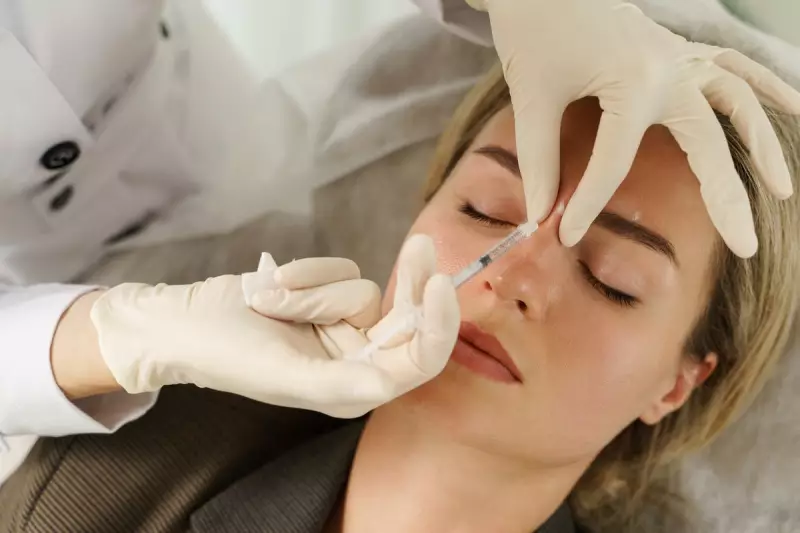
Medical experts are sounding the alarm over the potentially devastating consequences of cosmetic facial fillers, warning that incorrect injections can lead to blindness, skin loss, and stroke.
The Rising Popularity and Hidden Dangers
The demand for non-surgical aesthetic treatments continues to surge across the UK. In 2024 alone, members of the British Association of Aesthetic Plastic Surgeons (BAAPS) carried out close to 10,000 such procedures. While hyaluronic acid fillers are commonly used to smooth wrinkles and rejuvenate skin, the procedure carries significant risks if not performed with precision.
The core danger lies in accidental injection into or near facial blood vessels. This can block an artery—a complication known as vascular occlusion—which disrupts blood flow. "Vascular occlusion events in the face can be devastating," stated study author Dr Rosa Maria Silveira Sigrist, a radiologist at the University of São Paulo. "If they’re not properly treated, they can cause necrosis and even facial deformation."

Ultrasound: A Potential Game-Changer for Safety
New research presented at the Radiological Society of North America (RSNA) annual meeting highlights ultrasound as a critical tool for improving safety. A study of 100 patients with filler-related complications found absent blood flow in critical facial vessels in a high number of cases.
Dr Sigrist explained that using ultrasound before injecting allows practitioners to map the location of blood vessels, avoiding high-risk areas like those around the nose which connect to the eyes. Furthermore, ultrasound can guide the emergency injection of hyaluronidase, an enzyme that dissolves filler, directly to the blockage site. "Rather than flooding the area... we can do guided injections that use less hyaluronidase and provide better treatment results," she said.
Calls for Stricter Regulation and Qualified Practitioners
Despite its benefits, BAAPS confirms that pre-injection ultrasound is not yet standard care in the UK, though its use is growing. The association has long campaigned for tighter regulation of the aesthetic industry. "Risks like these... are one of the many reasons why BAAPS has been campaigning for a long time for increased regulation," said BAAPS President Nora Nugent.
The government has signalled plans to introduce a licensing scheme for non-surgical cosmetic procedures to crack down on unqualified 'cowboy' practitioners. A public consultation on the proposed rules is expected in early 2026. These changes would require practitioners to meet strict safety, training, and insurance standards.
The stark warnings are underscored by harrowing patient experiences. One individual, Lauren Bateman, previously described how under-eye filler administered by an unqualified person led to a severe infection and a feeling that her "face was going to explode." Her case highlights the vital importance of seeking treatment only from medically trained and qualified professionals.