
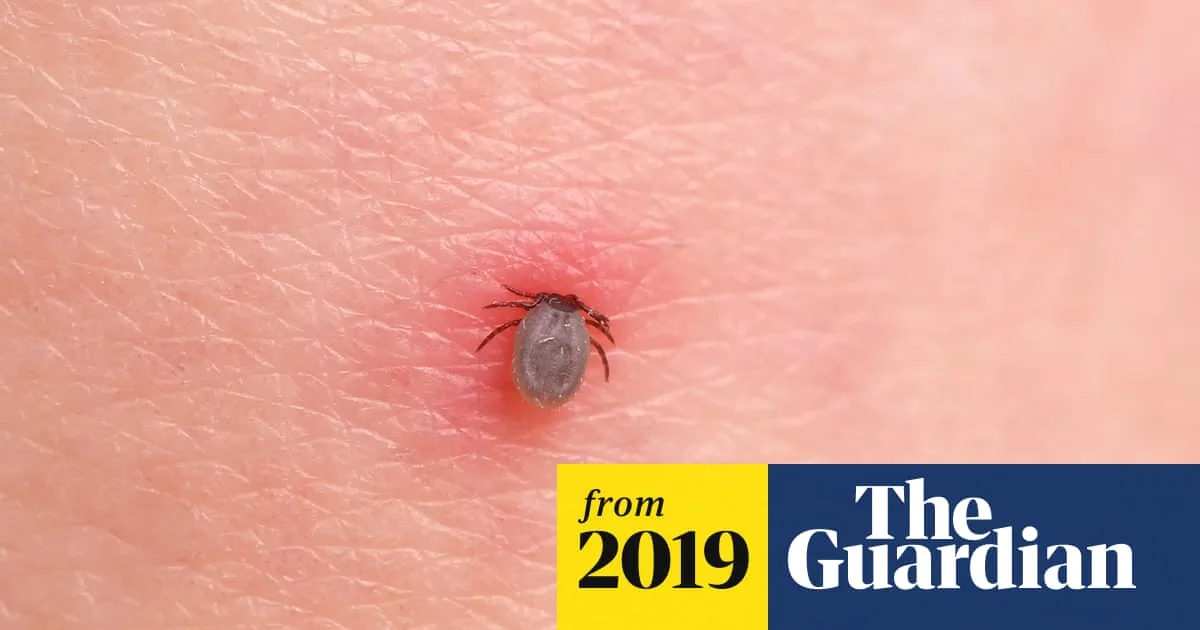
The US House of Representatives has called for an investigation into whether the spread of Lyme disease in America originated from a Pentagon experiment to weaponise ticks. The House approved an amendment proposed by Republican congressman Chris Smith of New Jersey, instructing the defence department's inspector general to review whether the US 'experimented with ticks and … insects regarding use as a biological weapon between the years of 1950 and 1975'.
The review would assess the scope of the experiment and 'whether any ticks or insects used in such experiment were released outside of any laboratory by accident or experiment design'. The amendment was added to a defence spending bill, which still requires reconciliation with a Senate version.
Smith said the amendment was inspired by 'a number of books and articles suggesting that significant research had been done at US government facilities including Fort Detrick, Maryland, and Plum Island, New York, to turn ticks and … insects into bioweapons'. A new book by Stanford University science writer Kris Newby, 'Bitten: The Secret History of Lyme Disease and Biological Weapons', cites the late Swiss-born discoverer of the Lyme pathogen, Willy Burgdorfer, as saying the Lyme epidemic was a military experiment that went wrong.
Burgdorfer, who died in 2014, worked as a bioweapons researcher for the US military and said he was tasked with breeding fleas, ticks, mosquitoes and other blood-sucking insects, and infecting them with pathogens. According to the book, there were programs to drop 'weaponised' ticks from the air, and uninfected bugs were released in residential areas to trace how they spread, suggesting such a scheme could have led to the eruption of Lyme disease in the US in the 1960s.




