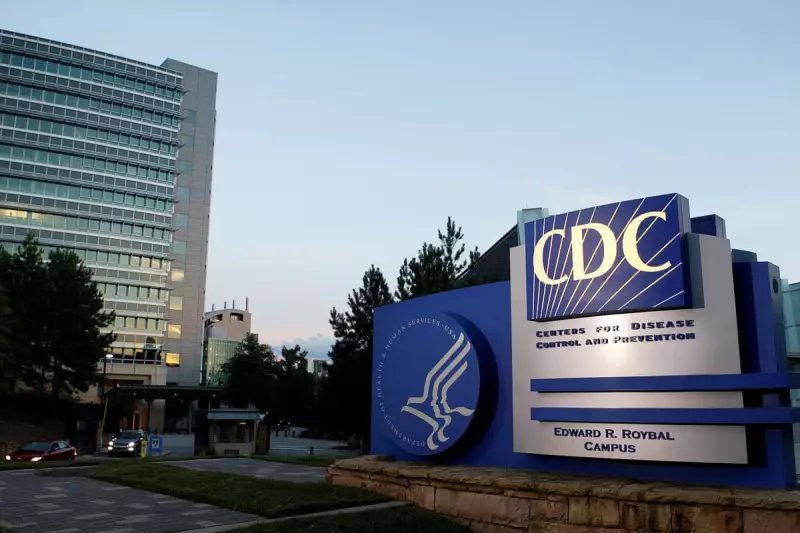
Officials at the Centers for Disease Control and Prevention have suggested that organisations receiving federal overdose prevention funding may soon be prohibited from promoting the crucial "never use alone" message, according to meeting details obtained by the Guardian. This development has sparked significant concern among public health experts who view the phrase as fundamental to reducing drug-related fatalities across the United States.
Executive Order Creates Compliance Challenges
The recent meeting was convened to bring recipients of the CDC's Overdose Data to Action funding programme into compliance with executive orders issued by the Trump administration. The most relevant directive is the July order titled "Ending Crime and Disorder on America's Streets," which explicitly prohibits federally funded "harm reduction" and "safe consumption" initiatives. The order argues that such efforts "only facilitate illegal drug use and its attendant harm," creating a challenging environment for organisations working to prevent overdose deaths.
Harm Reduction Under Scrutiny
Harm reduction encompasses a broad spectrum of interventions designed to make risky activities less dangerous, ranging from condom distribution to prevent sexually transmitted infections to providing clean syringes to reduce HIV and hepatitis transmission. In the context of drug use, it includes fentanyl test strips and the overdose-reversal medication Narcan. The "safe consumption" aspect specifically refers to drug-related interventions like sterile syringe programmes.

Professor Leo Beletsky of Northeastern University explained that the philosophy behind restricting such language is rooted in the concept of "moral hazard." He stated, "It's the idea that by making a risky activity less risky, you're encouraging people to engage in it." Beletsky added that if the threat of imprisonment doesn't deter drug use, the availability of a dirty syringe certainly won't either.
Confusion Over Permissible Messaging
During the meeting, CDC officials informed participants that any messaging that could be interpreted as encouraging drug use is now prohibited for funding recipients. When multiple officials from state and municipal health departments inquired whether they could continue promoting the "never use alone" message, they received ambiguous responses describing it as a "gray area" without clear guidance.
A spokesperson for the Department of Health and Human Services, which oversees the CDC, commented, "HHS is committed to implementing the President's Executive Orders across the Department." This commitment creates tension with established public health practices that have demonstrated effectiveness in reducing overdose fatalities.
Inconsistent Policy Implementation
Despite the executive order's general criticism of harm reduction, CDC officials clarified that Narcan and fentanyl test strips would remain permissible interventions. This contradiction has created confusion about the administration's precise definition of harm reduction and which specific practices will face restrictions.
Dr Jennifer Hua, medical director for Chicago's department of public health, highlighted this inconsistency, noting, "It's an interesting inconsistency because in some states test strips are still considered illegal paraphernalia." Chicago has witnessed the most significant improvement in overdose fatalities among major US cities, with Dr Hua attributing part of this success to fundamental harm reduction messaging.
"Our messaging has always been to carry Narcan, never use alone, check your drugs," Dr Hua explained, describing this approach as "harm reduction 101." She emphasised that providing Narcan and test strips naturally complements "never use alone" messaging, since someone experiencing an overdose requires another person to administer the life-saving medication.
Evidence Supporting Current Approaches
Dr Hua shared compelling, though anecdotal, evidence from Chicago neighbourhoods. Four out of five western Chicago areas most affected by overdose fatalities experienced significant declines in 2024. These were neighbourhoods where drug use primarily occurred outdoors. Austin, the fifth west-side Chicago neighbourhood where indoor drug use is more common, didn't show similar improvement.

"When you are overdosing outside or in public, what that means is that there's a much higher chance of someone using Narcan to help you reverse that overdose," Dr Hua observed, highlighting how environment and social context influence survival rates.
Professor Beletsky expanded on this point, stating, "Isolation is one of the key drivers of overdose fatalities, not necessarily overdoses, because people overdose and survive. Isolation in general is a major barrier to recovery, and that's why connection is really key to people's recovery process."
He described the "never use alone" message as "a message of hope and connection and support, which is absolutely critical to resolving this crisis." Beletsky expressed concern that impending changes could reverse progress, returning to "a time when things were spiraling year after year" and potentially causing "the trends to reverse again in the wrong direction."
Broader Funding and Policy Concerns
Dr Andrew Kolodny, medical director of the Opioid Policy Research Collaborative at Brandeis University, suggested that the focus on messaging language distracts from more fundamental issues. He noted that overdose and addiction prevention funding remains inadequate and is typically awarded in two-year blocks, making it impossible to establish comprehensive substance-use treatment systems.
Kolodny recalled that President Biden promised to bolster treatment infrastructure during his 2020 campaign but failed to double the nation's treatment capacity as pledged. "Under Trump, we're even less likely to see a new funding stream," he commented, adding, "There are other things I could think of that I'm more concerned about than the language in an executive order."
Harm reduction organisations have promoted take-home Narcan for decades and have been instrumental in advancing fentanyl and other test strips to help users identify dangerous contaminants. The potential restriction on "never use alone" messaging represents a significant shift in approach that many public health experts fear could undermine years of progress in reducing overdose deaths across the United States.