California Lawmakers Advance Bills to Protect Immigrant Patients in Hospitals
California legislators are pushing forward with two significant bills designed to enhance protections for detained immigrants who require hospital care. The proposed legislation aims to address alarming reports of isolation and interference by federal immigration agents during medical treatment.
Addressing Patient Isolation and Lack of Access
The bills, currently moving through the state Senate, seek to prevent Immigration and Customs Enforcement (ICE) officers from isolating patients from their families and legal representatives. This initiative follows investigative reporting by KFF Health News, which revealed that family members and attorneys often face extreme difficulties in locating and supporting patients hospitalized while in immigration custody.
KFF Health News documented instances where hospitals implemented so-called blackout policies. These practices included registering patients under pseudonyms, withholding their names from hospital directories, and preventing staff from contacting relatives to inform them of the patient's location and condition.

Key Provisions of the Proposed Legislation
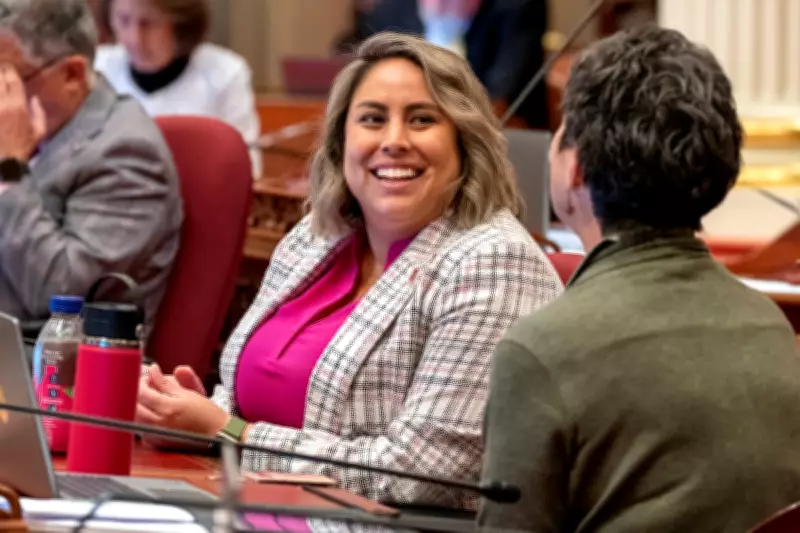
Democratic state Senator Caroline Menjivar of the San Fernando Valley introduced SB 915, which would largely prohibit the use of blackout policies for patients in immigration custody. The bill ensures these patients retain the right to have their families and others notified of their whereabouts and medical status. Exceptions would only be permitted if a healthcare provider determines the patient poses a credible risk to themselves or others, with such risks documented in the medical record. The legislation also guarantees patients the right to receive visitors.
Menjivar's bill specifically targets reports of ICE agents guarding patients in hospital rooms during medical exams or consultations, interfering with medical decisions, and pressuring for premature discharges to detention facilities ill-equipped to provide necessary follow-up care. "These are actions that have no place in health care, and it is a clear violation of the patients' rights," Menjivar stated.
Under SB 915, agents would not be allowed into the rooms of patients they bring in for care unless they can demonstrate legal authorization. If agents remain present, hospital staff would be required to ask them to leave during medical exams and patient care discussions. Refusals would need to be documented by healthcare facility personnel.
Complementary Legislation and Support
A second bill, SB 1323, authored by Democratic state Senator Susan Rubio of the San Gabriel Valley, would require healthcare providers to inform staff and relevant volunteers about policies regarding patient visitation and access. Facilities would need to post notices at entrances with information about these policies. While existing law already allows patients to consent to having loved ones notified of their hospitalization, Rubio's bill aims to ensure staff are aware they can facilitate this for patients in immigration custody.
Both bills have passed the Senate Health and Judiciary committees along party lines and are scheduled for review by the Senate Appropriations Committee. More than twenty immigrant rights advocates and healthcare workers voiced strong support for enhanced protections during a recent hearing.
"This state must do everything in its power to protect against these abuses and ensure detainees have the right to contact their loved ones when they are hospitalized and in critical conditions," emphasized Hector Pereyra, political manager with the Inland Coalition for Immigrant Justice.
Concerns from Healthcare Associations
Despite widespread support, representatives from the California Hospital Association and California Medical Association expressed reservations. They cautioned that directing healthcare workers to document agents' badge numbers and request they leave patients' rooms could potentially create conflict and pose safety risks.

"While we understand that this is an important issue, we want to ensure the bill strikes the right balance and does not create conflicting or unclear obligations for hospitals and their staff and clinicians, particularly in real-time interactions with federal officers," explained Vanessa Gonzalez, a vice president of state advocacy for the hospital association.
Tragic Case Highlights Urgency
The need for these protections is underscored by the case of Julio César Peña, a 43-year-old man with terminal kidney disease. KFF Health News reported that Peña was held at a hospital in Victorville for nearly two weeks before his attorney and family discovered his whereabouts. According to his wife, Peña was shackled to his hospital bed, guarded by immigration agents, and instructed not to disclose his location. He later suffered a seizure that left him intubated and unconscious, yet no one notified his family. Peña passed away on February 25, less than two months after being released to return home.
Advocates, healthcare workers, and lawmakers fear similar incidents are occurring across the state. Menjivar clarified that her bill "seeks to close the gap between existing law and practice by empowering health care provider entities with the tools to uphold the privacy, health, and visitation rights of a patient brought in under immigration custody."
Additional Safeguards and Context
SB 915 would further prohibit hospitals and clinics from allowing immigration officers to make medical decisions for patients or provide interpretation services. Healthcare facilities would be required to document and verify, to the extent possible, the identities of immigration officers; provide patients with access to communication tools; and inform patients of their rights. Additionally, facilities would need to develop discharge plans that include attempts to coordinate with receiving facilities, such as detention centers, to ensure patients receive appropriate follow-up care.
These bills build upon legislation passed last year that sought to limit immigration enforcement at healthcare facilities, including prohibiting medical establishments from allowing federal agents without valid search warrants or court orders into private areas. However, that previous bill did not address situations where patients are already in immigration custody.
"ICE has instilled fear in our hospitals and has kept us from doing our job," said SatKartar Khalsa, an emergency medicine resident at a safety net hospital in San Francisco who has treated detained patients and testified in support of SB 915. "This has all led to worse care for our patients and has added another layer of fear among health care workers."
The federal Department of Homeland Security, which oversees immigration enforcement, did not respond to requests for comment regarding the proposed legislation.