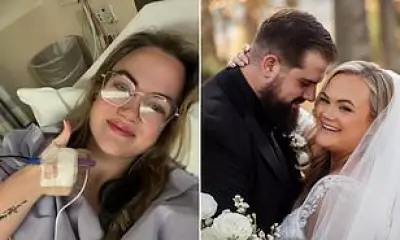
An emotional interview on BBC Breakfast left viewers deeply moved as a guest broke down in tears while discussing her husband's devastating diagnosis of an incurable illness.
Heartbreaking Revelation on Morning Television
Ryan and Kimberly Horsfall appeared on the BBC programme on Sunday, January 25th, hosted by presenters Rachel Burden and Roger Johnson. The couple shared the painful story of Ryan's recent diagnosis with Motor Neurone Disease, which came just two weeks before Christmas when Ryan was only 39 years old.
The Moment Their World Changed
Ryan described experiencing a "complete sinking feeling" upon receiving the diagnosis, comparing it to a "dark cloud" hanging over their lives. The couple's appearance included a pre-recorded report showing their family at home with their young children, accompanied by a voiceover explaining how their "beautifully ordinary life was turned on its head" by the heartbreaking news.

"With Motor Neurone Disease at this moment in time, it's just a waiting game, and you know that you are only going in one direction," Ryan told the BBC Breakfast hosts with remarkable candour about his prognosis.
Symptoms and Medical Journey
Ryan explained how his symptoms first manifested approximately three months before the diagnosis. "I was at work about three months ago, and I lost control of my left hand," he recalled. After visiting his doctor, extensive checks revealed denervation in all four of his limbs, leading to the Motor Neurone Disease diagnosis.
Kimberly became visibly emotional during the interview, expressing how the diagnosis had completely upended their lives. "The rug has just been pulled," she said through tears. "It's hard. I just wanted to take it away, but I couldn't."
Family Impact and Emotional Toll
The couple has already begun the difficult process of explaining Ryan's condition to their children. Ryan described how they "tried to do it in a way that was as gentle as possible," though he acknowledged that "it's getting a lot harder now" as the reality of the situation sets in.
Kimberly shared her profound distress, saying she felt "heartbroken" for her husband while also worrying about how the situation would affect their children. "But then of course it affects him, and I'm just heartbroken for him, but then it is the kids just come rushing into our heads," she explained, capturing the multiple layers of grief the family is experiencing.
Coping with Uncertainty
Ryan emphasised the particular cruelty of Motor Neurone Disease, noting that "there is no why" when it comes to understanding why someone develops the condition. Despite the bleak prognosis, he expressed determination to make the most of his time, saying he was "trying to get as much done as I possibly can."
Kimberly added her own poignant perspective, calling the diagnosis "just the cruellest thing" while reflecting on their initial hopes during the diagnostic process. "We wanted something to show up, obviously not being Motor Neurones, even a tumour," she revealed. "We could fight that."
Hope for Future Treatments
The BBC Breakfast report included a segment highlighting ongoing research that offers some optimism despite the currently incurable nature of Motor Neurone Disease. The programme featured Dr Gareth Wright from the University of Essex, who is involved in a project funded by the MND Association.
Dr Wright expressed cautious hope about potential medical advances, suggesting that "maybe in the next five years you can see some big developments in the way that we treat Motor Neurone Disease." He added that such developments "are going to have some big effects on patients" and that researchers remain "more than hopeful" about future breakthroughs.
Presenter's Emotional Response
BBC Breakfast host Rachel Burden appeared visibly moved by the Horsfalls' story, describing it as "absolutely heartbreaking" as the report concluded. The emotional interview served as a powerful reminder of the human impact of serious health conditions beyond the medical statistics.
The programme continues to air daily from 6am on BBC One, bringing viewers a mix of news, current affairs, and human interest stories like the Horsfalls' powerful account of facing Motor Neurone Disease with courage and honesty.