BAFTA Racial Slur Incident Sparks Complex Debate for Black Tourette's Community
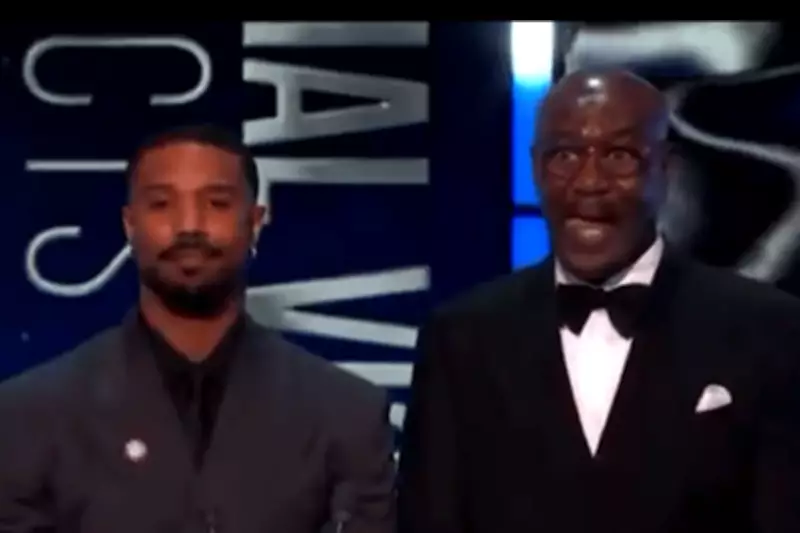
The British Academy Film and Television Arts Awards ceremony earlier this week has ignited a complex and painful conversation for Black individuals living with Tourette syndrome. During the live broadcast, a vocal tic from Tourette syndrome advocate John Davidson manifested as a racial slur just as actors Michael B. Jordan and Delroy Lindo were presenting the first award of the evening.
Clashing Realities of Disability and Racial Harm
"It's been pretty difficult because I feel like there's such a clash between both sides," explained Chloe Winston, a 24-year-old who experiences coprolalia, the same verbal tic condition as Davidson. "A tic is not intentional, but it still causes harm. And I think that does require accountability."
The incident has created what many describe as a dual reality where the involuntary nature of Tourette syndrome conflicts with the very real pain caused by racial slurs. This complexity has compelled Black people with Tourette syndrome across various professions to speak out about their experiences.

Media Responsibility Under Scrutiny
Significant criticism has been directed at broadcaster BBC for its decision to allow the racial slur to air uncensored two hours after the live event. Most major awards shows like the Oscars operate on a seconds-long tape delay specifically to prevent such incidents from reaching broadcast audiences.
Jhónelle Bean, an American Sign Language interpreter who is Black and has Tourette syndrome, created a viral TikTok video that has garnered over 3 million views addressing this very issue. "Two things can be true at the same time," Bean asserted. "Just because he ticced that does not mean it was intentional. But then also that still caused hurt or harm for people that heard it, which again is why I'm mad at the BAFTAs and the BBC for keeping it in the broadcast in the first place because they had the power to take it out."
Understanding Tourette Syndrome and Coprolalia
Tourette syndrome is a neurodevelopmental disorder characterized by sudden, involuntary movements and sounds called tics. According to the Tourette Association of America, these can range from mild to severe and potentially disabling. Dr. Jeremiah Scharf, a tic disorder specialist at Massachusetts General Hospital, explained that tics typically begin with non-specific sounds like coughing or sniffing before potentially developing into more complex vocalizations.
Coprolalia, which affects approximately 10-15% of people with Tourette syndrome, involves the involuntary utterance of obscene or socially unacceptable words and phrases. Scharf emphasized that these vocal outbursts are biological conditions that can sometimes be triggered by stress factors like insufficient sleep or emotional upset.
Advocacy and Support Networks Growing
Advocacy groups are now using the BAFTA incident as an opportunity to expand support networks specifically focused on Black individuals who feel isolated by Tourette syndrome. Reice Griffin, a 20-year-old Tourette Association of America rising leader and ambassador, highlighted the particular challenges faced by Black people with tic disorders.
"Law enforcement is not well equipped to deal with Tourette syndrome, but also historically, as a Black person, you never really want to be around law enforcement," Griffin explained, noting that people have witnessed her tics and incorrectly assumed she was using drugs or being belligerent.
Political Figures Weigh In
Jumaane Williams, New York City's public advocate who is Black and has Tourette syndrome with coprolalia, described how physically and mentally painful it can be to suppress a tic. While giving Davidson some credit for removing himself from the situation, Williams emphasized that proper care was not practiced for the Black actors and attendees subjected to the slur.
Williams also highlighted the insufficient support systems for Black people with Tourette syndrome, sharing how he frequently encounters families seeking guidance. "Sometimes in the street or an event people will bring their family member up which is always a pretty emotional space for me because when I see the kid, I know what they're going through," he revealed.

Moving Forward with Nuanced Understanding
The incident has exposed significant gaps in both disability awareness and racial sensitivity within media broadcasting. Advocacy organizations are now working to address these dual challenges while combating misinformation that could exacerbate racial profiling or discrimination against Black individuals with Tourette syndrome.
As Griffin noted about her own journey toward self-acceptance and advocacy: "I thought that because I had Tourette syndrome that, like, public speaking was out the window. If I could help another young Black girl with Tourette syndrome not feel as alone or help people get diagnosed — that's the dream."