
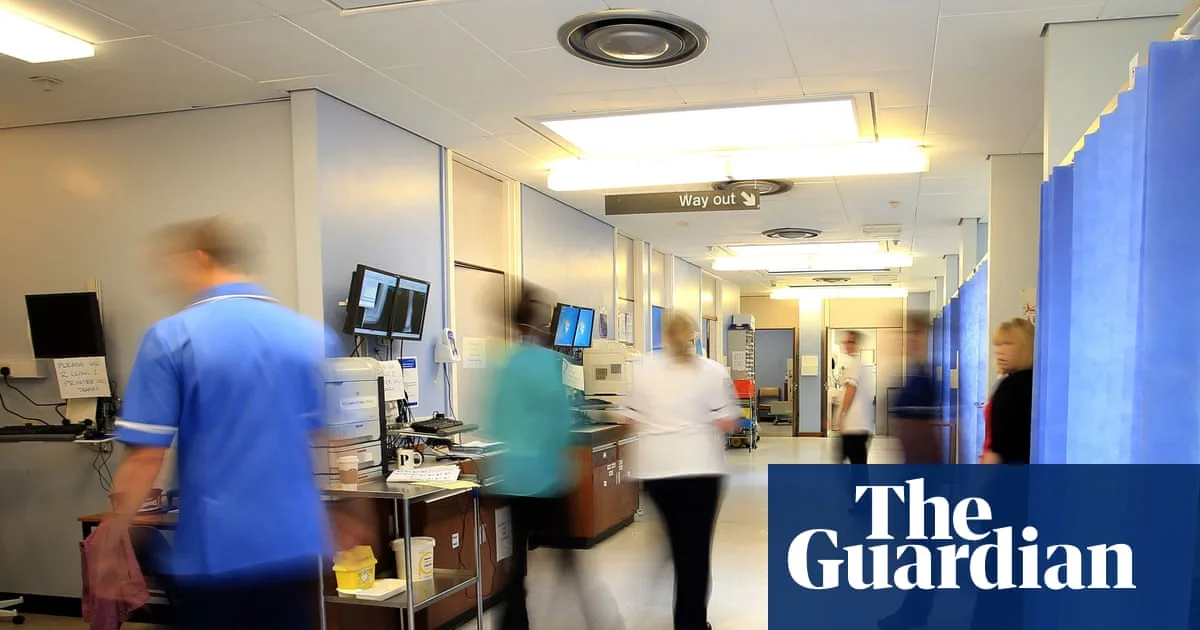
More than 1,300 patients a month in England are dying needlessly due to long A&E waits, a tenfold rise in a decade, figures suggest. There were more than 300 deaths linked to long waits every week in 2025, up from 30 a week in 2015, according to analysis by the Royal College of Emergency Medicine (RCEM).
The RCEM’s president, Dr Ian Higginson, said he wondered how many more deaths it would take before there was a meaningful plan to tackle the crisis. “We have to ask why this awful problem isn’t the subject of relentless focus and political conversation,” he said.
For its excess death estimates, the RCEM used a study of more than 5 million NHS patients published in the Emergency Medicine Journal in 2021. This found one excess death for every 72 patients who spent eight to 12 hours in A&E before being found a bed. The risk of death started to increase after five hours and got worse with longer waiting times.
Using this method, the RCEM estimated there were 15,860 excess deaths in 2025 related to long waits, down slightly on 2024 (16,644) but up nearly tenfold on 2015 (1,657). Higginson said it was heartbreaking that patients arrive in need and staff cannot do their jobs properly because departments are full.
Prof Nicola Ranger, general secretary of the Royal College of Nursing, called the death toll a catastrophe that had gone unchecked for too long, urging system-wide solutions including investment in hospital beds and the nursing workforce. Dr Vicky Price, president of the Society for Acute Medicine, described the deaths as a source of “national shame”.
The Department of Health and Social Care said it was unacceptable for patients to face long waits, noting that A&E waiting times are at their lowest level in half a decade. A spokesperson said the government is investing over £215m in 40 new same-day emergency care centres and deploying specialist teams to tackle corridor care.




