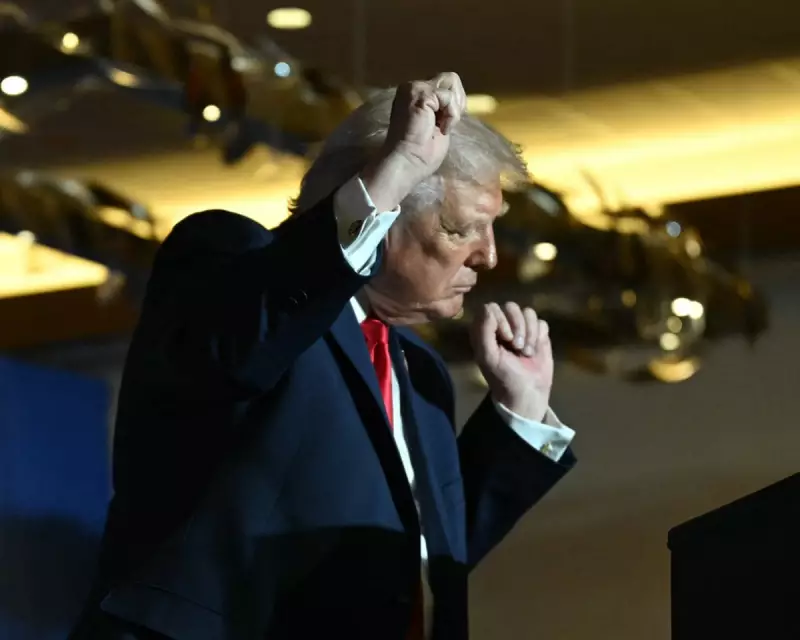
The political and medical worlds have collided once again in a heated debate over professional ethics and public commentary. This follows a recent speech by former US President Donald Trump in Pennsylvania on 9 December, which sparked widespread discussion about his presentation and competence.
The Speech That Fuelled the Fire
During his rally-style address in Pennsylvania, Donald Trump delivered what observers described as a rambling presentation. He railed against what he termed an affordability 'hoax' and launched a series of racist attacks. The event, captured in a photograph by Andrew Caballero-Reynolds for AFP/Getty Images, quickly became a focal point for media analysis and public speculation regarding his fitness for office.
Re-examining the Goldwater Rule
In response, the long-standing ethical principle known as the Goldwater rule has come under intense scrutiny. Originally established to prevent psychiatrists from issuing armchair diagnoses of public figures without direct examination, the rule is now at the centre of a critical discussion. Dr Robert Krasner, a physician with decades of health policy experience, has entered the fray with a crucial distinction.

Krasner argues that the current discourse misses the vital difference between a prohibited clinical diagnosis and a legitimate observation of publicly displayed behaviour. He points to a key clarification made in October 2024 by Dr Allen Dyer, a psychiatrist who helped develop the original rule. Dyer stated that the guideline was never intended to act as an absolute gag order on all professional commentary.
A Call for Informed Public Discourse
The core of Krasner's argument, presented in a letter to the Guardian, is that the Goldwater rule does not preclude responsible discussion of observable patterns when a figure voluntarily exhibits them on a national stage. When behaviour with potential implications for national welfare is extensively documented and publicly displayed, he contends, discussing it within ethical boundaries is not a breach of professional standards.
"We must allow medical expertise to inform public discourse," Krasner writes from New York. He believes that such informed analysis, when conducted responsibly, constitutes a valuable contribution to the nation's understanding, rather than a violation.
This debate underscores the ongoing tension between professional ethics, public interest, and the scrutiny of high-profile political figures. As the lines between personal conduct and public consequence continue to blur, the interpretation of rules like the Goldwater standard remains fiercely contested.