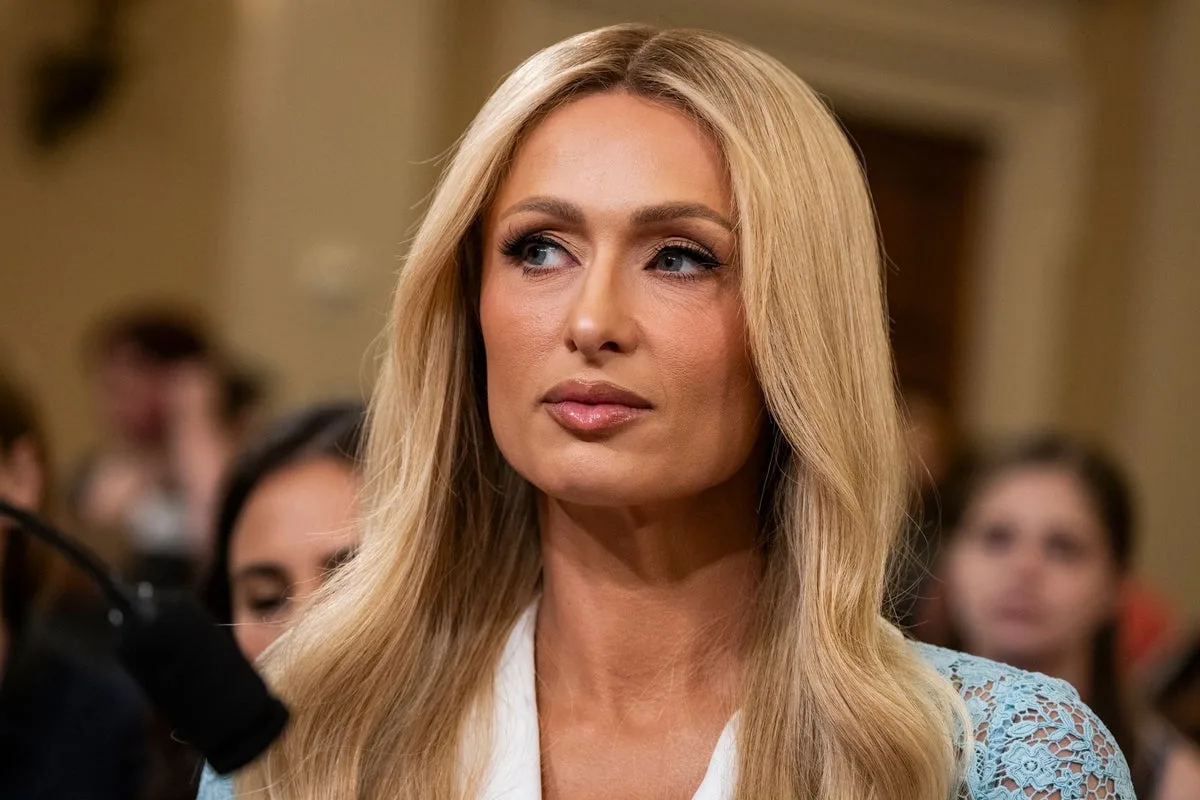
Socialite and hotel heiress Paris Hilton has spoken openly about her personal experience with rejection sensitivity dysphoria, a condition she vividly described as feeling like "a demon in your mind." The 44-year-old celebrity shared her journey during a recent appearance on The Him & Her Show podcast, hosted by Lauryn Bosstick and Michael Bosstick on Dear Media.
Understanding Rejection Sensitivity Dysphoria
Rejection sensitivity dysphoria, commonly abbreviated as RSD, is characterised by experiencing severe emotional distress in response to perceived rejection or failure. According to medical sources including The Cleveland Clinic, this condition is frequently associated with attention deficit hyperactivity disorder and may stem from structural differences in brain development.
"It's basically, like, any thought of a negative perception, if you think someone is being rude or you feel something," Hilton explained during the interview. "You will feel it like it's physical pain, and it's not even real. It's kind of just this, almost like a demon in your mind that is, like, saying negative self-talk to you."
The ADHD Connection and Late Diagnosis
Hilton revealed that she received her initial ADHD diagnosis in her late twenties, prior to learning about her RSD. She reflected on how undiagnosed ADHD affected her educational experiences, stating: "I was always so confused, and in school, it was so difficult for me. As hard as I would study, I could never remember anything. I was always failing my test. I was just always in detention, getting in trouble."
The media personality attributed her late diagnosis to historical gaps in medical understanding, particularly regarding how ADHD presents in females. "No one was talking about it when I was a teenager - especially for girls and women," she noted. "You know, everyone just would say, 'Oh, this is, like, something little boys have' ... and back then everyone always only said the negative parts about it."
Transforming Struggle into Strength
Despite the challenges, Hilton has developed strategies to manage her conditions and now views them through a positive lens. "Now I know it's not real - it's just like the RSD kicking in," she explained. "So there's so much to learn. I'm obsessed with learning more about it and spreading the message, because I want people to know that it doesn't have to be something that holds them back in life."
The entrepreneur has reframed her perspective, describing her neurodivergence as a potential advantage. "I see this my superpower, and I wouldn't be entrepreneur I am today without it," Hilton asserted. "It could be something that they can harness as a superpower, to really go for their dreams in life."
Medical Context and Awareness
While RSD remains an unofficial medical diagnosis with limited scientific research, healthcare professionals recognise its connection to ADHD. The Cleveland Clinic explains that brain structure variations may impair emotional regulation related to rejection, intensifying these responses significantly.
Medical providers typically identify RSD through described symptoms and co-occurring conditions like ADHD, though awareness gaps sometimes lead to misdiagnosis. Although RSD itself isn't considered dangerous, its association with anxiety and depression necessitates careful attention to mental health support.
Hilton's candid discussion follows her previous openness about ADHD and represents part of her broader advocacy for mental health awareness. By sharing her personal experiences with rejection sensitivity dysphoria, she joins a growing conversation about neurodiversity and emotional health challenges.