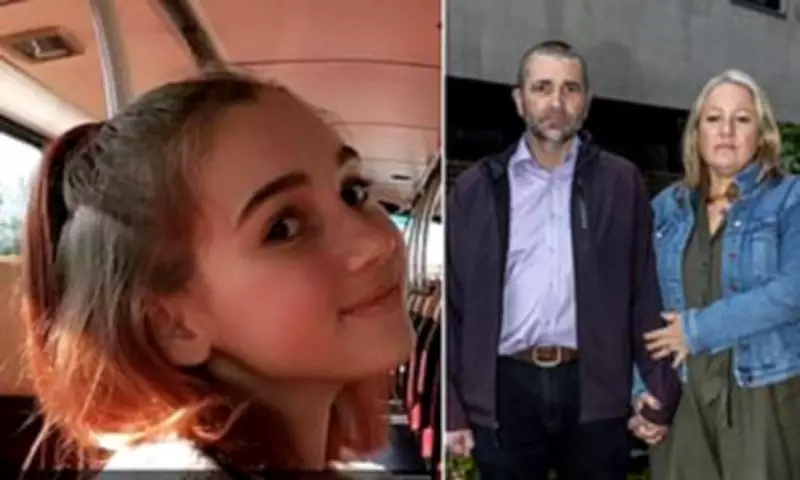
The grieving parents of a 16-year-old girl who took her own life have delivered a powerful condemnation of what they describe as 'devastating failures' within NHS mental health services, following a harrowing inquest that exposed systemic shortcomings. Ellame Ford-Dunn, from Upper Beeding in West Sussex, died after receiving what a coroner's jury determined was 'inadequate' care, plagued by 'poor communication' and a critical inability to find a 'suitable' specialist mental health bed.
A Pattern of Inadequate Care and Systemic Breakdown
The inquest heard that Ellame, who had ADHD and autism, had been in and out of mental health facilities for several years. Her struggles intensified significantly, leading to her eventual admission to Worthing Hospital in February 2022 after repeated self-harm incidents, compounded by a diagnosed eating disorder. She was initially placed on Bluefin ward, a children's acute medical ward not designed for specialist psychiatric care.
Critical Lapses in Safety and Supervision
Despite being detained under the Mental Health Act after absconding and attempting suicide, Ellame remained on the general paediatric ward under 24-hour one-to-one observation provided by an agency nurse. The jury heard alarming evidence of security lapses. Ellame had absconded 'multiple times' during her stay. Tragically, on March 20, 2022, she told an agency nurse she needed the toilet before breaking into a run out of the hospital. She was discovered an hour later in the hospital grounds and, despite resuscitation attempts, was pronounced dead.

Her parents, Ken and Nancy Ford-Dunn, fought back tears as they described their devastation. "I can't brush her hair and paint her nails and wash her clothes," Mrs Ford-Dunn told the inquest. "All we've got left is this fight - to make sure that everybody understands how badly she was failed." Mr Ford-Dunn said anger at the hospital trusts had driven him, leaving little space to grieve.
A History of Struggle and Missed Opportunities
The narrative presented to the Horsham inquest painted a picture of a young girl who enjoyed primary school but began to struggle severely upon starting secondary school in 2016. Her mental health deteriorated, marked by severe stress, self-harm, and later, anorexia diagnosed during the Covid-19 pandemic. She was under the care of Child and Adult Mental Health Services (CAMHS) and spent over 18 months in inpatient units.
In 2021, Ellame confided to her parents about being a victim of sexual abuse. After treatment at the Priory Hospital in Manchester and Chalkhill Hospital in Sussex, she was discharged in January 2022 with a care plan. However, her condition deteriorated rapidly at home, leading to renewed self-harm and suicide attempts.
Institutional Failures and Lack of Coordination
The inquest uncovered profound institutional failures. Ellame's care was split between two NHS trusts: Sussex Partnership NHS Foundation Trust (SPFT) for mental health and University Hospitals Sussex NHS Foundation Trust (UHST) for the Bluefin ward. Critically, there was no jointly agreed care plan for her while she was an inpatient. Agency nursing staff did not have proper access to patient records and lacked clear guidance on protocols, including whether to follow a patient off the ward.
The jury's narrative conclusion was damning. It cited 'inadequate' instructions to agency nurses, patient notes held on multiple inaccessible systems, inconsistent handovers, and a lack of guidance on responding to absconding. They concluded her death was contributed to by a national and local shortage of acute mental health beds and that it was 'inappropriate' for her to have been detained on a paediatric ward with inadequate security and risk assessments.
Calls for Action and Official Responses
Area Coroner Joanne Andrews stated she would be writing a Prevention of Future Deaths report to NHS England concerning the acute bed shortage for children and adolescents. UHST, which was fined £200,000 last November for failures in Ellame's care, offered a formal apology. Dr Maggie Davies, chief nurse for UHST, said: "We are deeply sorry that we were not able to protect her... general hospital wards are not the right place for young people suffering acute mental distress."

The trust claims to have made fundamental improvements, including additional staff training and stronger security protocols. Meanwhile, CAMHS officials acknowledged the delay in finding a bed for Ellame, though they noted waiting times have since reduced. For Ellame's parents, the fight continues to ensure other vulnerable children receive the care their daughter was denied.