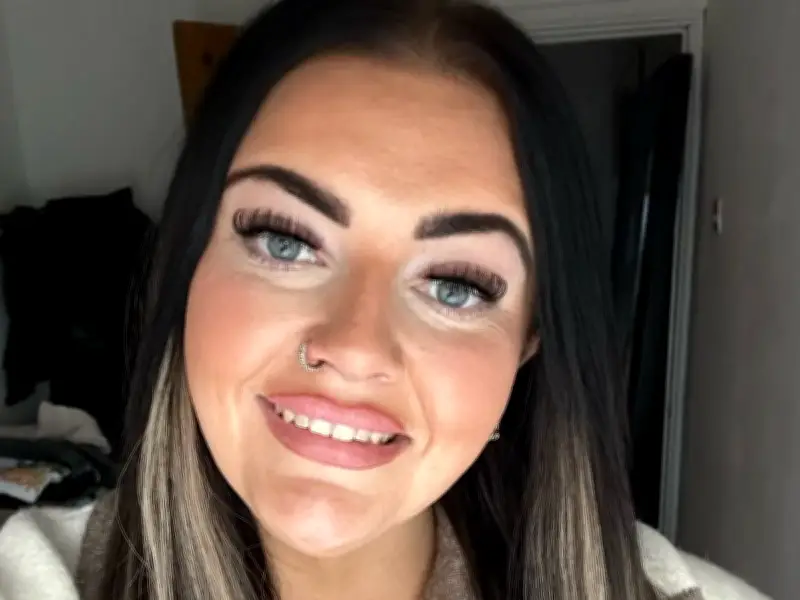
A woman from Ebbw Vale says she was given the news that she had lost her unborn baby while standing in a room full of strangers at hospital. Kacey Lukins, 28, was told she had suffered her eighth miscarriage on March 4 this year by medics at The Grange University Hospital in Cwmbran.
Kacey says she had spent hours waiting at the hospital's early pregnancy unit after experiencing discharge, repeatedly asking staff for updates because she was anxious about what was happening. She says she was eventually told she had lost her baby while standing in the middle of a room where another patient was being examined and staff were working behind a desk.
Feeling 'brushed off and sent home'
Kacey said a medical professional told her: "I am really sorry, we have got no rooms for you but your HCT is too low and you have lost your baby." Recalling the moment, she said: "I was told and everyone else in there knew as well. It was just horrible. I felt like a conveyer belt. Something happens, brush it off, move it down and I was sent home."
She says she had been waiting at the unit for around 10 to 12 hours and had repeatedly knocked on the door to ask whether somebody could explain what was happening. She said: "It was absolutely awful for me because I didn't know what was going on and obviously I'd been through this before."
History of pregnancy losses and endometriosis
The experience was particularly distressing because she had already suffered seven pregnancy losses and was hopeful that this pregnancy would be different after having surgery. She says she had been given a fertility treatment plan through the NHS and had contacted the relevant service after discovering she was pregnant on February 14.
Kacey says she was told she would be prescribed medication to support the pregnancy because of her medical history, but says she did not receive it until around 10 days after first making contact. She said she began taking the medication before noticing the brown discharge that prompted her to seek help at the hospital. Kacey said she had been so excited about the pregnancy that she had started buying baby clothes.
She said: "I was promised after my operation that my next baby would be 80% successful because before my operation it was 40%. So I thought, why not live in the bubble now? I am happy, I am excited, so I started buying stuff."
Grief and ongoing health struggles
Kacey struggled to process what had happened until she began to come to terms with her grief. She said: "It is awful. I did not actually register what happened until I started calming down a bit from grieving. It was traumatising." The loss has continued to weigh on her, particularly because her baby's due date was October 27 this year.
Kacey's pregnancy loss comes after years of struggling with severe endometriosis, a condition in which tissue similar to the lining of the womb grows elsewhere in the body and can cause debilitating pain, heavy bleeding and fertility problems. She says she first began experiencing symptoms at the age of 14, but it took 11 years to receive a diagnosis after repeatedly seeking help for the pain that affected her everyday life.
Kacey says her symptoms were often attributed to irritable bowel syndrome or heavy periods, and she was advised to change her diet. She said: "When I was actually diagnosed, I thought I'd just been fobbed off for so many years. I'd actually been living with this."
Surgery and health board response
Eventually, she underwent private surgery in June 2023 after her family helped raise money to access treatment at Spire Hospital in Cardiff. The surgery cost more than £10,000 and revealed a severe case of endometriosis. The surgery removed a significant amount of the disease, but not all affected areas could be fully examined during the procedure. Since then, she says the condition has continued to affect her life, with pain now particularly noticeable in her back.
Kacey says she has been waiting around three years for further treatment and is concerned about what the future holds for her health and fertility. She has also been diagnosed with antiphospholipid syndrome (APS), an autoimmune condition that increases the risk of blood clots and pregnancy complications.
A spokesperson for Aneurin Bevan University Health Board said: "We are deeply sorry to hear about Kacey's experiences and the distress she has endured. We recognise the profound physical and emotional impact that living with endometriosis can have, and we also understand the heartbreak and grief that can accompany pregnancy loss. Our thoughts are with Kacey and her family as they continue to cope with these experiences.
"We are particularly sorry to hear about the communication issues Kacey describes. At times when people are at their most vulnerable, they deserve to be treated with kindness, empathy and compassion. We understand how important clear and caring communication is, and we sincerely regret the additional upset that can be caused when someone's experience falls short of the standards they should expect from us."
They added: "Endometriosis is a complex condition that can be difficult to diagnose, particularly as symptoms can vary significantly between individuals and may overlap with those of other conditions. However, we recognise the frustration, uncertainty and impact that delays in diagnosis and treatment can have on patients' lives. We remain committed to improving access to women's health services across Gwent and ensuring patients receive the support and care they need.
"We are aware of the concerns Kacey has raised and these are currently being reviewed by our Listening to People team. They will be working closely with Kacey to fully understand her experience, address her concerns, and identify any learning that can help us improve the care and support we provide to patients in the future."