The chief executive of a Swedish medical technology firm whose products are used at Newcastle's Freeman Hospital has said that "no-one should die waiting for an organ" as new technology expands the pool of viable donor organs.
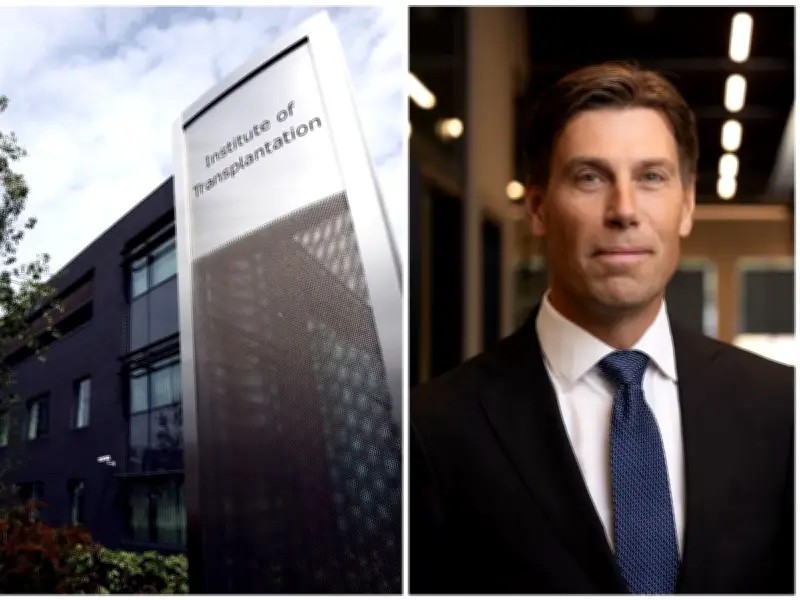
Christoffer Rosenblad, CEO of XVIVO, spoke to ChronicleLive about the company's organ preservation and evaluation technology, which is in use at the Freeman Hospital in Gosforth. The firm's products, such as the "XVIVO Kidney Assist", which was recently used for the first time in the UK at the Freeman, help prolong the life of vital organs outside of the body. This extends the time window medics have to transport a donor organ from the person who has consented to donate to the recipient.
The technology also allows for the evaluation of organs, enabling doctors to make more accurate decisions about whether a donor organ is viable for transplant. The aim is to make a wider pool of donor organs viable, as long as testing can help experts consider which ones will function properly post-transplant.
Vision to end waiting-list deaths
Mr Rosenblad told ChronicleLive: "We were founded based on a vision that simply no-one should die waiting for an organ. And so we have collaborated with scientists thinking way outside of the box. They have come up with some extraordinary ideas about how we can keep organs in good condition and what we can be doing to better evaluate them.
"[This company], it's built on the foundation that we can't accept this for patients. But today we see that the need for transplants is approximately ten times higher worldwide than when we were founded. And actually, organ usage rates are way too low."
The executive explained that the firm now has products in hospitals which help preserve viable organs whether they are a heart, a lung, a liver or a kidney. By perfusing the organs with a solution akin to oxygenated blood, the organs can survive in a better state outside of a body for longer.
Expanding the transplant window
This expands the window that transplant teams have to get a life-saving organ from one person to the next, which should increase the number of transplant operations able to take place. Mr Rosenblad said that by extending the time window, the cost of transporting organs could also be reduced.
XVIVO's technology has been used by transplant teams at the Freeman for some time. In September this year, the first UK operation using the Kidney Assist technology was celebrated by the Freeman team. The new Newcastle Organ Assessment Hub (NOAH) has been set up to use organ perfusion technology, including that supplied by XVIVO, to make more potential transplant organs viable.
In June, lung transplant patient Mark Wrenn became the first person at the hospital to have such a transplant using "ex-vivo" - out-of-body - preservation and transport of the organ. Previously, the XVIVO Heartbox saw Sanjana Kochar, then 29, receive a heart transplant back in 2023. In each case, the organ is supplied with vital oxygen and nutrients to keep it in a functional, transplantable state.
Evaluation and cost benefits
The company chief added that the technology allows the evaluation of organs, which could be especially helpful. He said: "As we are ageing as a population, so are our organs. That adds complexity and makes the choice of what is a good or bad organ [for transplant] very difficult."
Mr Rosenblad added that supporting healthcare organisations like the NHS was essential - he said: "We are working on how our products can save money for healthcare systems and can they make it so there is less burnout among transplant teams? If you can pro-long the out of body time [for an organ] you are able to save money and also ensure higher patient safety."
He said that if the time windows for transplant surgery were extended, surgeries could be planned at more appropriate times, bringing benefits for patients, medics and hospital trusts alike.
Earlier this year, the Freeman Hospital was selected by NHS Blood and Transplant (NHSBT) as one of 15 pilot sites across the country to host assessment and recovery centres (ARC). The idea behind this is to improve the quality of organs which may otherwise not be fit for transplant. The hope is that this will "significantly increase" the number of transplants possible, with NHSBT estimating it could enable up to 750 additional "life-saving or life-improving" operations.
Mr Rosenblad said that in light of the challenges facing transplant teams, in a year where NHSBT has launched an "urgent response" to falling donor rates, technology like this will boost the number of organs available for transplant and reduce those which are not used. He explained that, for example, less than 20% of donor lungs are used in transplants, and the firm's technology can improve this rate. He added: "The alternative for heart and lung patients is ECMO and being in intensive care. With kidneys it is dialysis. That is the most expensive part of most country's healthcare budgets."
As for the future of this type of technology, he added: "It's questions such as can we drill this down to help transplant teams make quicker decisions? I feel XVIVO is really on the brink of changing transplant care in so many ways. We will be making more organs available and improving patient outcomes and the costs for healthcare systems."