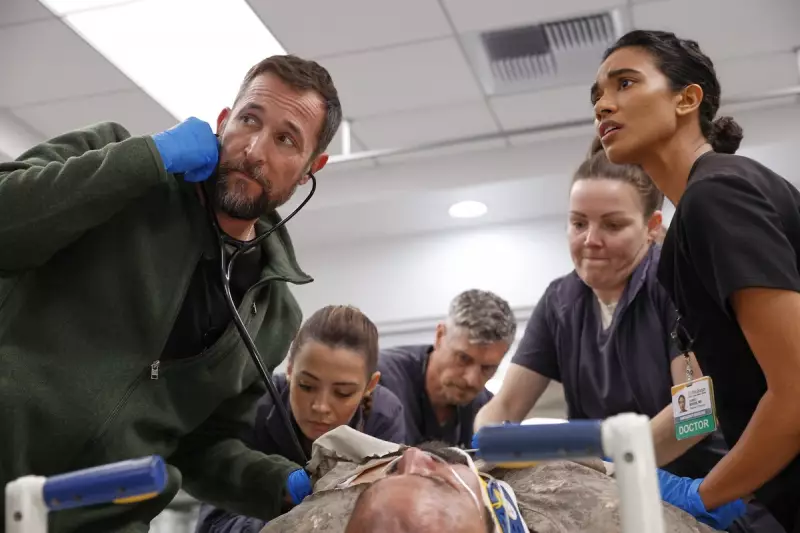
The acclaimed medical drama 'The Pitt' returns for a second season on Wednesday, 7 January 2026, promising another intense 15-hour shift for its characters and viewers. After a debut season that culminated in a mass shooting and won five Emmys, the question was whether the show could raise the stakes further. Star and producer Noah Wyle reveals the answer lies not in bigger stunts, but in deeper, more nuanced character exploration.
A Doctor's Deception: The Helmet That Isn't There
The season opens with a seemingly innocuous scene: Dr. Michael 'Robby' Robinavitch, played by Wyle, rides his motorcycle to work through Pittsburgh. He looks refreshed, but astute viewers will notice a crucial detail—he isn't wearing a helmet. This was a deliberate, last-minute creative decision.
"You're supposed to notice that he doesn't wear it," Wyle confirmed in an interview. "But then, he tells people that he does. Which means you know he's lying. We don't know what else he's lying about." The goal, he explained, was to immediately seed doubt and give the audience a secret the other characters don't share. This sets the tone for a season focused on personal flaws and hidden struggles.

Wyle emphasised the creative shift: "Our job isn't to come up with another stunt... Our job is to be faithful to the characters... and allow their lives and what they're going through to generate the drama."
Familiar Faces Return Amid Uncertainty
The narrative picks up ten months after the first season's events, strategically set around the 4th of July holiday—a time ripe for accidents and emergencies. Key characters are back, but their positions are precarious.
Dr. Frank Langdon, the senior resident with a dimpled chin played by Patrick Ball, returns for his first day after months in rehab for prescription drug addiction. His comeback is met with scepticism, particularly from Robby. Ball admitted he was "sweating pretty hard" waiting to learn his character's fate.
Similarly, fan-favourite charge nurse Dana, portrayed by Emmy-winner Katherine LaNasa, is back in charge. Her character, who left last season after a violent patient assault, returns with her signature sassy, maternal demeanour. "I think of her as like a basketball coach," LaNasa said, drawing on her own experience as a mother.
New Conflicts, Medicine, and Real-World Issues
The cast expands with Dr. Baran Al-Hashimi, played by Sepideh Moafi. She is poised to take over as chief attending while Robby plans a sabbatical, creating immediate friction due to her advocacy for AI and new technology, which Robby distrusts.
The medical procedures themselves are more complex this season. Actor Taylor Dearden, who plays neurodivergent resident Mel King, noted there's "a LOT more procedures," including a dramatic 'clamshell' thoracotomy. Her character faces a crisis as her hard-won confidence is shattered by being named in a malpractice suit.
True to its gritty roots, the season weaves in pressing real-world issues, particularly health insurance and affordability of care. Wyle, who also writes for the show, said the team consulted experts to project the "worst-case scenario" for healthcare access. "What can we put on TV that would be helpful as an informative guide?" they asked.
Doctors Make the Worst Patients
A central theme this season, according to Wyle, is that "doctors make terrible patients." Robby embodies this, advocating for his staff to use mental health resources while refusing to seek help himself. Instead, he plans a motorcycle odyssey as a form of self-guided therapy.
Wyle confessed to sharing this trait with his character. "I don't go to the doctor," he admitted. "In the same way that Robby's not going to a psychiatrist, Noah doesn't like going to doctors." This personal insight fuels the authentic, flawed portrayal that has made 'The Pitt' a standout drama, proving that sometimes deepening the conflict is more powerful than simply raising it.