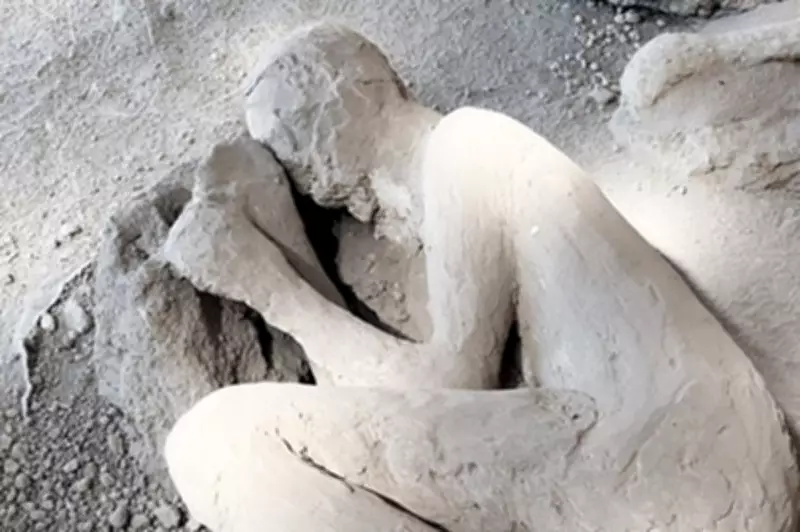
Archaeologists have identified a victim of the Mount Vesuvius volcanic eruption in Pompeii as a physician, thanks to a 'medical kit' he was clutching in his final moments. The discovery sheds new light on the identity of one of the ancient city's residents who perished in the catastrophic eruption of 79AD.
New Study Reveals Identity
In a study published recently, researchers examined the remains of a man found in the so-called 'Garden of the Fugitives,' where 13 people sought shelter during the eruption. Among his belongings was a small case that contained a drawer made of organic material with metallic elements, a fabric bag filled with bronze and silver coins, and instruments consistent with a medical set.
The kit also included a slate slab, typically used in ancient times for preparing medicinal or cosmetic substances, along with small metal instruments that may have been surgical tools.

Insights into the Final Hours
Scientists now believe the victim was a medicus, the Latin term for doctor, offering rare insights into the last hours of life during the eruption. 'This man brought his tools with him to be ready to rebuild a life elsewhere, thanks to his profession, but perhaps also to help others,' said Pompeii archaeologist Gabriel Zuchtriegel.
Dr Zuchtriegel dedicated the discovery to modern healthcare workers, stating: 'We dedicate this small but significant discovery to all the women and men who today continue to carry out this profession with a very high sense of responsibility and service to the community.'
Advanced Diagnostic Techniques
Using advanced diagnostic techniques such as CT X-ray scans supported by artificial intelligence, researchers were able to analyse the contents of the cast without damaging it. This approach allowed them to identify the medical instruments and other items.
Broader Significance
The findings open up new perspectives for studying ancient remains and highlight Pompeii as a living archive of ancient stories still waiting to be reconstructed. 'Already two thousand years ago, there were those who did not do it, limited to reception hours, but simply were, at all times, even at the moment of escape from the eruption, nullified by the pyroclastic cloud that caught the group of fugitives who tried to leave the city,' Dr Zuchtriegel added.
The discovery underscores the value of Pompeii as a site that continues to yield remarkable insights into Roman life and death.