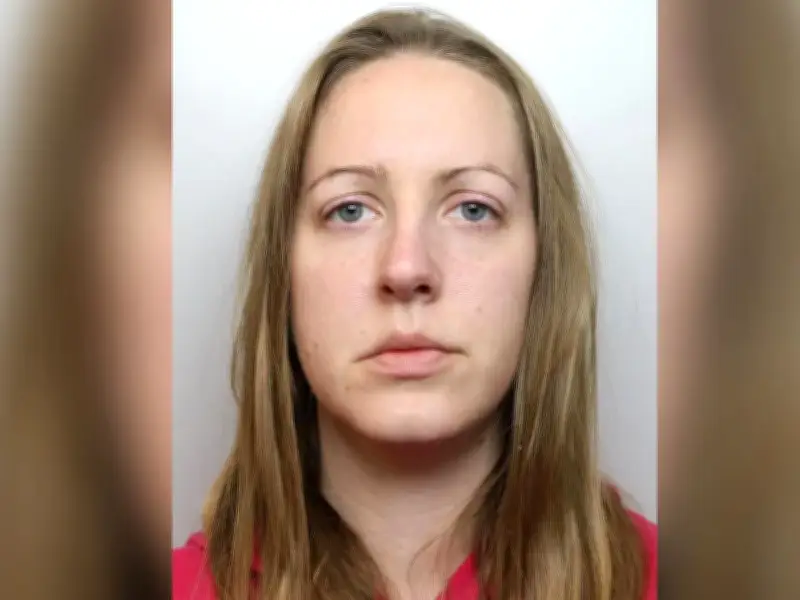
Some of serial killer Lucy Letby's baby victims could have been saved if not for the failures of "dysfunctional" senior leaders, a damning report has found. The Thirlwall Inquiry report, released today, Tuesday, found there had been a "complete failure" to protect babies on the Countess of Chester Hospital's neonatal unit because appropriate safeguarding was repeatedly ignored.
The inquiry was set up to examine what happened at the Chester hospital between 2015 and 2016, while Letby, now 36, was working as a neonatal nurse. Letby is currently serving 15 whole-life prison terms for murdering seven babies and attempting to murder seven others, including one baby she tried to murder twice, with victims from areas including the Wirral and Ellesmere Port.
The inquiry was never tasked with examining Letby's guilt. Instead, Lady Justice Thirlwall, a former Senior Presiding Judge for England and Wales, investigated how concerns about the neonatal nurse were handled and whether the hospital could have taken earlier action to stop her.

Failures of management, governance and safeguarding
In a report stretching over 800 pages, Lady Justice Thirlwall found major failings of management, governance and safeguarding at the hospital at the time Letby carried out her spree. The failures identified include that the hospital's safeguarding policy did not mention the possibility of deliberate harm by a staff member, and that senior nurses never accepted consultants' concerns were - or even might be - justified, moving quickly from "professional support to personal friendship".
Multiple reviews found there were still no explanations for several baby deaths, with the failure to call the police "impossible to defend". The handling of Letby's hospital grievance - which saw three consultants told to apologise to her and plans formulated to bring the killer back to the unit - was "deplorable". Communication with the victims' families was "dreadful", with concerns that someone had purposely caused the deaths only communicated after Letby was arrested.
Lady Justice Thirlwall said: "My report describes dysfunctional management and governance; a gulf between hospital leadership and clinicians; and failure to understand the fundamentals of safeguarding. There was a complete failure to protect babies on the neonatal unit at the Countess of Chester Hospital. This was because no-one seems to have understood that safeguarding action is required when a member of staff is suspected of causing deliberate harm and does not require colleagues to be sure of guilt."
Senior leadership criticised
Many of the chair's criticisms were focused on the conduct of the hospital's senior leadership. Lady Justice Thirlwall said: "The executives repeatedly failed in the duty of candour in their dealings with the bereaved parents, investigators, or regulatory organisations. Their behaviour was high-handed, contrary to all safeguarding principles and foolhardy."
Among those explicitly criticised was the then chief executive, Tony Chambers, who the chair found "lost objectivity and made poor decisions". Lady Justice Thirlwall determined Mr Chambers' assertion during a meeting in June 2016 that his "principal concern was patient safety" was unfounded, adding: "He made no reference to patient safety at all." Meanwhile, Ian Harvey, former medical director, "did not consider [doctors' concerns] credible," the report said. He also "sought to control the narrative", while presentations made to the hospital board were "an exercise in spin".
Lady Justice Thirlwall also found that Alison Kelly, head of safeguarding, failed to act when there was a suspicion that a baby had been harmed. She only made a referral in March 2018, long after the police investigation had begun. The report also criticised the way doctors' concerns, including from Stephen Brearey and Ravi Jayaram, were handled by senior leadership. The report found Mr Chambers' response was dictatorial, when he told them: "You will draw a line under it, and if you cross that line, there will be consequences."

Doctors' concerns and grievance
Doctors first raised an initial concern in June 2015, but from that moment there was a "them and us approach where what was needed were cool heads and reason," the chair said. "It should never have been about nurses against doctors. It was about keeping babies safe. Had that governed the approach of the managers, they would and should have sought to work with the doctors, not against them."
Letby was eventually removed from the neonatal unit in July 2016, the month after the final baby she was convicted of trying to murder collapsed, and a number of reviews were carried out as part of a hospital investigation. However, the chair found that when commissioning two of the reports, Mr Harvey did not inform the investigator about suspicions of deliberate harm. Lady Justice Thirlwall found that the fact that the investigations did not provide explanations for several of the deaths should have increased the concern exponentially.
After this, Letby filed a grievance against the hospital for victimisation and discrimination. Lady Justice Thirlwall found that evidence provided by Ms Kelly and Mr Harvey was "factually inaccurate and misleading", while the chair, Annette Weatherly, "was unfair in her approach, [and] expressed a baseless view that this was a witch hunt". The grievance report recommended disciplinary action against the doctors who had raised concerns.
Impact on families and recommendations
The most shocking report findings focused on the treatment of the babies' bereaved families. The report found parents were not told about the investigations into the deaths of their children, with four mums misled, either face-to-face or in written communications. They were also not told about the suspicions, reviews and investigations at the neonatal unit, with parents only finding out that someone was suspected of causing the deaths when Letby was arrested and police contacted them in July 2018 - more than three years on from the start of the offending window.
The report also found that several parents had been given leaflets about bereavement, but no other recognition of what they were going through. "This was not good enough," the chair said. The report detailed how consent was not obtained before medical records were shared with external experts. The chair said it would be impossible to say how many lives could have been saved had the hospital acted differently, but she found that it was clear some babies would have been saved and some attacks would have been prevented if action was taken earlier.
Lady Justice Thirlwall made a series of 17 sweeping recommendations to reform practices in the operation and supervision of NHS neonatal units. These include that all cots and incubators in all neonatal units should be fitted with baby monitors so parents can observe their baby; until access to insulin storage is controlled by biometric data, each trust should install CCTV cameras to fridges and units; and by March 2027 all hospital trusts must have effective board-level monitoring of all deaths of children and babies. Calling for urgent changes to protect babies in the future, the inquiry chair said: "This must never happen again."
The inquiry began in September 2024 and evidence concluded in March of the following year. The findings were due to be published in November 2025 but were pushed back, meaning inquests into some babies' deaths will also be delayed until May 2027. In July last year, three former senior staff at the Countess of Chester were arrested on suspicion of gross negligence manslaughter. One was later re-arrested on suspicion of perverting the course of justice in April, but no charges have been brought.
Letby, originally from Hereford, has repeatedly denied her crimes but has previously been denied permission to appeal against her convictions on two occasions. Her legal team has submitted dozens of expert reports to the Criminal Cases Review Commission (CCRC), the miscarriage of justice watchdog, regarding the safety of the convictions. The chairwoman of the CCRC, the only organisation with the power to send Letby's case back to the Court of Appeal, told the BBC this week that close attention would be paid to the findings of the report.