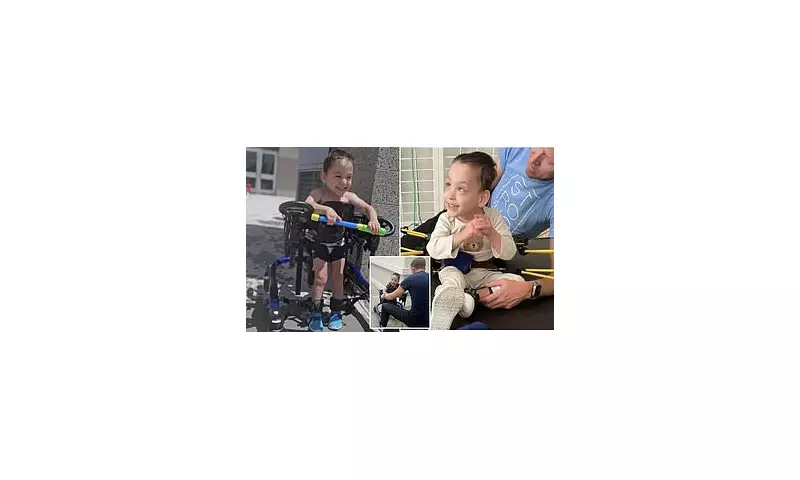
From the moment he took his first breath, Kai Reyna entered a relentless battle with life-threatening health conditions—a fight he and his parents, Tawny and Dustin Reyna, will continue for the rest of his life.
A Fragile Start and Lifelong Consequences
Kai arrived unexpectedly at just 25 weeks and six days, weighing a little over two pounds. He was immediately rushed to the neonatal intensive care unit (NICU). His parents knew survival odds were between 70 and 90 percent, but also that the risk of severe, lifelong complications was terrifyingly high.
Within his first three days, Kai suffered severe brain haemorrhages. "The skin and vessels are so fragile that even touch can send blood to the brain," his mother Tawny explained to the Daily Mail. These bleeds were later identified as the direct cause of his spastic quadriplegic cerebral palsy, the most involved form of CP, diagnosed after over 100 days in hospital.

The damage to his neural pathways results in chronic muscle tightness and involuntary reflexes that fight his every voluntary movement. His early life was a cascade of emergencies:
- A serious lung haemorrhage in his first week.
- A life-threatening bowel disease, which Tawny claims was caused by a hospital error switching his fortified breast milk to standard formula.
- A third, catastrophic brain bleed during a procedure for hydrocephalus (fluid on the brain).
To manage the hydrocephalus, doctors implanted a permanent shunt when Kai was around four months old, draining fluid from his brain to his abdomen. All this time, he was dependent on a ventilator to breathe.
The Astronomical Cost of Hope and Progress
Now four years old, Kai's daily life involves intensive therapies that leverage neuroplasticity—the brain's ability to rewire itself. The annual cost is around £100,000, almost entirely uncovered by insurance.
His regimen includes Dynamic Movement Intervention (DMI) therapy, a three-week intensive course in North Carolina alone costing $20,000, which has yielded his biggest progress. He also undergoes IASIS Microcurrent Neurofeedback (MCN), which uses low-current stimulation to balance his nervous system.
"Now he talks full sentences because of it," says Tawny. "When doctors see his imaging, they think, non-verbal kid, can't communicate. And then they see Kai, and they're like, 'Wait, how did you do that?' And I'm like, 'Neurofeedback therapy.'"
His cerebral palsy has also caused severe hip dysplasia, pulling his thigh bones 60 percent out of their sockets. To treat this, he endures two hours daily strapped into a standing board—a "torture device" according to his mother—to force his body into alignment.
A Family's Relentless Advocacy
The emotional and physical strain on the family is immense. Tawny and Dustin are constant advocates in a system they find unsupportive, all while trying to preserve their own health, their marriage, and the well-being of their daughter.
They have set up a GoFundMe to alleviate the financial strain of the cutting-edge treatments they pursue nationwide. "We're going to try anything and everything," said Dustin. "We just want him to have the most successful life, be as less in pain as possible, and be able to be independent as much as he wants and can be. We set the standard now."
Tawny adds a sobering perspective on her son's future: "He has to work hard every single day. He doesn't get a break... someday, he's going to have to choose to start lifting weights and stuff, if he can, to help build that strength up and keep his momentum going."
Kai's story is one of profound challenge, but also of a family's unwavering determination to forge a new path for his future.