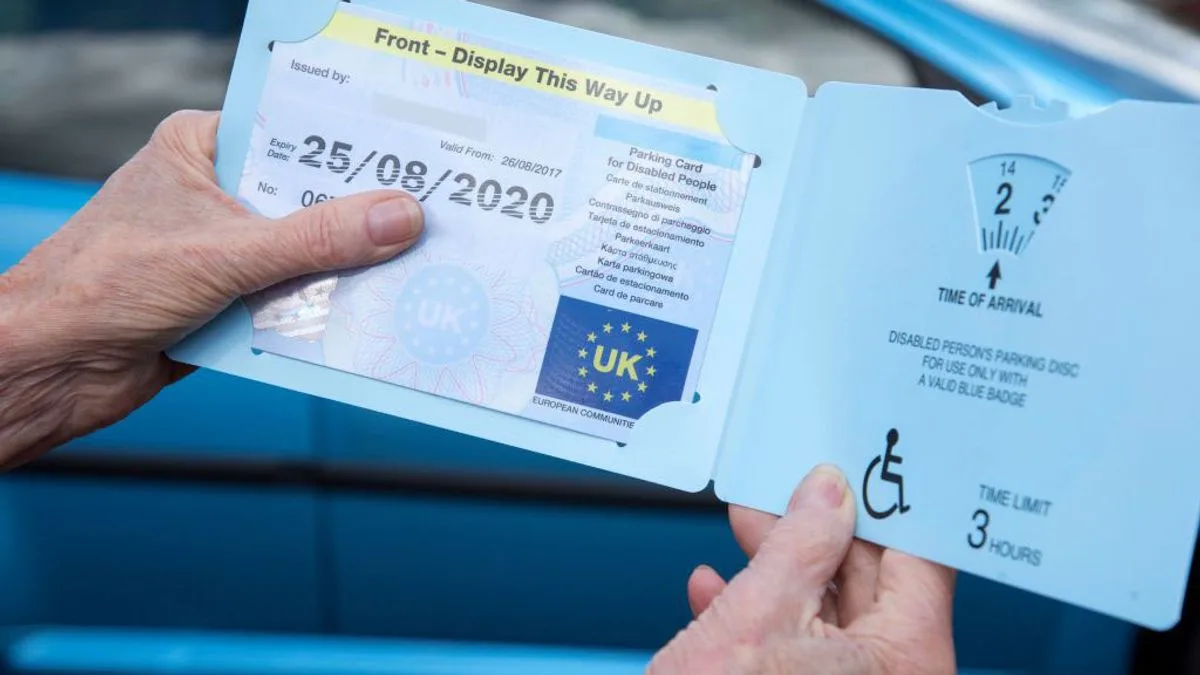
Understanding the Blue Badge Disabled Parking Scheme
The Blue Badge scheme is a vital initiative designed to assist individuals with severe mobility impairments by allowing them to park closer to their destinations. This programme provides badge holders, or drivers transporting them, with access to designated disabled parking bays, offering significant convenience and support for daily travel.
Key Benefits and Parking Privileges
Holders of a Blue Badge enjoy several important parking advantages. They can utilise disabled parking bays, often without charge, and are permitted to park on double yellow lines in many areas. Crucially, the badge remains valid in any vehicle the holder is travelling in, including taxis, as long as the badge holder is present during the journey.
Cost Variations Across the UK
The financial aspect of obtaining a Blue Badge differs across the nations of the United Kingdom. In England, the standard fee is £10, while in Scotland, it increases to £20. Notably, Wales offers the badge free of charge, eliminating this financial barrier for eligible residents.
Automatic Qualification Criteria
Certain individuals automatically qualify for a Blue Badge without needing further assessment. To be eligible under these automatic provisions, applicants must be aged three or older and meet at least one of the following conditions:
- Receiving the higher rate mobility component of Disability Living Allowance (DLA)
- Receiving Personal Independence Payment (PIP) with a score of 8 points or more under the 'moving around' activity, indicating inability to walk over 50 metres
- Being registered as severely sight impaired (blind)
- Receiving a War Pensioners' Mobility Supplement
- Having received a lump sum benefit within tariff levels 1 to 8 of the Armed Forces and Reserve Forces Compensation Scheme, with certification of permanent substantial disability causing walking inability or extreme difficulty
- Receiving the mobility component of PIP with exactly 10 points under descriptor E for 'planning and following journeys', due to overwhelming psychological distress preventing any journey
Important Note: Individuals scoring differently under descriptor E, including those with 12 points, may still qualify but must provide supporting evidence during assessment.
Assessment-Based Eligibility
For those not meeting automatic criteria, local councils conduct individual assessments. Potential eligibility exists if one or more of these circumstances apply:
- Complete inability to walk
- Requiring assistance from another person or mobility aids to walk
- Experiencing significant walking difficulty due to pain, breathlessness, or excessive time required
- Walking posing serious health and safety risks
- Having a life-limiting illness with walking difficulties and possessing an SR1 form
- Having severe disability in both arms while driving regularly, unable to operate pay-and-display machines
- Having a child under three requiring constant accompaniment by bulky medical equipment
- Having a child under three needing constant proximity to a vehicle for emergency medical treatment
- Posing significant regular risk to self or others near vehicles, in traffic, or car parks
- Experiencing severe difficulties planning or following journeys
- Having difficulty controlling actions with limited awareness of impact on others
- Experiencing regular intense overwhelming responses causing temporary behavioural control loss
- Frequently becoming extremely anxious or fearful in public or open spaces
Application Process and Timeline
Applications for Blue Badges in England, Scotland, and Wales are submitted through the GOV.UK website. Northern Ireland residents follow a separate process through dedicated government channels.
Local councils manage the entire application procedure, including eligibility assessment and fee determination. The assessment cannot commence until all required evidence is provided. Typically, the process takes approximately twelve weeks, though this may vary depending on individual circumstances and council workloads.
If an application is unsuccessful, applicants have the right to request a review if they believe all relevant facts were not properly considered during the initial assessment.
Administration and Renewal
Blue Badges are generally valid for up to three years, after which holders must reapply for renewal. Councils maintain responsibility for processing applications, conducting assessments, and establishing pricing within national guidelines.




