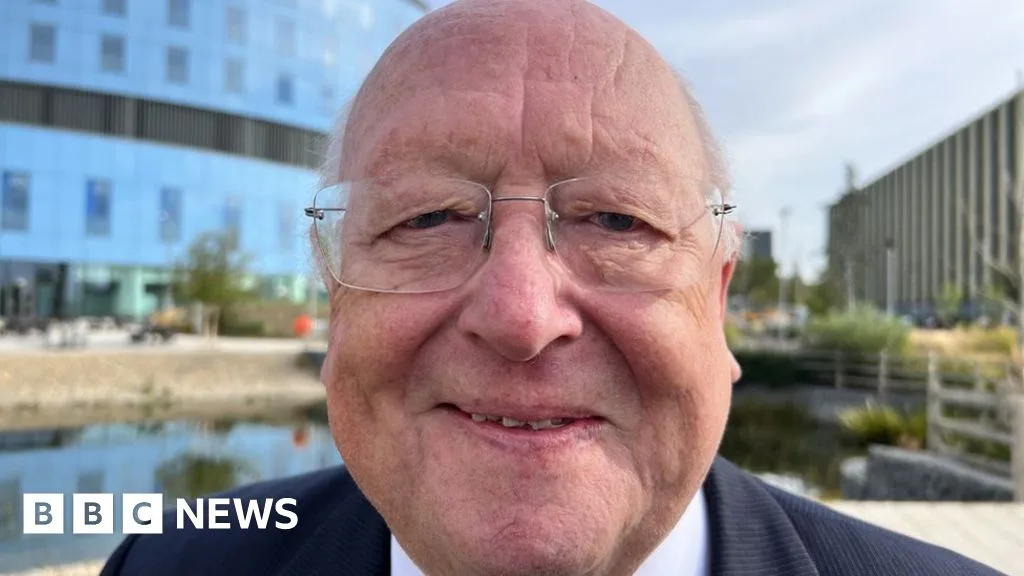
Sir Terence English, Heart Transplant Pioneer, Dies at 93
Heart transplant pioneer Sir Terence English dies at 93

The pioneering cardiac surgeon Sir Terence English, who directed the first successful UK heart transplant programme, has died at the age of 93. His groundbreaking work at Papworth Hospital in Cambridgeshire saved hundreds of lives and transformed the field of cardiac medicine in Britain.

The Pioneering Operation That Changed Everything

In August 1979, with the future of heart transplantation in the UK hanging in the balance, Terence English prepared to operate. The cardiac surgeon knew failure would not only be a tragedy for his patient but would likely end his vision for a sustainable transplant programme at Papworth. "I very much had my back to the wall. I had a shot and I was going to take it," he later recalled. That shot, on builder Keith Castle, was a resounding success. Castle lived for nearly six more years, becoming a powerful ambassador and helping to shift public and medical opinion.

This triumph followed an earlier setback in January 1979, when patient Charles McHugh died from brain damage after a cardiac arrest before surgery could begin. The success with Castle proved pivotal. It came after years of preparation and struggle against significant scepticism.

Overcoming Skepticism to Build a Legacy

The road to that historic operation was long. After Christiaan Barnard's first human heart transplant in 1967 and a few unsuccessful attempts in the UK, a government moratorium was placed on the procedure in 1973. English, who had trained under Donald Ross in London, was determined to revive it. He joined Papworth as a consultant cardiac surgeon in 1973 and made several research trips to learn from world leader Donald Shumway in California.

A key breakthrough came in 1976 with the formal UK recognition of brain death, improving organ viability. Despite this, when English and his team requested permission to begin a transplant programme in 1978, the Department of Health's advisory panel refused. Undeterred, English found a sympathetic ear in Pauline Burnet, chair of the Cambridge area health authority, who agreed to fund two trial operations.

The success with Keith Castle changed everything. Hostile media narratives framing transplants as a "surgeons' vanity project" began to fade as pictures circulated of Castle living a full life. The National Heart Research Fund agreed to fund six more operations, and the programme grew rapidly. By the end of 1989, English had performed 342 heart transplants. He was knighted in 1991 for his services to medicine and surgery.

A Life of Adventure and Advocacy

Born in Pietermaritzburg, South Africa, in 1932, Terence English's path to medicine was unconventional. After initially studying civil engineering and working as a diamond driller, a family legacy of £2,000 enabled him to travel to London to study medicine at Guy's Hospital. He qualified as a doctor in 1962.

His career included prestigious roles as President of the Royal College of Surgeons (1989-92), President of the British Medical Association (1995-96), and Master of St Catharine's College, Cambridge (1993-2000). Yet, he remained driven to make a difference beyond establishment circles. In his 70s, he worked passionately in conflict zones, supporting medical aid in Palestine and Pakistan through charities like Medical Aid for Palestine. In his final decade, he was a patron of Dignity in Dying, advocating for the legalisation of physician-assisted dying.

English retained a spirited, adventurous character throughout his life. A lover of cars, he once bought a 1930s Rolls-Royce as a student. In retirement, he climbed Kilimanjaro at 70, drove from London to Cape Town, and traversed India and China in his Toyota Land Cruisers. He famously joined a Christmas Day sea swim in Cornwall at the age of 85.

Sir Terence English is survived by his second wife, Judith, his four children Katharine, Arthur, Mary, and William, eight grandchildren, and his sister Elizabeth. His legacy is the thriving heart transplant programme he founded, which continues to save lives at the Royal Papworth Hospital today.




