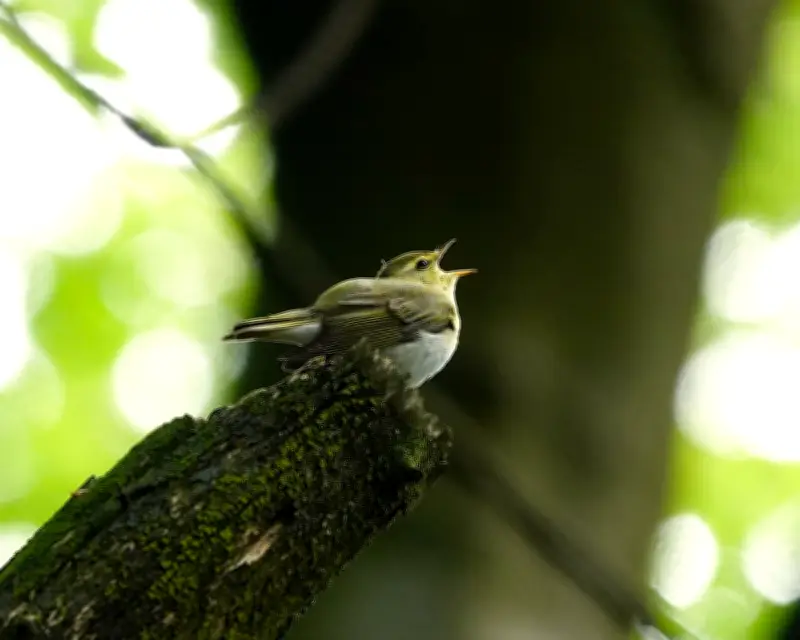
A wood warbler has been spotted in Buxton, Derbyshire, for the first time since 1979, marking a bittersweet return for a species that has seen its British numbers collapse by 82%. The bird, observed throwing its head back in song, was last recorded in this exact location half a century ago.
Signature Bird of Schooldays
The wood warbler holds personal significance for the observer, who recalls the species as a highlight of schooldays when a pair bred annually in nearby Lightwood. The birds were widespread at other local sites, always special even if taken for granted. More often heard than seen, the song is described as a hard, brittle repeat note that increases in pace and volume, swelling to an exhilarating trill. The full impact, however, requires witnessing the delivery: head thrown back, pink bill agape and pointing skywards, often translucent against sunlight, with lemon breast thrust forward and long wings shivering as the sounds emerge.
Pattern of Decline
The absence since 1979 fits a broader pattern of British decline, with the wood warbler's range withdrawing northwards and numbers plummeting by 82%. In contrast, Poland's 9 million hectares of woodland—three times the UK's total—hold a million pairs. The return of an individual to this precise location raises questions and evokes melancholy joy.
Journey of Vulnerability
The late-singing bird, whose kind normally arrives in early May, likely failed to find a mate at a previous location in Herefordshire or Wales. It then moved, probably at night, flying across unknown, treeless, chemically controlled terrain unsuitable for a wood-dwelling bird. It may have passed over at a kilometre above ground until some mysterious cue brought it down to the exact place where other wood warblers had sung and bred 50 years before. This feat by a bird weighing just 10g, having already arrived from west Africa, speaks of extraordinary resilience and deep vulnerability.