
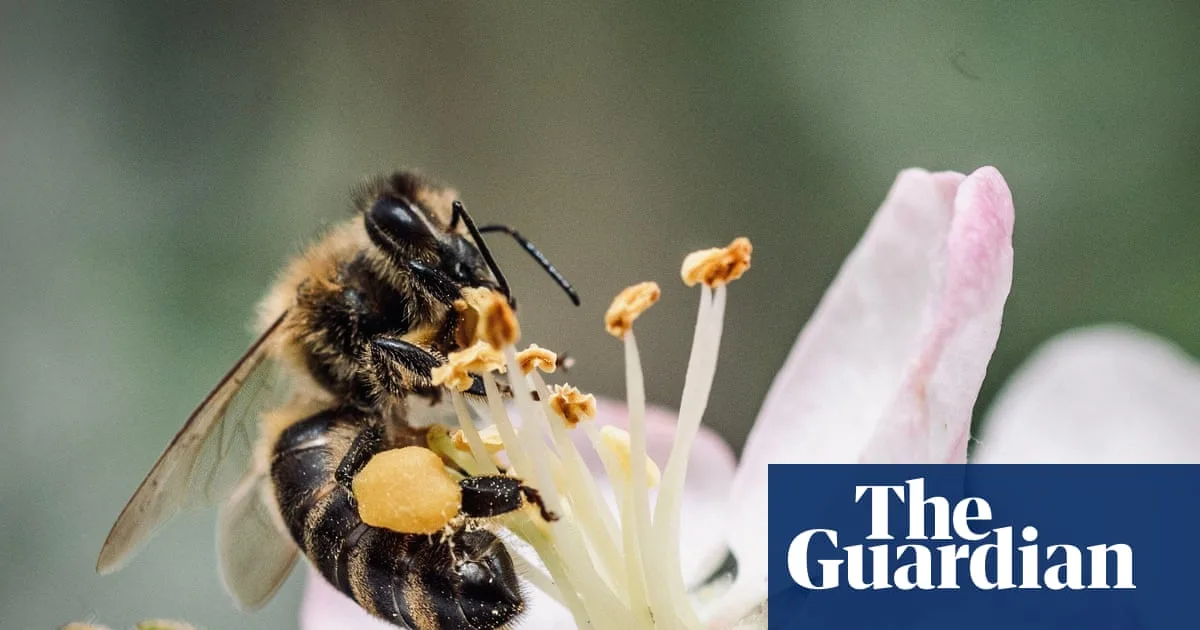
Every summer, 1,000 virgin queen bees descend on the Belgian town of Chimay for a unique mating ritual known as the 'wedding flight'. During this event, a male bee attaches to the female, his endophallus is torn off, and he falls to the ground and dies. Beekeepers then collect the fertilised queens and transport them back to their hives, sometimes over 300km away, to build new colonies in the Netherlands, France and Germany.
The annual pilgrimage, which began in 2000, aims to spread the genes of the endangered European dark bee (Apis mellifera mellifera), the native subspecies of the honeybee. Conservationists argue it is the only subspecies that should be present in the region. Beekeepers can reserve a place at the Maison de l'Abeille Noire (dark bee house) for a two-week visit, during which young queens mate with up to 20 males, collecting millions of sperm that can last for several years.
Hubert Guerriat, a Belgian beekeeper and biologist who has worked with dark bees for 40 years, compares the difference between farming dark bees and hybrid honeybees to looking after a Scottish highland cow versus an intensive dairy cow. 'They are not the same animal,' he says. Dark bees were widespread in northern, central and western Europe for thousands of years, but their numbers declined in the mid-20th century as beekeepers imported hybridised bees that produced more honey, causing 'irreparable' damage to the native population.
Today, dark bee populations are extremely fragmented, clinging on in parts of Scandinavia, France and Spain. They were thought extinct in the UK but were rediscovered just over a decade ago. Guerriat's organisation, Mellifica, brings together dark bee keepers from across Europe, and he personally breeds hundreds of queens annually. In 1983, he created a beekeeping school to train local keepers, and now a 30,000-hectare protected zone covering Chimay and Momignies only allows dark bees.
Beekeepers like Isabelle Noé, a cheesemaker with over 100 hives, produce less honey than those using hybrid bees, but face fewer losses and lower inputs. Last year, Noé produced a tonne of honey, selling 250g pots for €4.50 (£3.90). Other products include lip balm, candles and throat syrup. Guerriat argues that switching to native subspecies is 'the only way to get closer to more sustainable beekeeping', warning that 'all the beekeepers who use foreign bees contribute to the disappearance of the native bee'.




