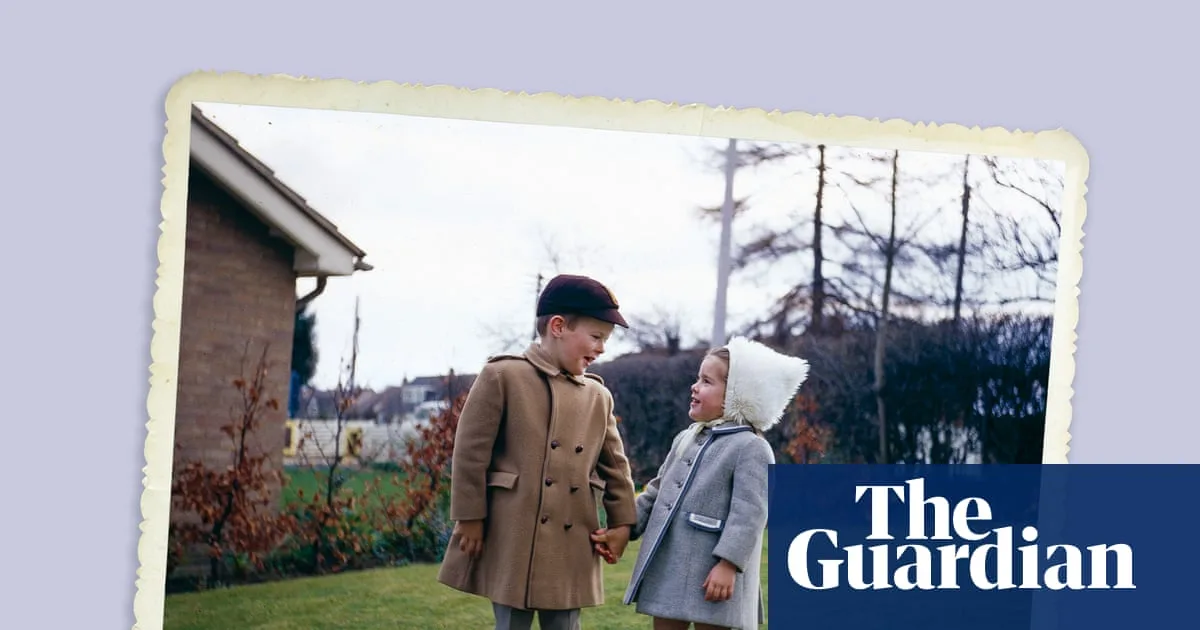
Mark Haddon's Blistering Memoir: A Painful Journey Through a Loveless Childhood
Mark Haddon's Memoir: A Painful Childhood Journey

Mark Haddon's Blistering Memoir: A Painful Journey Through a Loveless Childhood

Mark Haddon, the celebrated author of The Curious Incident of the Dog in the Night-Time, has unveiled a deeply personal and blistering memoir titled Leaving Home. This powerful work delves into the author's predominantly miserable and affection-starved childhood, while also exploring the complex nostalgia he feels for that formative period. The memoir provides readers with an unflinching look at the upbringing that fundamentally shaped Haddon's creative vision and personal struggles.

The Raw Material of a Difficult Upbringing

Haddon's childhood was marked by a near-total absence of love and affection, with his mother frequently withdrawing from family life—either to bed or to drink—creating a persistent atmosphere of emotional undermining. This raw material from his early years has proven vitally important to his literary work, serving as the foundation for many of his creative explorations. The memoir reveals how Haddon has transformed these painful experiences into various artistic expressions throughout his career.

In his breakthrough novel The Curious Incident of the Dog in the Night-Time, published in 2003, Haddon created a teenage protagonist who struggles to communicate with the world around him while uncovering a world of deceitful adults. The character discovers he has been falsely told his mother died rather than learning she absconded with a neighbour, ultimately leading him to run away from home. This theme of domestic disruption and emotional betrayal clearly resonates with elements from Haddon's own childhood experiences.

Wide Pickt banner — collaborative shopping lists app for Telegram, phone mockup with grocery list

Creative Elasticity and Artistic Expression

What proves particularly fascinating in Haddon's memoir is the variety of creative modes he employs to achieve what might be described as artistic elasticity. His work moves between strikingly plain reportage that asserts "this happened" and flights of fancy often rooted in classical mythology, with its possibilities of shape-shifting and transformation. The memoir makes clear that Haddon is as interested in visual images as he is in words, featuring hundreds of illustrations throughout its pages.

These visual elements range from wincingly explicit photographs—such as those showing his elderly mother's open foot wound or the scars from his own heart bypass surgery—to puckish collages and phantasmagorical paintings and sculptures. Haddon's work, whether verbal or visual, functions as a kind of reclamation yard for his experiences. One particularly telling cartoon depicts a rugby-playing father rebuking his weeping son with the words "I have sired a weakling child," beneath which runs the son's riposte: "But he will draw pictures of you when you are DEAD HAHAHAHA HA-HA-HA-HA-HA-HA."

Connections Between Life and Literature

The memoir reveals numerous connections between Haddon's personal experiences and his literary creations. His more recent novel The Porpoise opens with a fatal air crash before morphing into a reworking of Pericles, while in Leaving Home we discover that Haddon himself is terrified of flying. Similarly, the author borrowed heavily from childhood holidays in Brighton to create the atmosphere and texture for his story The Pier Falls, a merciless, documentary-style narration of a cataclysmic seaside disaster.

Haddon does not shy away from confronting his ongoing struggles, including incidents of self-harm that occurred as recently as 2024. The memoir includes a photograph of a newly sutured arm alongside a doodle of a dog with a bleeding forepaw and the caption "And what, precisely, is this going to solve?" Opposite this, matter-of-fact paragraphs describe Haddon's visit to A&E after deliberately cutting himself, though he claims he "accidentally" chose a new scalpel "instead of the scissors I might normally use" and went too deep. He explains that he cuts when "uncontrollably angry" with himself, with calm returning quickly and leaving him feeling "embarrassed" and "apologetic" toward hospital staff.

Pickt after-article banner — collaborative shopping lists app with family illustration

The Question of Recovery and Nostalgia

A central question posed by the memoir is whether one can recover from—or even avenge—an unhappy childhood by dismantling and remaking it differently in adulthood. In one demonstrable sense, Haddon has achieved remarkable recovery: he has built a successful life in literature, established his own family, and maintained a strong continuing bond with his sister Fiona. Alongside the evident joy he finds in acts of creation, personal relationships, and activities like running, there remains damage that the book suggests he needs to examine, catalogue, and somehow fix in place.

Perhaps most intriguing is Haddon's confession of feeling nostalgia—a sense of longing for the sights, sounds, smells, and artefacts of the 1970s—that both grips and confuses him given his difficult childhood experiences. One answer to this paradox, as presented in the memoir, is to channel those thoughts and feelings into creative work like Leaving Home, which serves as an incredibly detailed, painful, funny, horrifying, and exhilarating record of how to live beside what has happened.

Leaving Home: A Memoir in Full Colour by Mark Haddon represents a significant contribution to contemporary memoir writing, blending raw emotional honesty with sophisticated artistic exploration. The work stands as both a testament to survival and a complex meditation on memory, creativity, and the enduring impact of childhood experiences.