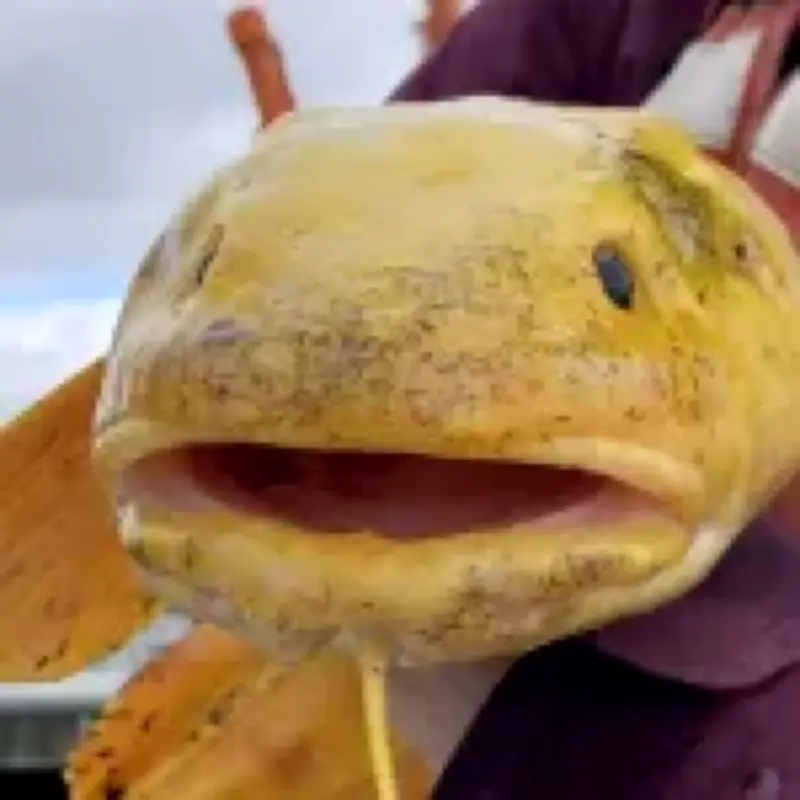
Wildlife biologists have made a 'one in a million' catch: a bright yellow fish. The colourful discovery was made during a routine survey in Oswego Harbour, New York.
The burbot (Lota lota), a native freshwater species, was found to have an unusual genetic condition known as xanthochromism, which gives it a striking yellow-orange appearance.
Routine survey catches rare specimen
The fish was caught last month by biologists from the US Fish and Wildlife Service (USFWS) during an Aquatic Invasive Species Survey. The USFWS uses a range of methods to monitor fish populations in Great Lakes harbours, rivers and coastal inlets, including electrofishing, fyke-netting, gill-netting and environmental DNA (eDNA) analysis.
The discovery, described as a 'one-in-a-million' find, is particularly significant because burbot populations in the lake are extremely low. The species also tends to inhabit deeper, colder waters than those found in Oswego Harbour.
First documented harbour detection
It is the first documented detection of a burbot during a fisheries survey in the harbour, although a small number of catches by anglers have previously been reported. The fish's unusual colouring makes the find even more remarkable.
Xanthochromism is a rare biological condition caused by a genetic mutation that suppresses normal pigmentation, resulting in a yellow-orange appearance. The condition is considerably less common in wild fish than albinism or melanism. However, biologists from the US Geological Survey (USGS), who were familiar with the species, noticed that the fish appeared emaciated and in poor health when it was examined.
Health assessment and conservation hopes
Given its condition and the unexplained factors behind the continued decline of the burbot population, the fish was sent to Cornell University's College of Veterinary Medicine for a health assessment. Researchers hope the discovery could also prove beneficial to the species.
The exceptionally rare specimen may provide valuable information about the health of burbot populations across the Great Lakes basin, helping scientists develop measures to support the species and inform future conservation efforts.