Martin Lewis has advised UK households on the minimum temperature to set their thermostats as the country experiences its coldest autumn days, with the Met Office predicting nighttime temperatures of -4C to -6C.
Cold snap and energy price cap rise
The UK has seen the coldest days of the autumn in the last week, and the Met Office is forecasting overnight temperatures from -4C to -6C. Chris Bulmer, Met Office Chief Forecaster, said: "The UK forecast has moved to a colder phase with the daytime temperatures for most locations likely to stay in single figures. Overnight temperatures on Friday night will dip again to -4 or even -6 C in some locations, meaning another significant ground frost for many locations."
The Ofgem Energy Price Cap currently stands at £1,723 per year for a typical dual-fuel household paying by Direct Debit (October 1 to December 31, 2026), a 4% (£60) increase from the previous quarter driven largely by high Middle East wholesale gas prices. Forecasts warn that the cap could jump by roughly 27% to 29%, taking the typical annual bill toward £2,187 to £2,215 from January 2027 onward if wholesale pressures persist.
The 'one degree challenge'
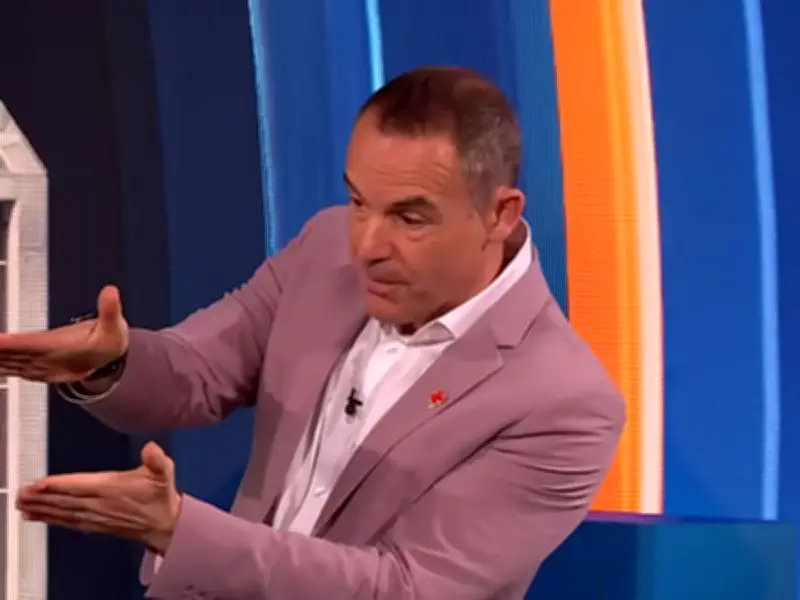
On his Money Show Live on ITV this week, Mr Lewis said people facing massive bill rises should consider carrying out the 'one degree challenge'. He said health officials say that people should set the thermostat at 18C, but lots of Brits want it higher.
Mr Lewis said: "Take my one-degree challenge. It doesn't sound very much. The World Health Organization says for a healthy adult, you can set the thermostat at 18°. Most of you are far higher than that. Obviously, if you've got a medical condition or older people, you'll want it to be higher. But if you were to drop, say, from 21°C to 20°C, that could cut your heating bill by 7%.
"I am not telling you to do it. I'm telling you to experiment and see whether you can really notice a difference. So maybe you put a little bit more clothing on while you're doing it on the top. Also a little note because people often contact me: if it's cold outside, lots of people turn the thermostat up. The thermostat's job is to take your house to a set temperature. You don't need to turn it up. Let the thermostat do its work for itself."
Heating all day or at set times?
Martin and two energy experts also settled the age-old argument - is it better to leave the heating on all day low or blast it at certain times? On his Money Show Live this week he spoke to Prof Richard Fitton, Technical Director, Energy House Labs.
Mr Lewis told viewers that there are some guidelines around from the Energy Savings Trust. He said: "The Energy Savings Trust default setting is that you have your heating on from 7am to 9am in the morning. This is for people who go out to work during the day, not people who are staying at home all day.
"You have your heating on from 7am to 9am in the morning and then you have it on from 4 to 11 at night. And that should keep the fabric of your house going. And generally the rule is you only pump heat into your house when you need it. And then you don't put it on when you don't need it and you pump it on again when you need it. Now we get to the baboons, the big buts.
"It depends on a number of things. The weather that the type of building, if you've got a big heavyweight house with lots of thermal mass, and that might be a solid brick Victorian terrace for instance, that kind that will store heat and that will act as a battery for heat. Whereas, if you have a very light lightweight or modern house, made of timber frame for instance, that will heat up really quickly but won't necessarily store the heat."
Martin clarified: "So the first one you have it on low all day?" Prof Fitton replied: "They can work in different ways but I think that's probably an easier challenge for that house."