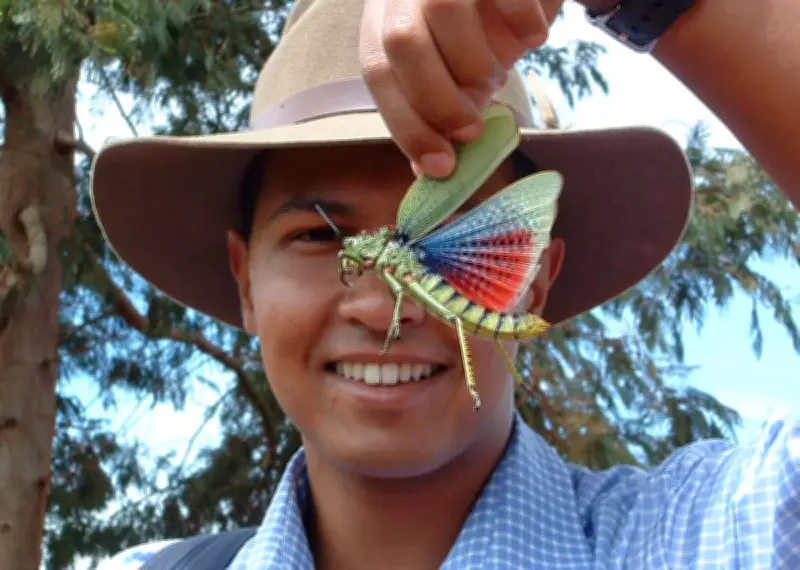
Award-winning entomologist Dino Martins, known for his work on pollinators, argues in his latest book that even the most gruesome parasites have vital roles in ecosystems. Hidden Creatures: Luscious Leeches, Bashful Botflies and the Wondrous, History-Shaping World of Parasites, published this month, draws on his personal encounters with parasites in East Africa, New York, Borneo and London parks.
From childhood wonder to scientific mission
Martins grew up in biodiversity-rich western Kenya with his foster parents, Joe and Sarah Ellen, observing birds, flowers and insects on Mt Elgon, in Kakamega forest and Kerio valley. He was especially captivated by dung beetles, safari ants, and butterflies. “We had no television, so I learned to look at the creatures around me. Insects were the easiest to find,” he says.
The Royal Entomological Society estimates 1.4 billion insects exist for every person, making up to 90% of all animal species and over half of all living things. “Throughout our lives, we are never more than a couple of feet from an insect, yet we ignore them,” Martins notes.
Parasites as ecosystem linchpins
As a child, Martins raised caterpillars only to discover one had been parasitised by wasps that laid eggs inside its body, fed on it while alive, and burst through its skin to form cocoons. “This made such an impression on me,” he says. “No ecosystem or habitat exists without parasites. Their presence is an indicator of a healthy, complex biodiversity.”
Martins, who chairs the insect committee of Nature Kenya and is a research professor at Stony Brook University, argues that parasites are central to biodiversity and extinction. Their ability to move between hosts and hijack immune systems offers insights for novel therapies.
Human health and the hookworm arms race
In Hidden Creatures, Martins writes that one in three people serve as hosts to some parasitic nematode at any given time, including hookworms “that have sex frequently and vigorously” in our intestines. He suggests some exposure to parasites can strengthen immunity, and that complete eradication may have unforeseen consequences.
Human efforts to eradicate hookworms have been futile despite deworming drugs like albendazole, as reinfection occurs from contaminated soil. No approved vaccine exists, but several candidates are in trials, notably one by the Sabin Vaccine Institute. However, Martins warns that any vaccine “will still be subject to evolutionary processes,” leading to a long-term arms race.
Intersection of food systems and parasite spread
Martins argues that global dietary shifts have increased parasite spread. Fish farming creates unnatural densities where parasites thrive, while crowded livestock operations transport parasite-laden effluents into water systems, fueling antibiotic resistance. Indiscriminate chemical use, he says, will only make problems worse by selecting for resistant parasites.
Lessons from extinction
When species like the dodo go extinct, humans lose understanding of complex relationships and practical conservation lessons. “Some day we may need the lessons from these parasites to survive greater challenges or emerging pathogens,” Martins says. “Are we creating conditions where host-switching might become more common? This has ramifications for our own health.”
The 2015 Whitley gold award winner hopes Hidden Creatures will interest nature societies, conservationists, biologists and medical students exploring links between ecosystems and health. “Even the most disgusting have some of the most incredible adaptations and abilities,” he says.