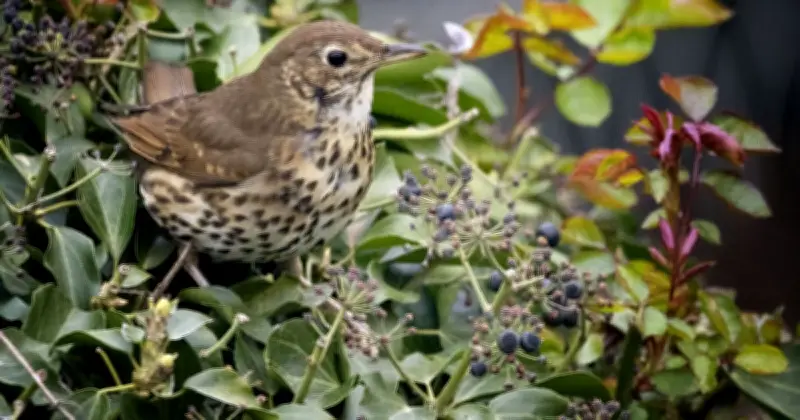
Adding a guelder rose (Viburnum opulus) to your garden now will keep blackbirds, thrushes, redwings and fieldfares returning throughout autumn and winter, according to the Royal Horticultural Society (RHS).
The RHS recently named the guelder rose its ‘Plant of the Month’ as part of its Bringing Nature Home campaign, which highlights plants that provide seasonal support for wildlife. In a social media video, the RHS described the shrub as “a British native” that “makes a great choice for wildlife-friendly hedgerows, borders and naturalistic planting.”
Why birds are drawn to the guelder rose
The guelder rose is a bushy, deciduous shrub with maple-like, palm-shaped, lobed, dark green leaves that turn red in autumn. In spring and summer it produces lacecap-like flowers made up of tubular white fertile flowers surrounded by larger white sterile flowers, which develop into berries by autumn and winter.
Mark Tuson, RHS Wisley Garden Manager and biodiversity specialist, said: “Looking for a plant that birds will absolutely love? Meet the guelder rose.” He added: “But the real wildlife feast comes later. In autumn and winter, its bright red berries provide a valuable food source for blackbirds, thrushes, redwings and fieldfares. Beautiful, useful and basically an all-you-can-eat bird buffet.”
The white spring flowers are described as a “nectar magnet” for bees, hoverflies and other pollinators, but it is the red berries that draw birds in during the colder months.
Other wildlife and plants to consider
The RSPB also praised the plant as a great food source for birds, noting that thrushes, blackbirds, fieldfares and redwings will readily eat the berries when they bloom in autumn and winter. The RSPB added that gardeners may see Privet Hawk-moth caterpillars feeding among the plant’s leaves during the warmer months.
For those looking to attract more wildlife, the RSPB also recommended planting Bird’s Foot Trefoil, Burdocks, Cardoon, Chicory, Common Knapweed, Coneflower, English Lavender, Fennel, French Lavender, Garden Forget-me-not, Greater Knapweed, Meadowsweet, Millet, Nettle-leaved Bellflower, Purple Coneflower, Red Campion, Red Clover, Sheep’s Sorrel, Sunflower, Thistles, Teasels, Verbena and Wild Angelica.