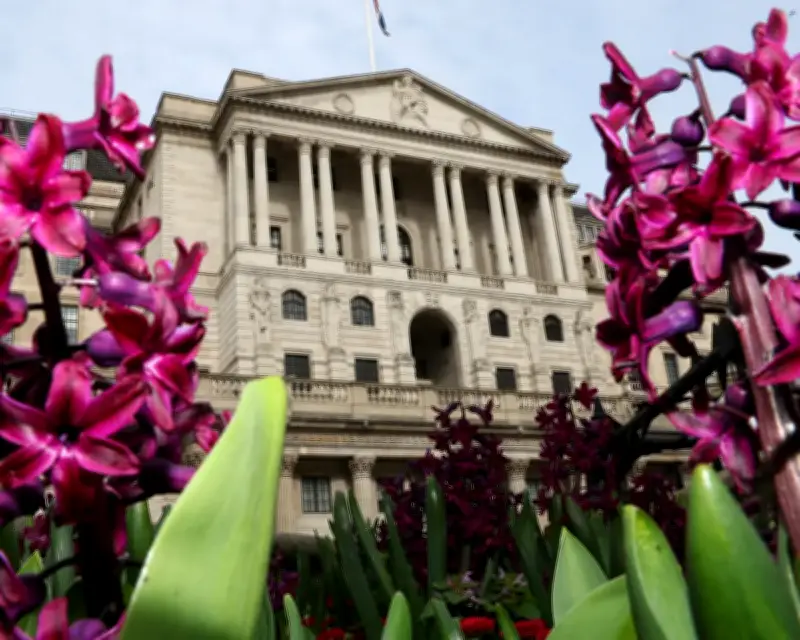
The Bank of England's £160m revamp of its historic headquarters in the City of London presents a major project management challenge for Governor Andrew Bailey, with the central bank keen to avoid the delays and budget overruns that plagued the US Federal Reserve's renovation.
The project aims to modernise the Grade I-listed neoclassical building while 3,500 staff continue working on site. By summer 2028, 1,400 staff from a nearby office at 20 Moorgate will be relocated to Threadneedle Street, take voluntary redundancy, or move to a refurbished outpost in Leeds.
Historic Building, Modern Ambitions
The Bank, nicknamed the Old Lady of Threadneedle Street, has occupied the site since 1734. The building was remodelled by Sir John Soane between 1788 and 1833, and again in the 1920s when the interior was largely demolished and rebuilt. The current project aims to preserve Roman mosaic floors, stone columns, and vaulted ceilings while creating a Google-like workplace with breakout rooms and in-house cafes.
Funding comes from an estimated £100m of annual savings over three years, derived from 450 redundancies and other cost cuts. One Bank staff member told the Guardian: "It's like there is a leaving party every week."
Avoiding Federal Reserve-Style Problems
The Bank wants to avoid a repeat of the Federal Reserve's renovation issues in Washington, where construction costs soared from an initial budget of $921m (£696m) in February 2020 to $2bn by December 2024. Completion has slipped from mid-2024 to December 2027, with final costs likely near $2.5bn.
At a smaller scale, the Bank's project is more akin to the £80m Elizabeth Tower restoration, whose budget doubled and then rose by a further 20%. The Bank's scheme was announced in July 2025, with construction firm Sir Robert McAlpine awarded the contract in October.
Complex Renovation Underway
Described as an "incredibly complex project," the renovation must meet new regulations on fire safety, accessibility, and electrical testing, while securing the 400,000 gold bars worth over £200bn and £100m of bank notes in the vaults. The Bank's museum, open to the public and facing Bartholomew Lane, may be relocated to the central quad, with 100,000 visitors a year expected.
Architectural plans have yet to be agreed with the City of London Corporation and Historic England. Vivienne Grafton, executive director of central operations, told the Architects Journal: "This is an opportunity to breathe new life into a legacy building, not through radical reinvention, but through thoughtful, intelligent transformation."
Some preparatory work has begun, including scaffolding on the main portico roof and planning permission for the former governor's secretaries' offices. The rest of the 1.4-hectare (3.5-acre) site awaits further progress.