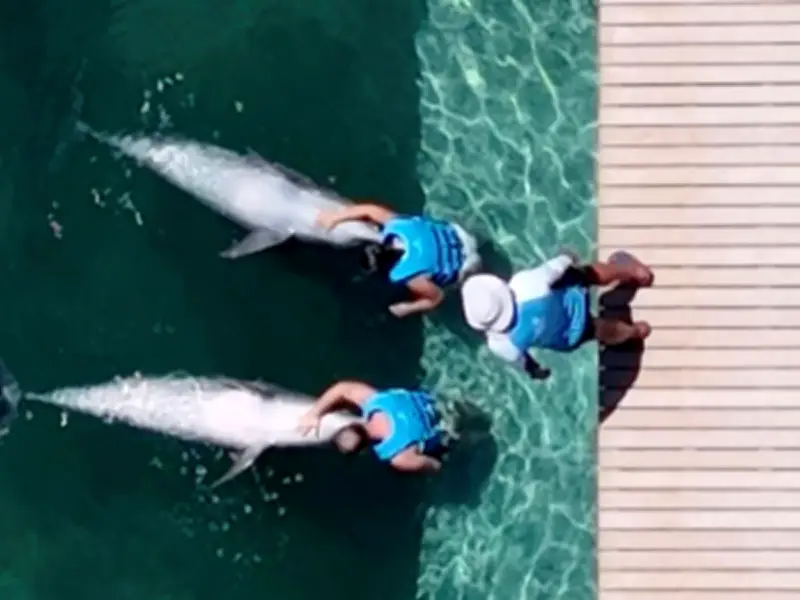
Drone footage captured in May 2026 has ignited outrage after showing six dolphins confined to a shallow concrete tank at the Hyatt Ziva Cancún hotel in Mexico. The tank, originally a guest swimming pool, has been leased to Delphinus, a company offering dolphin experiences, since 2015. The marine animal rights group TideBreakers provided the footage, which depicts the dolphins swimming in endless circles or floating aimlessly by the gate.
Poor Conditions and Lack of Shade
Marketa Schusterova, co-founder of TideBreakers, visited the resort in May and described the animals as being in "poor conditions." She noted that the pools are shallow, offer minimal shade, and provide little to no rest for the dolphins. "These dolphins are in shallow tanks, have no escape, no shade, suffer from a constant barrage of disco music and then at night a laser show keeps them awake," Schusterova said. She added that the dolphins appear thin, have scars and damage on their bodies, and are clearly distressed, with no opportunity for normal social behavior.
Global Boycott Campaign
TideBreakers has launched a global campaign urging a boycott of Hyatt hotels until the company stops leasing the pool to Delphinus. The group argues that the dolphins face constant public interactions throughout the day, limiting their time for natural social behaviors. According to TideBreakers, the dolphins are not well medically cared for and show signs of chronic stress.
Hyatt's Response
A spokesperson for Hyatt Ziva Cancún responded to the concerns, stating, "We understand the concerns raised regarding the dolphins at the resort. While the dolphin habitat and program at the resort are operated and managed by a third party, Delphinus, we want all services and experiences offered at our hotel to meet our high standards." The spokesperson added that Delphinus is accredited by Mexican authorities and international agencies and is responsible for the care of the dolphins, including support from trained animal care and veterinary professionals. Delphinus has not commented.
Captivity and Sanctuary Options
Dolphins kept in captivity often cannot be released directly into the open ocean. According to Dolphin World, animals born in tanks or held for years at tourist venues lack the hunting skills, fitness levels, and social pod structures needed for survival. Welfare groups recommend relocation to seaside sanctuaries—enclosed ocean pens where dolphins can experience natural tides and currents while still receiving veterinary care and feeding support. Tourists are also cautioned not to judge a dolphin's welfare by its facial expression, as the "smile" is simply the shape of its jaw and can mask stress, injury, or illness.
Global Captive Dolphin Numbers
Marine welfare organizations, including Whale and Dolphin Conservation (WDC), estimate that there are approximately 3,600 to 3,700 captive cetaceans worldwide, held in about 345 facilities across 56 countries. The largest concentrations are in China, Japan, the United States, Mexico, and Russia. Welfare groups argue that even purchasing a day pass or staying at a resort linked to dolphin encounters supports the business model by maintaining leasing agreements and tourist demand.