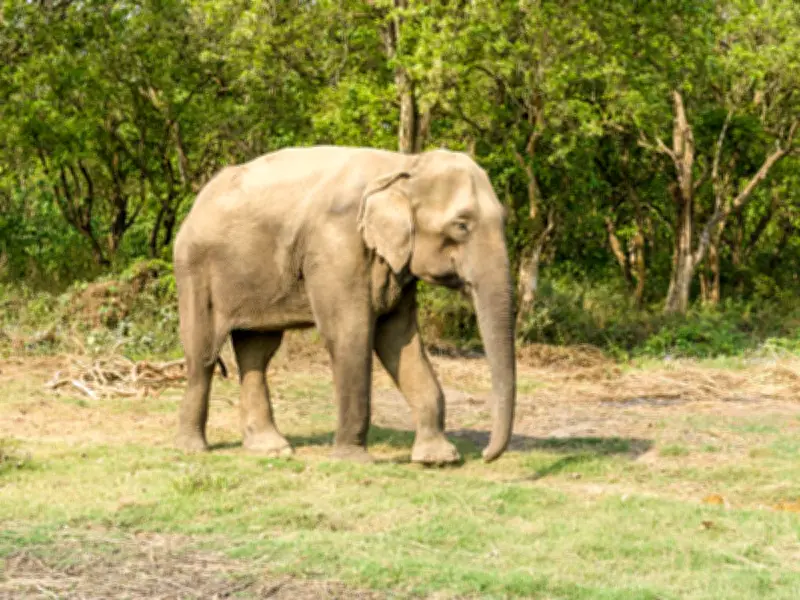
A man who lost both parents to a notorious wild elephant in 2012 has now tragically lost two more relatives to the same beast, despite relocating to avoid it. Shanichara Bote, from Madi, Nepal, saw his mother and father trampled to death by an elephant named Dhurbe near Chitwan National Park in December 2012.
Family's Repeated Tragedy
Following the double killing, Shanichara moved 30 kilometres to the village of Jagatpur, on the opposite side of the Reu River, believing the river would keep his family safe. However, on June 28, 2026, nearly 14 years later, Dhurbe smashed into his new home, killing his four-year-old grandson Bharat and his 25-year-old daughter-in-law Ashika.
Shanichara told The Kathmandu Post: "The constant terror of wild elephants forced us to sell what we had and move to Jagatpur. We believed that moving across the major rivers would keep us safe. But after all these years, the exact same elephant found us again, raided our home and took my daughter-in-law and my little grandson. There is nowhere left for us to run."
Dhurbe's Deadly Record
Dhurbe has a notorious reputation, linked to at least 25 human deaths in Nepal. The elephant has survived being shot twice, with officials briefly believing it had died from bullet wounds in 2012. Its victims include two army members assigned to protect elephants from poachers.
Chitwan National Park information officer Abinash Thapa Magar said: "We have been using a satellite tracking collar to monitor the movements of this highly aggressive male elephant. Our data showed that his location was around the perimeter of the incident site on Saturday night. Before this incident, Dhurbe had officially claimed 23 human lives. With these two latest casualties in Jagatpur, the confirmed death toll linked to this single elephant has now risen to 25."
Ongoing Efforts to Contain the Elephant
Park officials have been trying to isolate Dhurbe for some time. Despite tracking and monitoring, the elephant continues to pose a threat to local communities. Shanichara's story highlights the devastating impact of human-wildlife conflict in the region, where expanding human settlements encroach on elephant habitats.