
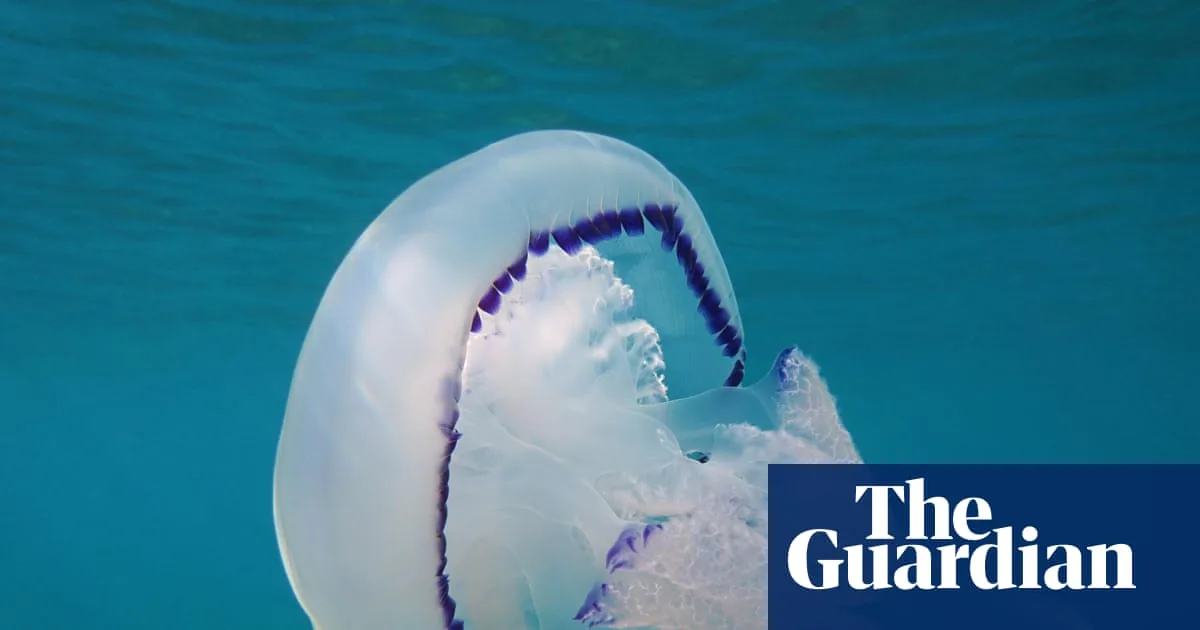
An unusually high number of jellyfish have arrived in UK seas this summer, experts report. Warm sea surface temperatures, exacerbated by global heating, have created favourable conditions for jellyfish blooms, which follow warm water currents to the coast during their yearly reproduction cycle.
Record-high sea surface temperatures in April and May, according to the Met Office, have contributed to a population bloom and prolonged stay. Experts say conditions may also lead to the arrival of new jellyfish species that prefer warmer waters.
The Marine Conservation Society recorded 1,432 jellyfish sightings in 2024, a 32% increase from the previous year. Species identified include compass, barrel, moon, lion's mane, blue, and mauve stinger jellyfish. Barrel jellyfish, which can grow to a metre in diameter, have arrived in great numbers and have a relatively mild sting.
Abigail McQuatters-Gollop, a marine conservation specialist at the University of Plymouth, noted that jellyfish are a foundational element of the aquatic food web. She said evidence suggests more blooms are likely due to climate change and warming waters. However, jellyfish have short lifespans, with some born and dying within the same summer.
After summer, some jellyfish may follow currents back out to sea, while others die from depleted food supplies, storms, or old age. Extreme weather, an effect of climate breakdown, can break apart their fragile bodies, which are 90% water.




