How Animals Perceive Time: A New Frontier in Consciousness Research
Imagine standing in your garden. A bumblebee whizzes overhead too quickly to follow, a sparrow darts from the fence to the trees, and a snail lugs itself across the garden stones. Assume for a moment that each of these animals has a stream of experience – that the world for them unfolds over time. How does the world appear from their perspective? In short, do they experience time in a similar way to us?
Scientific studies have already shown that humans, bees, sparrows and snails all differ in sensitivity to wavelengths of light and frequencies of sound – that is, we see and hear differently. But in a recent review, our research group asked whether time, that stream of experience, unfolds in the same way for us as it does for the bee, the sparrow, or the snail.
Understanding Timescapes: The Temporal Fabric of Perception
If we can understand how different species assemble perceptual contents – the information coming in from their senses – we can better understand how each carves up the world in time. We use the term “timescape” to describe this: the way a stream of perception is stitched together, updated, and structured as it unfolds. To investigate whether different animal species inhabit different timescapes, one strategy is to examine how animals perceive temporal illusions.
Auditory Continuity Illusion: Filling in the Gaps
One example is the auditory continuity illusion. Imagine listening to an audio clip in which parts of a phrase have been removed and replaced with white noise. If the original phrase were “happy birthday”, the recording might actually play “happy b[static]day”. Yet when you hear it, you still experience the complete phrase. Your perceptual system “fills in” the missing sounds that were masked by the static noise. Crucially, this filling-in occurs only if the noise lasts for about 100 milliseconds and is immediately followed by the remainder of the word. This reveals a window of time during which our conscious experiences remain open to revision in light of new information.
Other studies suggest that similar effects occur in squirrels and starlings. When these animals hear recordings of calls from members of their own species with bursts of white noise inserted into them, they respond as though the calls were uninterrupted, suggesting that they too fill in the missing sounds. However, the time period during which their experiences remain revisable is shorter than in humans – about half as long in starlings and only a quarter as long in squirrels.
Flash-Lag Illusion: Synchronising Visual Signals
Another temporal illusion arises when we must synchronise different aspects of a visual scene, such as movement and a sudden flash. When a flash occurs beneath a moving object when they are perfectly aligned – that is, the flash is directly beneath the object, not ahead or behind it – we actually perceive the flash as lagging behind the moving object. This is called the “flash-lag” illusion. One explanation for it is that the visual system processes the position of a moving object more quickly than it processes a sudden flash. Because of this asynchrony we see the flash lagging behind the moving object, even though the signals appeared at the same time.
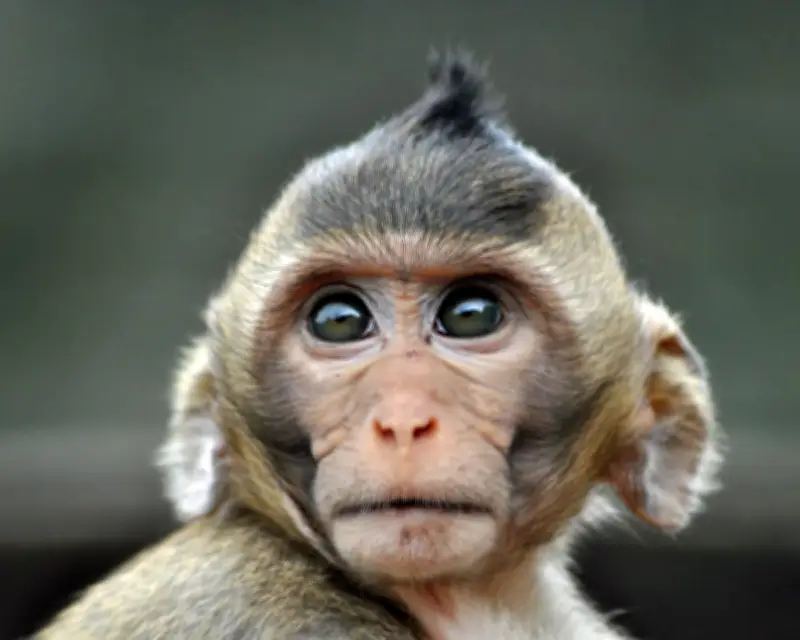
Experimental studies suggest that monkeys experience this illusion too, although with a smaller lag. This is probably because the difference in processing time between flashes and moving objects is smaller in monkeys than in humans. But what might such differences mean for animal behaviour in the wild?
Time-Based Defences and Courtship Displays
Some species appear to exploit flash lag-like effects to evade predators. Butterflies, for example, often have bold, high-contrast patterns on the upper surfaces of their wings and much duller patterns underneath. As they fly, these alternating patterns create flash-like visual displays. For a predator trying to synchronise the butterfly’s movement with these flashes, tracking its true position becomes more difficult. This phenomenon, known as motion dazzle, is used by several species as a time-based defence against predation.
Timescapes also offer striking insights into animal ecology and courtship. A good example is given by the dancing displays of Indian peacocks. We speculate that as a peacock shakes its iridescent tail feathers during courtship, it may create an illusory sense of depth, making the eye-spots of the feathers appear to float in front of the rest of the plumage. One possible explanation for this is an illusion known as flicker-induced depth, in which different rates of flicker create a perception of depth where no difference in depth actually exists.
Practical Applications: From Wind Turbines to Animal Shelters
Beyond helping us understand animal perception, the study of timescapes could also help us design better infrastructure. Potential applications include reducing bird collisions with wind turbines, developing more effective alarm-signalling systems for clearing railway tracks and highways, and creating temporally sensitive lighting for animal shelters and housing. Our hope is that understanding animal experience through the shared lens of temporality can provide a bridge between evolution, perception, and, ultimately, what it is like to inhabit the world.
Ishan Singhal is a research fellow at the University of Sussex Centre for Consciousness Science