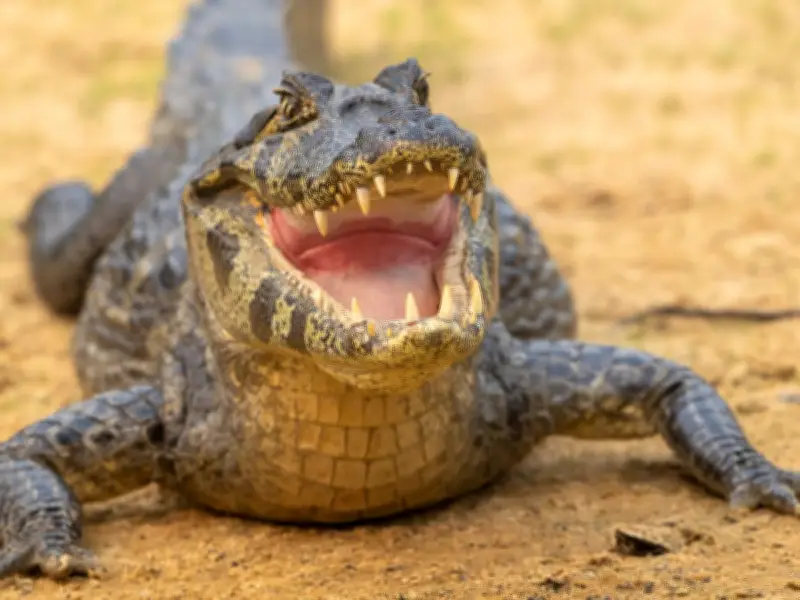
Alligators and crocodiles rank among the most captivating reptiles on the planet, frequently confused with one another due to their similar appearance. Despite both belonging to the order Crocodilia, they are distinct species with their own unique physical characteristics, behaviours and natural habitats.
Understanding the distinctions between these reptiles helps us appreciate their importance in the natural world and identify them more readily. From the shape of their snouts to the environments they call home, numerous differences set them apart. Yet they also share certain similarities, which is precisely why they are so commonly mixed up.
Physical Appearance
One of the simplest ways to tell an alligator apart from a crocodile is by examining the shape of its snout. Alligators possess broad, U-shaped snouts that are ideally suited to crushing prey such as turtles and shellfish. Crocodiles, on the other hand, have narrow, V-shaped snouts that are better equipped for catching fish and other swift-moving prey.
Their teeth also differ considerably. When an alligator closes its mouth, the lower teeth are largely concealed as they slot into sockets within the upper jaw. A crocodile's upper and lower teeth, however, remain visible even when its mouth is shut, giving it a distinctly toothier look.
Colour and Size
Alligators tend to be darker in colouring, appearing black or dark grey. Crocodiles are typically lighter, ranging from olive green to tan or brown. While both can reach considerable sizes, crocodiles are generally bigger than alligators. Certain species, such as the saltwater crocodile, can surpass six metres in length, making them the largest reptiles alive today.
Habitat
Alligators favour freshwater settings such as rivers, lakes, marshes and swamps. They are found predominantly in the southeastern United States and eastern China. Crocodiles, by contrast, are more widely distributed and are capable of living in both freshwater and saltwater environments. Specialist salt glands in their tongues enable them to survive in brackish water and coastal areas.
Behaviour
Although both reptiles can pose a danger, alligators are broadly less aggressive towards humans. They typically shy away from confrontation unless they feel threatened or are defending their young. Crocodiles are frequently regarded as more territorial and aggressive, making any encounters with them considerably more hazardous.
Diet
Both alligators and crocodiles are carnivorous, consuming fish, birds, mammals, reptiles and amphibians. Their diet is determined by their size and the availability of prey within their habitat. Younger individuals feed on insects and small fish, while larger adults can take down much larger animals.
Despite sharing numerous similarities, the two species differ in appearance, habitat, behaviour and geographical distribution.