Discovery of a Thriving Colony
Before 7am, the heat is already pressing down. I've come out early for my annual pilgrimage to a local colony of crested cow-wheat, Melampyrum cristatum. On each side of the narrow path, orchids stand among the grasses, overtopped by the pale pink froth of common valerian flowers, whose scent always puts me in mind of sugared almonds. Stock doves call gently from an oak. Around my boots, grasshoppers and crickets fizz and spring aside.
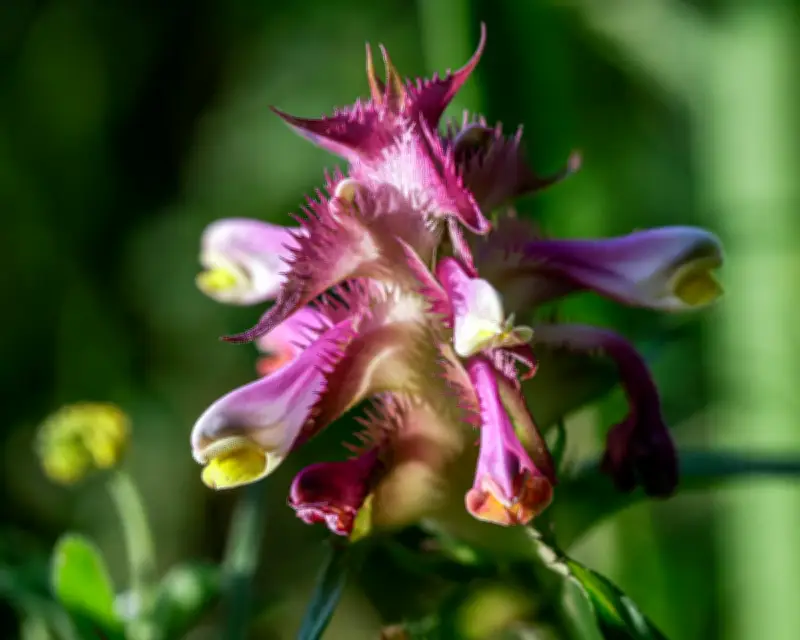
In among it, to my excitement, is a tangled abundance, thousands of plants jostling with mats of wild liquorice. The flowers repay close attention – soft primrose-coloured tubes with plush mouths, stacked one above another, flushing magenta with age, each held in a purplish bract, elegantly curved and sharply toothed. This is the crest that gives the plant both its common and scientific names.
Hemiparasitic Nature and Rarity
Like other cow-wheats, it is hemiparasitic: its leaves make food, but its roots also tap neighbouring plants for water and minerals. An annual of old woodland edges and clearings, it's a rarity, growing only in a small part of eastern England. Its oil- and protein-rich seeds are irresistible to ants, so much so that they drag them underground; in the fine soil of the nest, they germinate. It's an ingenious system, but not one that allows the plant to be a particularly intrepid traveller.
Origin Story: A Timely Act of Care
I first met crested cow-wheat in the 1980s, when a precarious colony survived beneath a shady oak on a verge in nearby Ufford. When rabbit disturbance declined, allowing the grass to grow long, that colony faded. Before it vanished, a far-sighted reserve warden gathered some seed and founded this population, in a place where ants are plentiful and winter cattle grazing keeps the sward open.
Reflections on the Colony's Legacy
In the shade of another oak, I think back to previous visits: a warm summer evening when brassy longhorn moths cavorted over field scabious flowers; a wet July day with a naturalist friend seeing this scarce, beautiful plant for the first time. So much delight has flowed from one timely act of attention – seed gathered, carried and given a future before it was too late.