
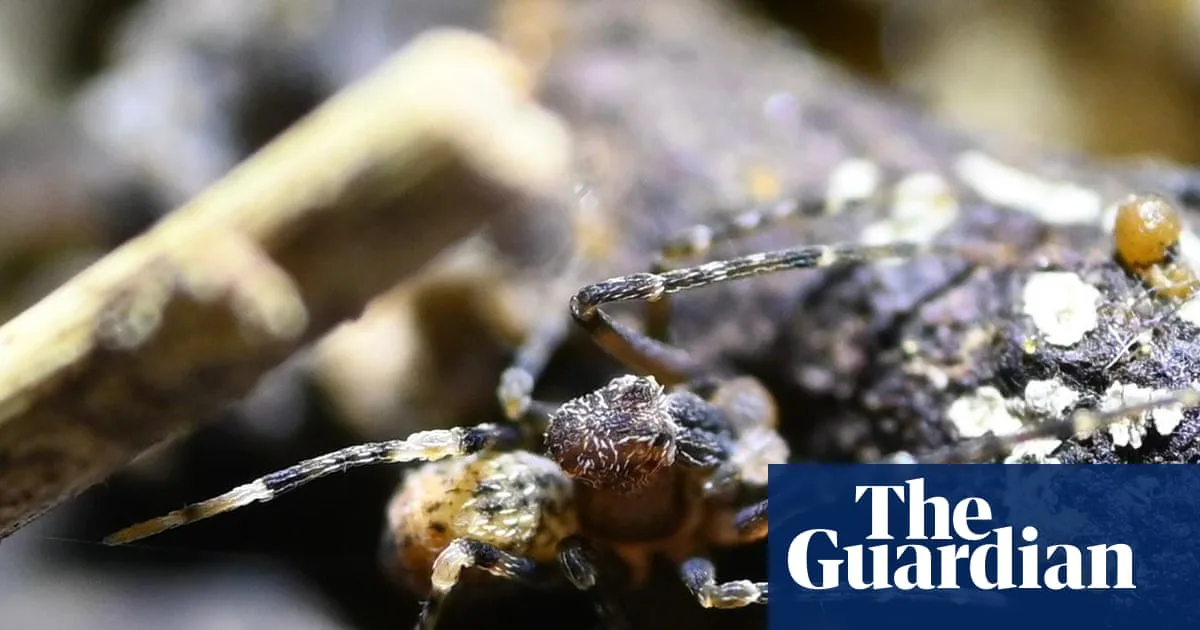
Australian scientists warn that the critically endangered Kangaroo Island assassin spider, a relic from the Jurassic era, is on the brink of extinction after bushfires and drought destroyed much of its habitat. The spider, which has survived for 150 million years, is now confined to a small patch of vegetation on Kangaroo Island in South Australia.
Conservation biologist Jane Ogilvie has spent weeks searching for the spider in its only known home, the north-west of the island. After more than a month of searching, she has found only one tiny juvenile. Last year, scientists found just one mature female and six juveniles at six locations, but those same sites have come up empty this year.
The spider's habitat has been devastated by a combination of near-record drought, the black summer bushfires of 2019-2020, and an invasive plant root disease called phytophthora. These threats have dried out the leaf litter where the spiders live, leaving them with nowhere to go. Dr Michael Rix, who first discovered the species in 2010, says the spider is 'potentially one big fire away from extinction'.
The Kangaroo Island assassin spider is one of 11 invertebrates on the federal government's priority list of threatened species. Scientists are now considering establishing a breeding program in a zoo to create an 'insurance population', but warn that removing individuals from the wild carries risks. Dr Jess Marsh, who found two surviving specimens after the bushfires, says the spider is being 'squeezed into smaller and smaller areas'.
Rix says the spider's plight is part of a larger, largely unseen wave of invertebrate extinctions. Officially, Australia lists only one invertebrate as extinct, but researchers believe many more are at risk. The assassin spider's survival hangs by a thread, with scientists racing against time to save it.




