
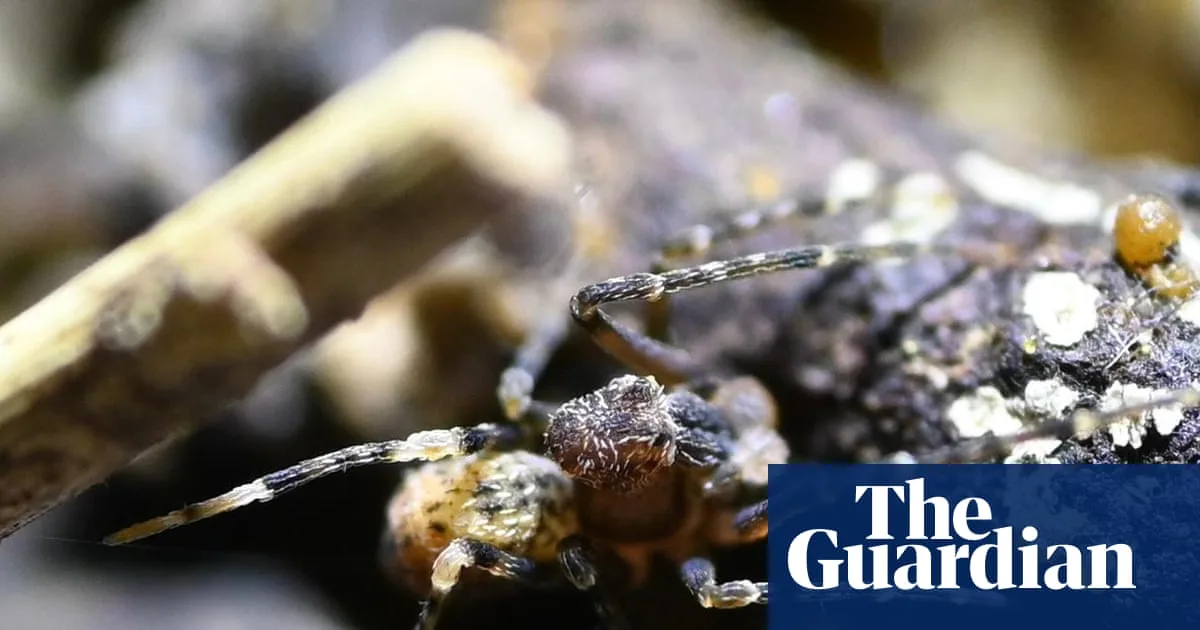
Australian scientists warn that the critically endangered Kangaroo Island assassin spider, a relic from the Jurassic period that has survived 150 million years, is now at high risk of extinction due to drought, bushfires, and disease.
Conservation biologist Jane Ogilvie and her team have spent weeks searching the spider's only known habitat in north-west Kangaroo Island, South Australia, but have found only one tiny juvenile in over a month. The spider relies on moist leaf litter, which has been drying out due to near-record drought over the past 18 months, with rainfall among the lowest since 1900.
The 2019-2020 Black Summer bushfires destroyed large areas of potential habitat, and an invasive plant root disease called phytophthora is further damaging the forest canopy and leaf litter. Dr Michael Rix, principal scientist at the Queensland Museum, says the spider is 'potentially one big fire away from extinction' and that its existence is 'phenomenally precarious'.
First discovered in 2010 by Rix, the Kangaroo Island assassin spider is one of 11 invertebrates on Australia's federal priority list of threatened species. Assassin spiders, named for their habit of stalking and eating other spiders, are found only in Australia, Madagascar, and parts of southern Africa.
Scientists are considering establishing a captive breeding program to create an 'insurance population', but warn that removing individuals from the wild carries risks. Dr Jess Marsh from the University of Adelaide notes that while the species has survived mass extinctions and past climate changes, human activity is now testing them severely.




