
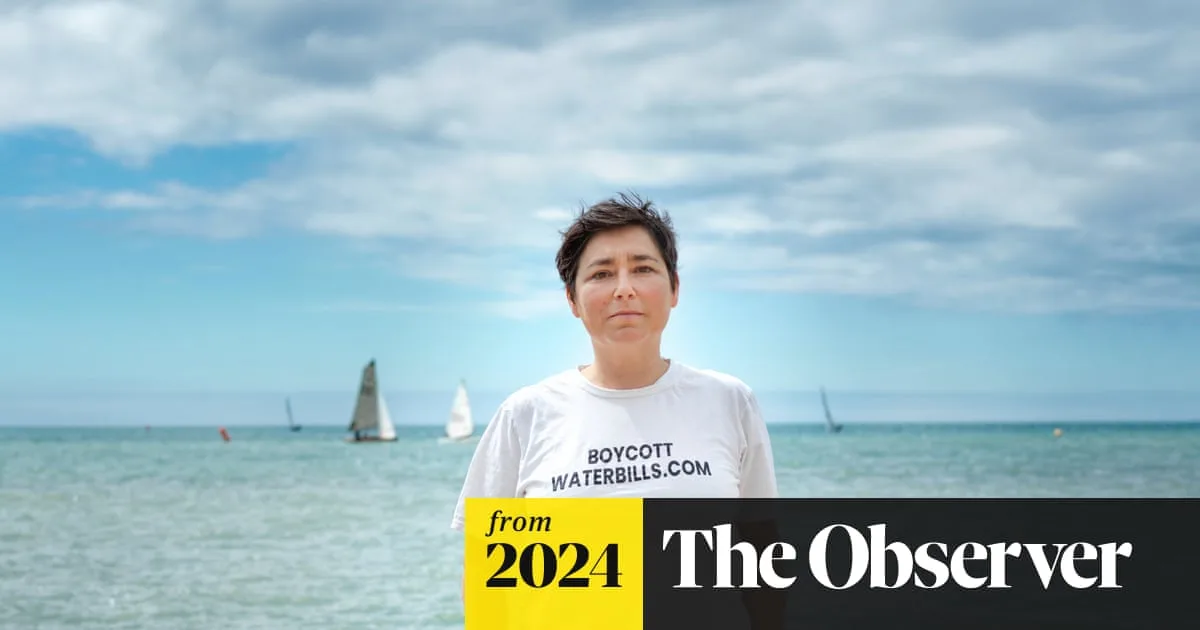
Residents in a Cornish village have joined a growing movement of people across England and Wales refusing to pay their water bills in protest against the sewage crisis. The action comes after data showed sewage spills in England increased by 54% in 2023 compared to the previous year, with enough raw sewage to fill 4,352 Olympic swimming pools released from 30 treatment works in one year.
The Don't Pay for Dirty Water campaign, founded by Caz Dennett, encourages customers to withhold payments for wastewater services they say they are not receiving. 'We are paying for a service that we are just not getting; a service we absolutely have to have,' Dennett said. 'People are really aware that they're being ripped off.'
Another group, Boycott Water Bills, was launched in May 2023 by Katy Colley, who runs a campsite in Hastings. Colley began withholding wastewater charges from Southern Water in December 2022 after contracting E. coli, which she believes came from swimming at the beach. 'As a people we are really wedded to the idea that things should be fair. And this just isn't fair,' she said. The group has seen more than 13,000 visitors to its website seeking advice.
In Whitstable, writer Julie Wassmer stopped paying her water bill in 2021 alongside friends, including a former Greenpeace campaigns manager and local councillors. 'We did so, not as a campaign, but as a group of committed individuals who wanted to make a stand,' she said. The action gained attention after Bob Geldof amplified it. Wassmer noted that the boycott now covers all 11 wastewater areas in England and Wales.
The protests come amid revelations that UK water companies paid out £1.4bn in dividends in 2022, up £540m from the previous year, while customers face rising bills and pollution in rivers and seas. Campaigners argue that shareholders are prioritised over environmental and public health.




