
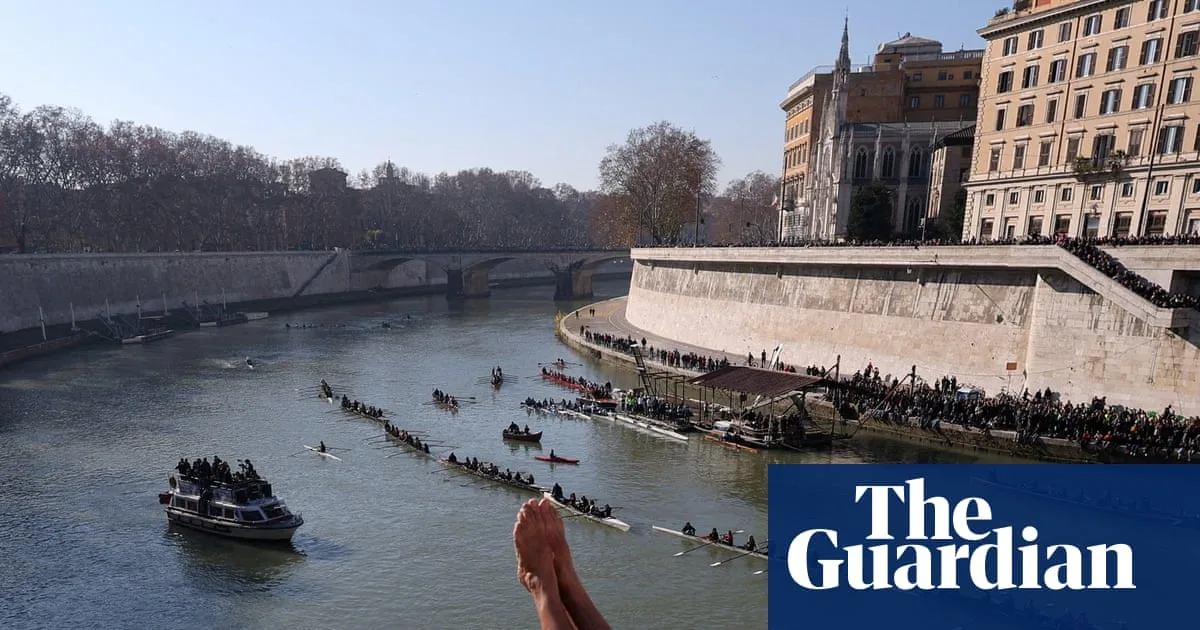
Rome's mayor, Roberto Gualtieri, has announced plans to make the River Tiber swimmable within five years, drawing inspiration from Paris's successful clean-up of the Seine. During a visit to the Osaka Expo in Japan, Gualtieri stated that a working group had been established to study the feasibility of the project, declaring it an 'entirely achievable goal'. However, the announcement has been met with widespread scepticism from experts and the Italian media.
Until the 1960s, Romans regularly swam in the Tiber, but pollution led to restrictions, and swimming is now strictly prohibited with fines of hundreds of euros. Despite this, a New Year's Day tradition of diving from bridges persists. Gualtieri has claimed that pollution levels in the Tiber are lower than those previously recorded in the Seine, suggesting the clean-up would be cheaper than Paris's €1.4bn project.
Yet, recent studies highlight significant contamination. In April, the Tara Microplastics mission found an average of three microplastic particles per cubic metre in the Tiber. Further research in September 2024 by Italy's Institute for Environmental Protection and Research (ISPRA) revealed the Tiber carries more floating waste—mostly plastic—into the sea than any other Italian river, alongside high levels of ammonia and faecal bacteria.
Alessandro Miani, president of the Italian Society of Environmental Medicine, warned of extreme health risks, including gastrointestinal infections from E. coli and skin and eye infections from contact with contaminated water. The Paris project, though successful for Olympic events, faced similar issues, with some events postponed due to high E. coli levels.
Italian media remain unconvinced. Roma Today described the goal as 'anything but downhill', while La Repubblica noted that a smaller project to clean a lake in Rome's EUR district would cost €8m and take at least five years, concluding that 'the Tiber will take far longer'.




