
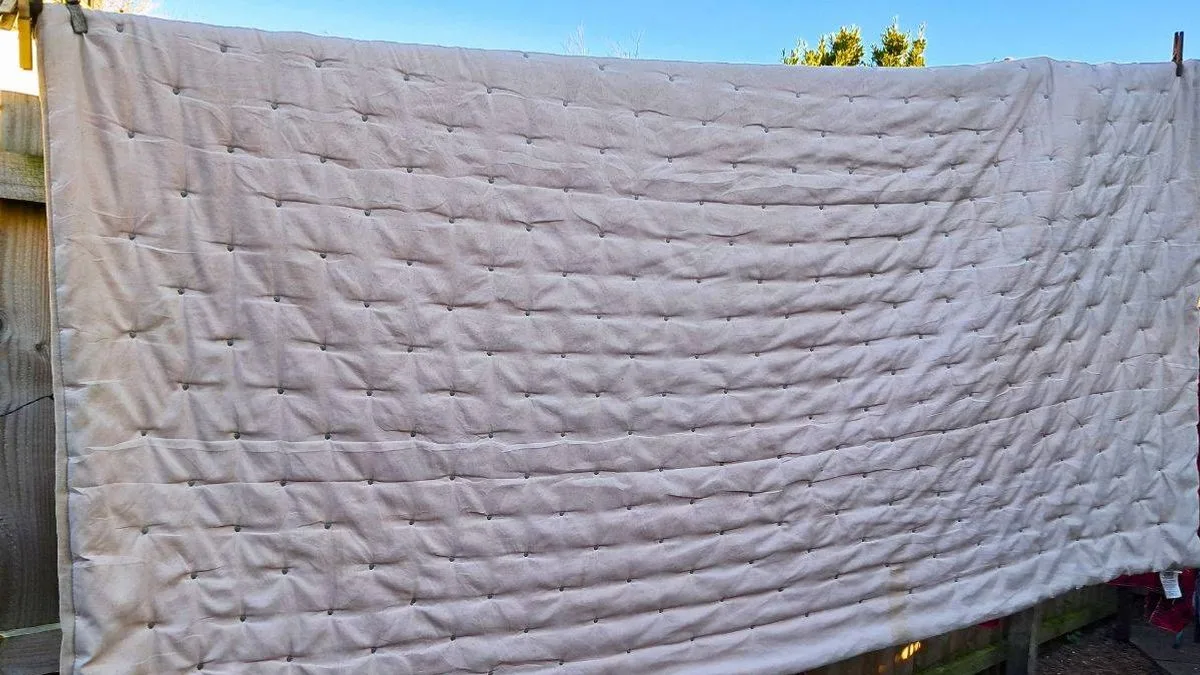
As winter draws to a close, many Britons find their duvets have acquired a stale smell. The prospect of washing a bulky duvet can be daunting, but there is an easier solution: sun-drying. According to experts, simply hanging your duvet outdoors on a sunny day in March can kill bacteria, fungi, and dust mites using ultraviolet rays.
Throughout winter, duvets absorb moisture from perspiration and humid bedroom conditions created by heating. This residual dampness creates an ideal environment for microbes, leading to unpleasant odours, potential mould, and dust mite infestations. Sun-drying harnesses natural sunlight to sanitise the fabric and evaporate excess moisture.
To try this method, choose a dry, sunny day. Check the weather forecast to ensure it hasn't rained the previous day, as high humidity can render the process ineffective. Take your duvet outside around 10am to maximise sun exposure, and hang it on a clothesline or drying rack. Leave it for about four hours.
One writer who tested the technique reported that after four hours, the duvet smelled fresh and felt cleaner, despite not being washed. 'It's remarkable how such a straightforward task can yield such significant results,' she said, adding that she plans to make it a weekly routine.
Sun-drying is not only effective but also energy-efficient, avoiding the need for a washing machine. It helps separate clumped filling and leaves your bedding feeling renewed. Incorporating this into your spring cleaning can keep your duvet hygienic with minimal effort.




