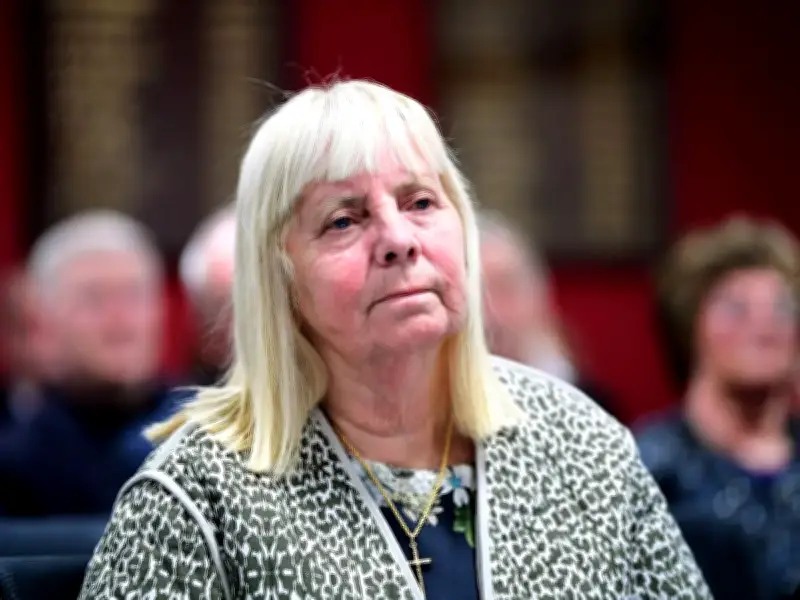
The Hillsborough Law bill is facing a dispute over legal funding, with campaigners warning that victims of state-related disasters will not gain equal access to legal representation under its current form. Margaret Aspinall, whose 18-year-old son James was unlawfully killed in the 1989 disaster, has delivered a stark message to the government, insisting that families must have the same level of legal support as the state bodies they face.
Bill Progress and Core Provisions
The Public Office (Accountability) Bill, commonly known as Hillsborough Law, is named after the 97 Liverpool fans unlawfully killed in the 1989 disaster. It has cleared the House of Commons and is now progressing through the House of Lords, with hopes it could become law early next year.
The proposed law would introduce a legally binding duty of candour, imposing legal and ethical obligations on public authorities and officials to act truthfully and transparently during investigations, inquiries, and inquests. However, a row has developed over another key element: a significant expansion of legal aid to ensure victims and their families have the same access to legal representation as the organisations they are up against.
Funding Concerns Raised by Families
Families and campaigners have told the ECHO that the bill in its current form will not result in true parity of funding between victims and state bodies. Under the current proposals, victims and their families would not have immediate access to legal aid and would have to wait until a coroner names a state body as an interested party, while state bodies can instantly access publicly-funded legal guidance.
A second issue relates to the rates of pay allowed for legal representation on both sides. The campaign argues that, as it stands, victims of state-related disasters and tragedies will not be able to afford the same level of legal representation as the organisations and bodies on the other side.
The Hillsborough families received no legal funding after the unlawful deaths of their loved ones in 1989, while South Yorkshire Police and other bodies were immediately able to access publicly-funded lawyers. Margaret Aspinall had to cash a £1,200 compensation cheque to try to pay for legal representation at the first Hillsborough inquests in 1990.
Aspinall Calls for a Level Playing Field
Speaking to the ECHO, Ms Aspinall, now 80, said there must be a level playing field on legal funding to ensure no other families go through what she and others who lost loved ones at Hillsborough did. She said: "It's very, very important and the Prime Minister Andy Burnham knows how I feel about all of this.
"In the past, they have had a Rolls Royce and we haven't. We have had to go out and fundraise and try and raise money to help us. It feels as if the ordinary people are being treated like second class citizens."
She added: "The people are not second class, they are equal. We are the same, we pay our taxes and we are entitled. Especially when it comes to state-related deaths, they should have access to lawyer as soon as possible. They should be allowed to get a lawyer and it should be on equal terms, whatever they pay for the perpetrators, the victims must get exactly the same and I will not rest until that happens."
Recalling her own experience after her son's death, she said: "We could only afford one lawyer and yet all of them - the police, the ambulance service, the city council, Sheffield Wednesday - they all had their own, all paid for, while we had to go and raise funds for one lawyer between us all. When you have just one lawyer against so many, you've got no chance and this has got to stop. How can it be Hillsborough Law if the parity of arms is not there? If it's not equal? It's not a Hillsborough Law. It is about a level playing field and at the end of the day, we pay their wages. I'm still paying taxes at my age and all I want is fairness. Not for myself, but for the people."
Legal Expert Explains Concerns
Pete Weatherby KC co-authored the original Hillsborough Law bill and led the legal team that represented 22 of the Hillsborough families at the fresh inquests that corrected one of the worst miscarriages of justice in British legal history. Speaking to the ECHO, he explained the campaign's concerns over the legal funding aspect of the bill.
He said: "We are generally in quite a good, collaborative space with the government but on the parity points, we are struggling. The trigger point is the point at which the new funding for families at inquests would commence. We are saying it should commence at the same time as the state bodies have representation. At Hillsborough, people were still dying when the other parties called in their own lawyers."
He continued: "A family who suffers the death of a loved one in a disaster, they need advice straight away from lawyers. All we are saying is it is entirely legitimate for both sides to want legal advice and representation all the way through, so the funding should be triggered right at the start. Currently the Ministry of Justice is saying the wording means the funding only starts from when the coroner formally designates the state body as an interested person in the inquest. That can take months or even years."
He added: "The second issue is that state lawyers often get paid at a much higher rate than those representing families, even where funding is available. So what we are saying is that if you are being funded by the taxpayer, then you should get paid at the same rate and families should have access to the same level of legal representation. We are not asking to cap the spending for one side or the other, because one side may have more work to do, we are saying that the lawyers on both sides should be paid at the same rate, because this is public money."
Next Steps for the Bill
The Hillsborough Law recently completed the committee stage in the House of Lords. It will next head to the Report stage and Third reading before hopefully gaining Royal Assent and becoming law early next year.
A Ministry of Justice spokesperson said: "Candour, transparency, and frankness are at the heart of our Hillsborough Law. The Bill will bring forward the largest expansion of legal aid in a decade, providing non-means-tested legal aid for bereaved families at any inquest where a public authority is an interested person. The Lord Chancellor met with campaigners last week, and we'll continue working closely with them on the Bill. Together, we'll make sure legislation can change the balance of power so the State can never hide from the people it is supposed to serve."