
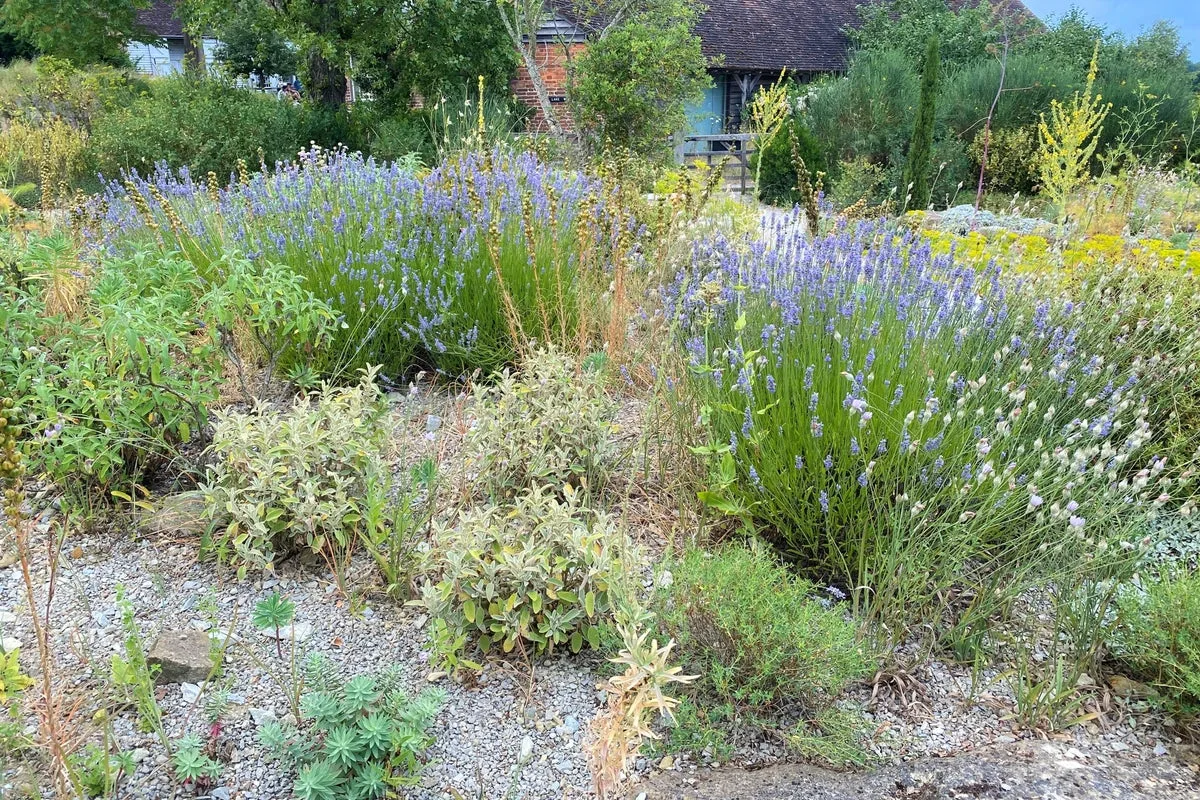
Unrelenting heat, wind and lack of rain can create inhospitable conditions for plants, as well as humans. But a simple change in mulch can help gardeners mitigate damage from those conditions, and wildfires too. That’s one reason so-called “gravel gardens” are growing in popularity.
When airborne embers land on plant-based garden mulches like pine bark, straw or wood chips, they ignite quickly and risk spreading fire. These organic mulches can even trap heat and combust spontaneously. Many high-risk municipalities now discourage or restrict organic mulches within a specified distance from homes and buildings. Gardeners in fire-prone areas have long embraced covering bare soil with inorganic materials such as pea gravel, tumbled granite or brick chips.
Using aggregate 4 inches deep in beds and borders also helps prevent weeds, improves drainage and reduces runoff, which cuts water waste. In at-risk areas, gravel serves as an exceptional substitute for organic mulches, and its use around drought-tolerant native plants facilitates drainage, weed suppression and moisture retention without needing regular replacement.
To create a gravel garden, begin by removing weeds and existing plants. Spread 2 inches of compost or well-rotted manure and turn it in. Define the bed with edging tall enough to keep the gravel in place. Lay 4 inches of aggregate, pushing it several inches away from tree trunks. Do not use landscape fabric beneath the gravel, as it creates heat pockets, restricts water and oxygen flow, and traps carbon, harming soil life.
Select drought-tolerant, sun-loving perennials native to your region, suited to your horticultural zone. Buy plants in 3½–4½-inch pots. Remove the top layer of soil from each plant to reduce weed seeds, and water well. Transport plants to the bed on trays to avoid loose soil falling onto the gravel. To plant, remove a small area of gravel equal to the pot's width and 4 inches deep, place the moistened roots, and replace the gravel. Water frequently throughout the first season—daily or even twice a day—as the only water available comes from the soil clinging to the roots. Once established, these plants seldom require supplemental watering or fertilizer.




